How Close Are We to Fully Autonomous Robots? Sergey Levine Explains
TL;DR
Useful autonomous robots could arrive within single-digit years, with Sergey Levine hoping the first genuinely valuable deployments may take only one or two years. Physical Intelligence’s robots can already fold laundry, fold boxes, clean tables and kitchens, and make coffee, but household-scale autonomy still requires continuous learning, common sense, safety, reliability, and mistake recovery. Read on to understand what must improve before robots can manage months of everyday tasks.
Transcript
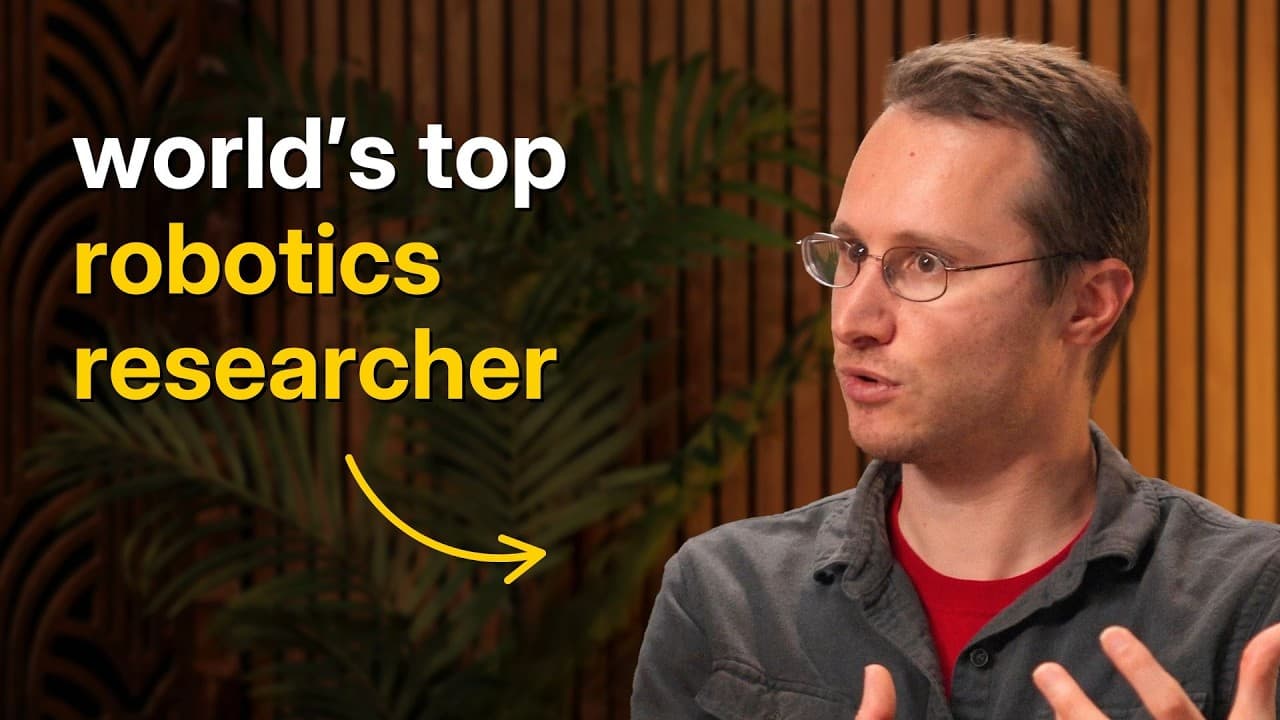
Today I'm chatting with Sergey Levine, who is a co-founder of Physical Intelligence, which is a robotics foundation model company, and also a professor at UC Berkeley and just generally one of the world's leading researchers in robotics, RL, and AI. Sergey, thank you for coming on the podcast. Thank you, and thank you for the kind introducti... Read More
Key Insights
- Physical Intelligence aims to build general-purpose robotic foundation models that can control any robot for any task.
- The current focus is on developing basic building blocks for robots, with tasks like folding laundry and cleaning kitchens already achievable.
- The vision for robots includes continuous learning, common sense understanding, and the ability to perform complex household tasks autonomously.
- Advancements in AI perception and understanding of the physical world are crucial for the progress of robotics.
- The timeline for deploying useful robots in real-world scenarios is estimated to be within single-digit years, with significant progress expected soon.
- Robotic foundation models require industrial-scale efforts, similar to the Apollo program, to become practical and widespread.
- The integration of vision-language models with action experts is key to enabling robots to perform dexterous tasks.
- Education and a balanced robotics ecosystem are essential for maximizing the benefits of automation and addressing future challenges.
Install to Summarize YouTube Videos and Get Transcripts
Explore YouTube Video Summarizer or Get YouTube Transcript Extractor
Questions & Answers
Q: How close are we to useful fully autonomous robots?
Sergey Levine says single-digit years is a realistic estimate for robots that competently perform tasks people genuinely want done. He hopes something useful could be deployed within one or two years, though he emphasizes that the timing is hard to predict.
Q: What is Physical Intelligence building?
Physical Intelligence is building robotic foundation models: general-purpose models intended to control any robot for any task. Levine describes the company’s current work as establishing basic building blocks for much harder capabilities.
Q: What tasks can Physical Intelligence’s robots already perform?
The robots can fold boxes and different articles of laundry, clean tables, enter a new home and try to clean its kitchen, and make coffee. Levine says these dexterous demonstrations work well, but they primarily confirm that the foundational methods are solid.
Q: What would a truly general household robot be expected to do?
A general household robot would manage broad, long-running instructions rather than wait for one task at a time. Levine’s example includes preparing dinner at 6:00 p.m., managing Saturday laundry, shopping, and checking in every Monday, then continuing those responsibilities for six months or a year.
Q: What major challenges remain before robots can manage a household?
Robots still need common sense, continuous learning, physical-world understanding, safety, reliability, and the ability to recover from mistakes. They must also recognize difficult edge cases, seek additional information when needed, and reason more carefully at the right moments.
Q: How would a robot handle an unfamiliar request such as making a particular salad?
The robot should determine what the requested salad entails, look up missing information, buy the ingredients, and complete the task. Doing that successfully requires prior knowledge, suitable representations, common sense, and intelligent handling of edge cases.
Q: What is the robotics self-improvement flywheel?
The flywheel begins when a sufficiently competent robot is deployed into the real world and starts collecting experience. That experience can then be used to improve the robot, so Levine focuses more on when this cycle starts than on a date when robotics will be completely finished.
Q: Why might narrowly scoped robots reach the real world sooner?
Levine says narrowing a robot’s scope makes it possible to deploy it earlier because it only needs to perform a smaller set of useful tasks competently. Physical Intelligence is already exploring which real tasks could provide enough value to start the experience-and-improvement flywheel.
Summary & Key Takeaways
-
Sergey Levine discusses the development of robotic foundation models aimed at creating general-purpose robots capable of performing any task. The focus is on building basic capabilities, such as folding laundry and cleaning kitchens, with the ultimate goal of achieving fully autonomous household robots by 2030. Key challenges include enhancing AI perception, continuous learning, and common sense understanding.
-
The conversation explores the potential for a 'self-improvement flywheel' in robotics, where robots learn and improve autonomously over time. Levine emphasizes the importance of industrial-scale efforts and leveraging AI advancements to achieve these goals. The timeline for deploying useful robots is estimated to be within single-digit years, with significant progress anticipated soon.
-
Levine highlights the need for a balanced robotics ecosystem that includes both software and hardware innovation. Education and a focus on productivity-enhancing technologies are crucial for navigating the societal impacts of automation. The integration of vision-language models with action experts is seen as a key factor in enabling robots to perform complex tasks and adapt to various environments.
Read in Other Languages (beta)
Share This Summary 📚
Summarize YouTube Videos and Get Video Transcripts with 1-Click
Try YouTube Summary with ChatGPT & Claude or YouTube Transcript Generator
Explore More Summaries from Dwarkesh Patel 📚
Summarize YouTube Videos and Get Video Transcripts with 1-Click
Try YouTube Summary with ChatGPT & Claude or YouTube Transcript Generator