Understand IELTS Reading in 30 Minutes
TL;DR
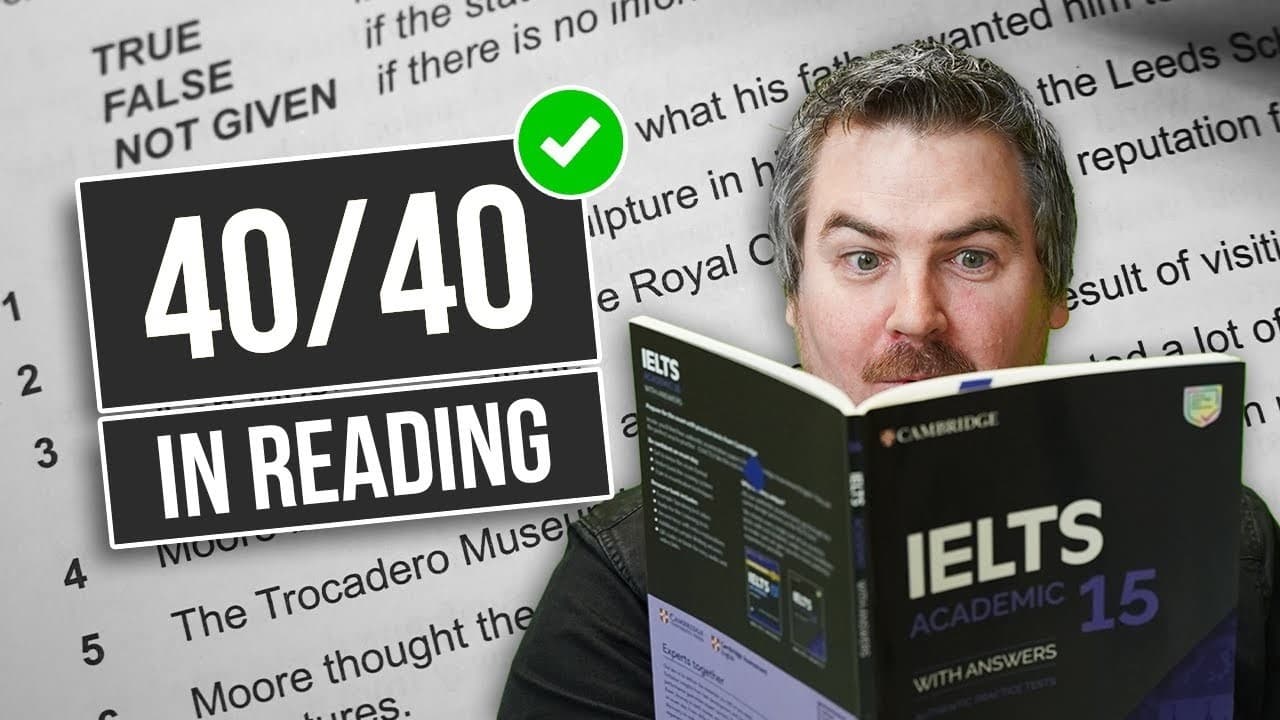
The best way to improve IELTS Reading is to follow a question-specific process: read the instructions and questions first, predict likely answers and synonyms, locate the relevant passage, and only then read it carefully. The guide covers all 12 question types, warns that one misspelled letter can invalidate a written answer, and includes two free practice tests, so read on for practical strategies for the major formats.
Transcript
you've just found the Ultimate Guide to a reading this gives you step-by-step strategies for all 12 of the questions that you might get on test day these are the exact same strategies that thousands of my students have used to get band nine on their I reading test and at the end I'll also give you two free practice tests and step-by-step walkthroug... Read More
Key Insights
- 🏆 Clear instructions and keyword understanding are essential for avoiding common mistakes in the IELTS reading test.
- 🧑🎓 Predicting content based on incomplete sentences primes students for finding accurate answers effectively.
- 🧑🎓 Familiarizing with various synonyms can enhance students' ability to match questions with answers found in the text.
- 🤝 Time management and strategic approaches, such as dealing with easier questions first, can significantly reduce stress during the test.
- 🦻 Grammar understanding aids in making grammatical predictions and ensuring completed answers make sense in context.
- 🥺 Encouraging confidence in deciding answers can help in managing questions that can lead to time wasted on incorrect guesses.
- 👻 Maintaining focus on the entire context of statements rather than narrow keywords allows for a better understanding of the text.
Install to Summarize YouTube Videos and Get Transcripts
Explore YouTube Video Summarizer or Get YouTube Transcript Extractor
Questions & Answers
Q: How should you approach IELTS Reading questions?
Read the instructions and question first, predict the likely content or word type, and scan the passage to locate the answer. Follow the “where before what” principle: find the relevant section before reading closely and deciding on the answer.
Q: How do you answer IELTS sentence completion questions?
Read the instructions and incomplete sentences before reading the passage, paying close attention to the permitted number of words. Predict likely answers and synonyms, scan for the relevant location, and then read that section carefully before answering.
Q: What are the most common sentence completion mistakes?
The two key problems are ignoring instructions about the number of words and spelling answers incorrectly. Because these questions require words from the passage rather than choosing A, B, C, or D, one wrong letter makes the whole answer wrong.
Q: How should you approach IELTS summary completion questions?
Read the instructions and summary first, then predict both the missing content and whether each blank requires a noun, verb, or adjective. Scan for the relevant passage, consider synonyms, read that section carefully, and check that the completed summary makes grammatical sense.
Q: Why is grammar important in summary completion?
Grammar helps you predict whether a blank requires a noun, verb, or adjective. It also lets you verify the answer: if the sentence requires an adjective but your proposed answer is a noun, you should return to the passage and check again.
Q: What is the recommended IELTS multiple-choice strategy?
Read the question and every option carefully so you understand the slight differences in meaning between them. Then skim the passage for its general meaning, identify the relevant section, and analyze it closely before selecting or eliminating options.
Q: Why should you predict answers and synonyms before scanning?
Prediction primes your brain to recognize the relevant information, even when the initial prediction is wrong. Thinking of related synonyms also helps because the passage may express the answer using different words.
Q: What does “where before what” mean in IELTS Reading?
It means locating where the answer appears in the passage before deciding what the answer is. Scan first, then carefully read only the relevant section to determine the correct response and save time.
Summary & Key Takeaways
-
The content provides step-by-step strategies for tackling all 12 question types in the IELTS reading test, aimed at maximizing scores.
-
Key pitfalls include overlooking instructions and spelling errors; correct reading techniques can improve accuracy and save time.
-
Free resources, including practice tests and a course, are offered to help students prepare for the IELTS reading section.
Read in Other Languages (beta)
Share This Summary 📚
Summarize YouTube Videos and Get Video Transcripts with 1-Click
Try YouTube Summary with ChatGPT & Claude or YouTube Transcript Generator
Explore More Summaries from IELTS Advantage 📚
Summarize YouTube Videos and Get Video Transcripts with 1-Click
Try YouTube Summary with ChatGPT & Claude or YouTube Transcript Generator