How to Build Bigger Legs With a Proven Workout
TL;DR
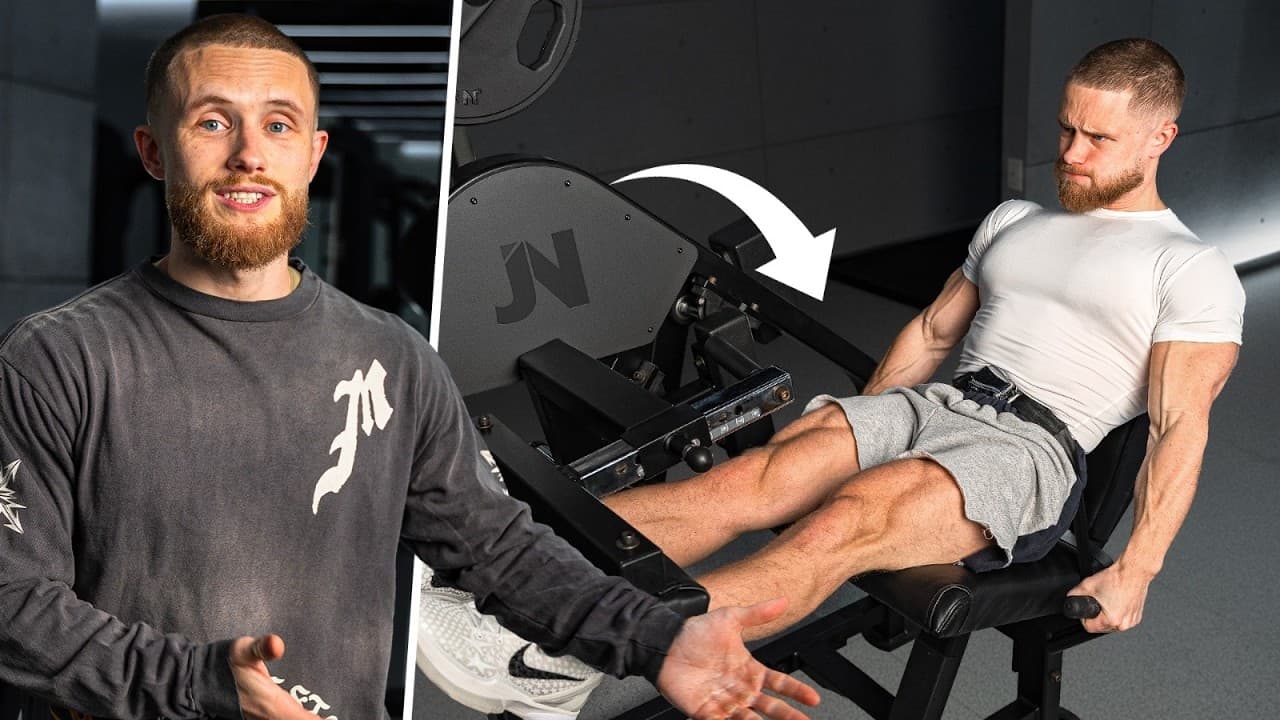
Start with leg curls to warm the knees and prioritize the hamstrings, then combine a progressively overloaded squat variation, Romanian deadlifts, leg extensions, hip abduction, and calf work. Use stable positioning, controlled depth, and complementary movement patterns, while stopping early sets one or two reps short of failure and periodically reducing the load to manage fatigue.
Transcript
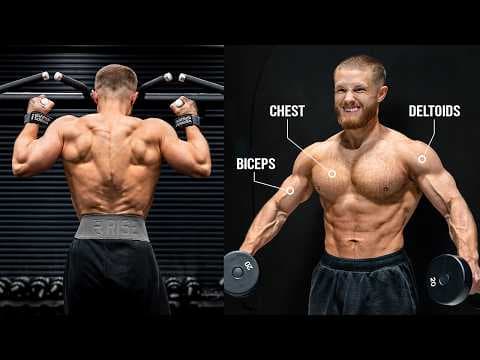
this is the exact leg workout I followed for 365 days straight no skipping and it took my legs from looking like this to this and in this video I'll show you every exercise and every technique cue that I used and I'll break down the science behind why it works so well let's get into it all year I kicked off this leg workout with lying leg curls put... Read More
Key Insights
- Lying leg curls are placed first to prioritize the hamstrings and warm the knees and surrounding soft tissues before squatting. Slight posterior-chain activation can help the glutes engage, encourage smoother knee tracking, and make subsequent squat sets feel stronger and more comfortable.
- Exercise variety is used by performing lying leg curls on one weekly leg day and seated curls on the second. A cited 12-week study found 1.6 times more hamstring growth from seated curls, while the lying version produced better growth in the sartorius.
- Lengthened partial repetitions extend the final leg-curl set after full-range repetitions become impossible. The hamstrings remain comparatively strong in the bottom half of the movement near failure, allowing productive partial repetitions while the lifter can no longer bring the pad completely upward.
- The pendulum squat is performed for three sets of six to eight repetitions and serves as the primary quadriceps builder. Its supported, arcing movement challenges the bottom position, while barbell, Smith machine, and hack squats remain suitable alternatives when they can be progressively overloaded.
- Progressive overload is the central progression method for Romanian deadlifts and squat variations. Adding a small amount of weight or an additional repetition from week to week provides a measurable way to increase training demands and support growth in the glutes, hamstrings, and quadriceps.
- Romanian deadlifts train the hamstrings through hip extension, complementing leg curls that train knee flexion. Pushing the glutes backward, maintaining a slight knee bend, keeping the bar close, and stopping before the spine rounds preserve the intended hip-hinge pattern.
- Leg extensions directly train the rectus femoris because the hips remain fixed while the knees move. A cited 2021 study found that five weeks of Smith machine squats did not grow this quadriceps head, while leg extensions did produce growth.
- Seat position and body stability affect leg-extension execution. Setting the seat back, keeping the glutes firmly planted, pulling against the handles, and optionally using a strap help direct tension into the quadriceps. A three-second lowering phase permits a strong stimulus with moderately lighter weight.
Install to Summarize YouTube Videos and Get Transcripts
Explore YouTube Video Summarizer or Get YouTube Transcript Extractor
Questions & Answers
Q: Why should leg curls come before squats?
Leg curls can come first because they prioritize a frequently neglected hamstring muscle group while warming the knees and surrounding soft tissues for heavier exercises. Slightly activating the posterior chain before squatting may help the glutes engage more effectively, support smoother knee tracking, and make the squat feel stronger. The workout specifically uses lying leg curls at the beginning for these reasons.
Q: Should I choose lying or seated leg curls?
Both variations can be included across separate leg days. The described program uses lying curls on one weekly session and seated curls on the second. A cited 12-week study found 1.6 times more hamstring growth with seated curls, but lying curls produced better sartorius growth. Using both also supplies exercise variety and may develop the legs more proportionally across different muscles and heads.
Q: How should lengthened partials be used on leg curls?
Lengthened partials are added at the end of the final set, after full-range repetitions are no longer possible. When the pad cannot be curled completely upward, continue performing repetitions through the bottom portion. This matches the hamstrings' strength curve because the lifter can remain strong in the lower half near failure even after losing the ability to complete the full movement.
Q: What can replace a pendulum squat machine?
A barbell squat, Smith machine squat, or hack squat can replace the pendulum squat if the chosen exercise can be progressively overloaded. For a more quadriceps-focused barbell squat, place the bar higher on the traps and stay upright. On Smith machine and hack squat variations, keep the feet farther back, allow the knees to travel forward, and use a deeper knee angle.
Q: How hard should pendulum squat sets be?
The workout uses three sets of six to eight repetitions. The first couple of sets should generally finish with one or two repetitions still available, preserving performance while delivering a large quadriceps stimulus. The final set can be pushed to failure. Because repeated failure training and progressive overload create substantial fatigue, the program also recommends reducing the weight during a deload week every couple of months.
Q: How do I perform Romanian deadlifts for the hamstrings?
Push the glutes straight backward to maintain a true hip hinge, keep only a slight bend in the knees, and avoid allowing the knees to drift forward. The bar should travel vertically over the middle of the foot and remain close to the body. Lower only as far as possible while maintaining a neutral spine and clear hamstring tension, rather than chasing extra depth.
Q: Why include leg extensions after squats?
Leg extensions complement squats by isolating the quadriceps and training the rectus femoris more directly. Because that muscle crosses the hip and knee, its length changes relatively little during a squat when both joints move. During a leg extension, the hips remain fixed while the knees move. A cited five-week study found rectus femoris growth from leg extensions but not Smith machine squats.
Q: How can leg extensions be made more stable and knee-friendly?
Set the seat back as far as the machine allows, keep the glutes firmly planted, and pull against the handles so the body remains locked into position. A strap or seat-belt extender can also prevent the hips from rising during difficult repetitions. Using a controlled three-second lowering phase allows the quadriceps to receive a strong stimulus with moderately lighter loads, which may reduce knee strain.
Summary & Key Takeaways
-
The workout begins with lying leg curls to prioritize the hamstrings, activate the posterior chain, and prepare the knees for squatting. Lying and seated curls are split between two weekly leg days for exercise variety. Lengthened partial repetitions extend the final set after full-range repetitions are no longer possible.
-
The main compound work uses three sets of six to eight pendulum squats, although barbell, Smith machine, or hack squats can substitute when necessary. Deep knee flexion increases tension near the bottom. Early sets retain one or two repetitions, while the final set is pushed to failure before periodic deload weeks.
-
Romanian deadlifts train hip extension and complement the knee-flexion function of leg curls. Leg extensions isolate the quadriceps, particularly the rectus femoris, after compound squatting. Hip abduction adds direct glute work, and calf work completes the six-exercise lower-body session described by the workout timestamps.
Read in Other Languages (beta)
Share This Summary 📚
Summarize YouTube Videos and Get Video Transcripts with 1-Click
Try YouTube Summary with ChatGPT & Claude or YouTube Transcript Generator
Explore More Summaries from Jeff Nippard 📚


Summarize YouTube Videos and Get Video Transcripts with 1-Click
Try YouTube Summary with ChatGPT & Claude or YouTube Transcript Generator