How Does Cryogenic Treatment Improve Drill Bit Lifespan?
TL;DR
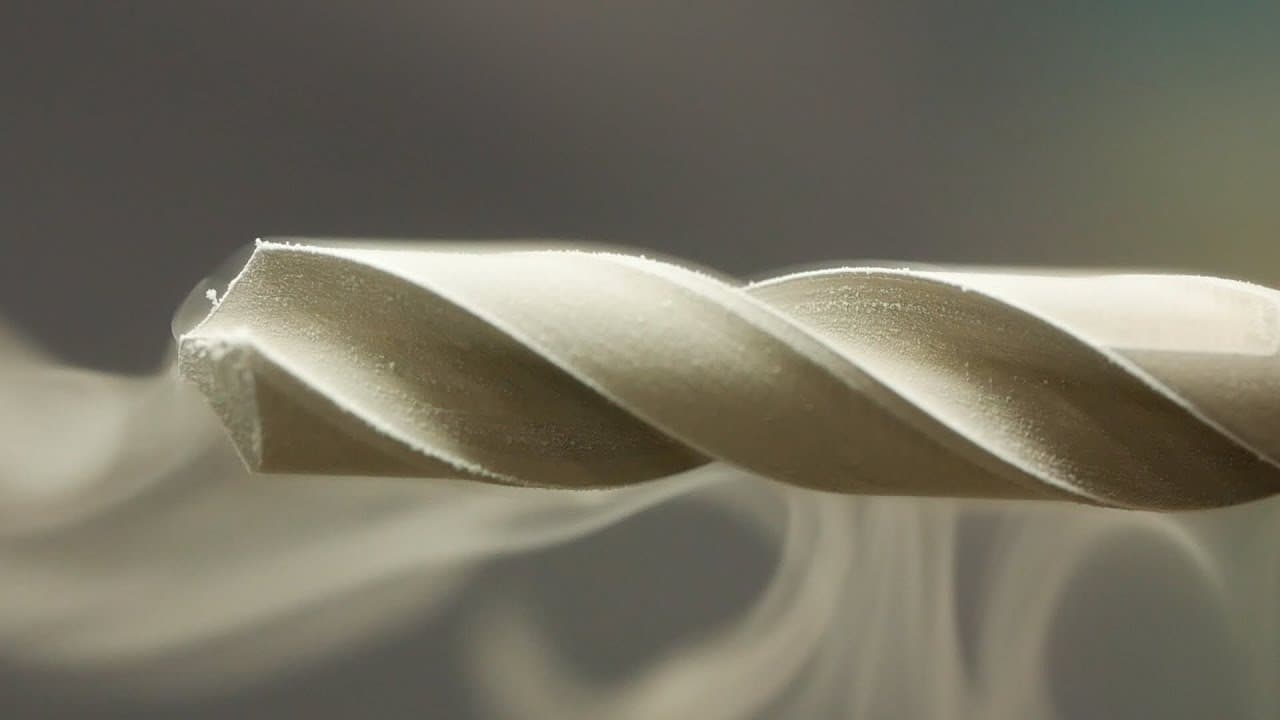
Cryogenic treatment significantly enhances the lifespan of drill bits by cooling them in liquid nitrogen, leading to an average of 60 holes drilled compared to just 32 for untreated bits. This process modifies the steel's crystalline structure, making it harder and more wear-resistant, although it may also increase brittleness.
Transcript
today on Applied Science we're gonna take a look at the process of improving drill bits by dipping them in liquid nitrogen a process known as cryogenic treatment so I'm going to show you how I did this in the shop here and then also how I tested it and then we'll also use the scanning electron microscope to take a look at the microstructure to try ... Read More
Key Insights
- 🫦 Cryogenic treatment significantly increases the durability and lifespan of drill bits, with treated bits lasting almost twice as long as untreated ones.
- 🫦 Proper surface speed is crucial for achieving optimal results with cryogenically treated drill bits.
- 💁 The cryogenic treatment process converts steel's crystalline structure to martensite, a harder but potentially more brittle form.
- 🫗 The cryogenic treatment process can be easily replicated using a cryocooler or a tank of liquid nitrogen.
- 😒 The use of nitric acid as an etchant and the creation of polished surfaces allow for the observation of the modified crystalline structure under a microscope.
- 🔨 Cryogenic treatment may not be suitable for all steel tools, as it can affect properties such as flexibility and toughness.
- 👨🔬 The cryogenic treatment process is a subject of interest and ongoing research in the field of steel metallurgy.
Install to Summarize YouTube Videos and Get Transcripts
Explore YouTube Video Summarizer or Get YouTube Transcript Extractor
Questions & Answers
Q: Why did the creator choose to test cryogenic treatment on drill bits?
The creator chose drill bits as a test subject because the torsion bar on their DeLorean, which was cryogenically treated, displayed impressive durability. Drill bits undergo similar twisting motions and require high durability.
Q: Were there any factors that could have influenced the test results?
The testing process involved a subjective failure criteria based on sound, which may introduce some variability. However, similar research papers have shown significant performance gains from cryogenic treatment of drill bits.
Q: Is cryogenic treatment suitable for all steel tools?
Cryogenic treatment can enhance the hardness and wear resistance of steel, but it may also increase brittleness. Tool manufacturers consider factors such as flexibility and specific usage requirements when deciding whether to employ cryogenic treatment.
Q: What is the process of cryogenic treatment?
Cryogenic treatment involves slowly cooling the drill bits in liquid nitrogen, holding them at low temperatures for several hours, and then slowly warming them back up.
Summary & Key Takeaways
-
The process of cryogenic treatment involves cooling drill bits in liquid nitrogen to enhance their durability and strength.
-
The cryogenically treated drill bits lasted significantly longer, with an average of 60 holes drilled compared to 32 holes for untreated bits.
-
Cryogenic treatment modifies the crystalline structure of the steel, resulting in a harder and more wear-resistant material.
Read in Other Languages (beta)
Share This Summary 📚
Summarize YouTube Videos and Get Video Transcripts with 1-Click
Try YouTube Summary with ChatGPT & Claude or YouTube Transcript Generator
Explore More Summaries from Applied Science 📚




Summarize YouTube Videos and Get Video Transcripts with 1-Click
Try YouTube Summary with ChatGPT & Claude or YouTube Transcript Generator