Why did India fall behind in nuclear power capability?
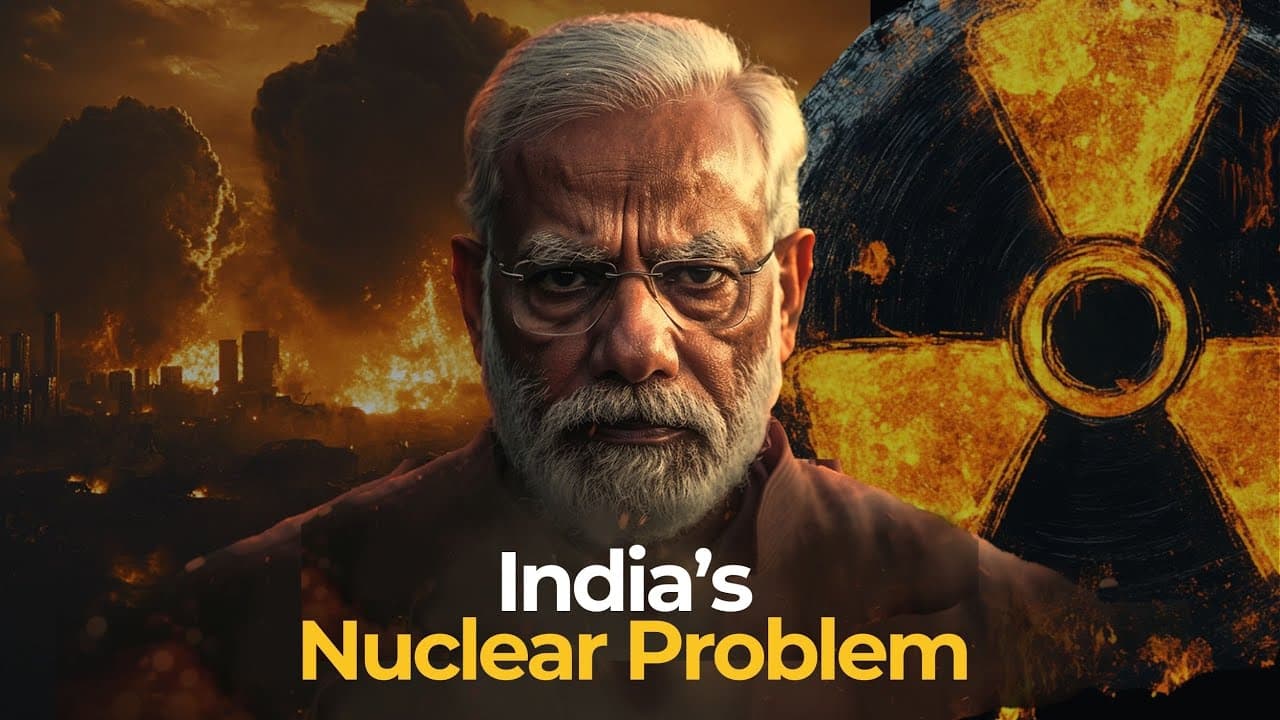
TL;DR
India fell behind in nuclear power due to slow approvals, geopolitical risk, and leadership deaths that interrupted progress, despite Homi Bhabha’s early push for a nuclear program. The video outlines India's energy needs after independence, the thorium opportunity, and the obstacles that delayed development.
Transcript
stroke of the Midnight Hour when the world sleeps India will awake to life and Freedom the year is 1947 and India had just gotten Independence and while we were taking our first breath of freedom on the other side the world had just witnessed the most horrific war in world history four years of bloody hell Hitler has committed a crime not only agai... Read More
Key Insights
- Homi Bhabha framed nuclear energy as essential for India’s energy independence and scientific leadership.
- India relied on importing uranium while possessing large thorium reserves, shaping a strategic debate over fuel sources.
- The narrative links the creation of research institutions with political backing to accelerate nuclear development.
- Pakistan and regional security concerns intensified hesitancy around pursuing aggressive nuclear programs.
- Deaths of key leaders and mysterious circumstances disrupted momentum and policy continuity.
- Economic constraints after independence amplified the urgency for a reliable, domestic energy mix.
- Global nuclear tests and geopolitical pressures influenced India’s strategic choices and timing.
- Thorium abundance in Indian coastlines positioned India as a potential long-term leader in thorium-based reactors.
Install to Summarize YouTube Videos and Get Transcripts
Explore YouTube Video Summarizer or Get YouTube Transcript Extractor
Questions & Answers
Q: A real search query question about the video (e.g. 'How to...', 'What is...', 'Why does...', 'When should...'). Question 1
How did Homi Bhabha’s vision influence India’s early nuclear research and what happened to that momentum after independence? Bhabha viewed nuclear energy as a path to energy independence and global scientific leadership, leading to partnerships with institutions like TIR and support from JRD Tata. However, political delays, approvals, funding constraints, and later mysterious deaths of leaders disrupted continuity and slowed progress, causing India to lag behind in nuclear implementation despite initial groundwork.
Q: What role did thorium play in India’s nuclear debate according to the video?
The video presents thorium as a vital, locally available resource that could reduce dependence on imported uranium. India holds a large share of the world’s thorium, especially in monazite sands along the coast. Homi Bhabha emphasized thorium as a cleaner, potentially more efficient fuel option for India, guiding discussions on long-term reactor technology and strategic energy planning, even as uranium imports complicate immediate deployment.
Q: Why is the 1947 independence period crucial to India’s nuclear story?
The 1947 independence period is crucial because India faced widespread poverty, energy scarcity, and a fragile economy just as global nuclear threats loomed. The need for energy independence and scientific self-reliance drove leaders to envision a nuclear program as a strategic national priority, shaping institutions and partnerships that would later underpin India’s nuclear ambitions, despite immediate postcolonial challenges.
Q: What impact did global nuclear testing have on India’s policy decisions in the narrative?
Global nuclear testing created a sense of urgency and strategic fear that influenced India’s policy decisions. The timeline of tests by the US, the Soviet Union, the UK, France, and China highlighted the rapid development of nuclear capabilities and pressured India to consider its own security and energy strategy. This external pressure intensified debates about fuel sources, technology, and the pace of domestic nuclear development.
Q: How did the deaths of key figures affect India’s nuclear trajectory in the video?
The deaths of Homi Bhabha and Prime Minister Lal Bahadur Shastri are presented as pivotal disruptions in the narrative. The video suggests that the lack of postmortems and incomplete investigations created gaps in policy continuity and leadership, slowing decisive action on India’s nuclear ambitions and potentially altering the country’s trajectory in energy strategy.
Q: What organizational efforts supported India’s initial nuclear ambitions?
The video highlights collaborations such as Homi Bhabha and JRD Tata working together to establish the Tata Institute of Fundamental Research and to propose new scientific institutes with backing from the Sorab Tata Trust. These efforts aimed to create a solid research ecosystem in India that could underpin a burgeoning nuclear program, despite broader political and economic hurdles.
Q: How does the video describe the energy challenge India faced after independence?
The video describes widespread poverty and energy scarcity as defining post-independence challenges. India needed a miracle to recover from economic disruption, and a nuclear program is portrayed as a strategic path to energy independence, reduce imports, and propel scientific leadership, while navigating global geopolitical dynamics and domestic political constraints.
Q: What contrasts are drawn between uranium and thorium in India’s approach?
The video contrasts reliance on imported uranium with India’s vast thorium reserves, portraying thorium as a domestically advantaged fuel option. Thorium could offer energy security, potential environmental benefits, and align with India’s resource endowment, influencing long-term strategic choices in reactor design and fuel cycles, even as practical deployment faced technical and policy hurdles.
Summary & Key Takeaways
-
India faced energy independence needs after 1947, with a large portion of the population in poverty and a weakness in energy infrastructure, which heightened the push for nuclear energy. The story links Homi Bhabha with JRD Tata and the Tata Institute of Fundamental Research to foster nuclear research, while highlighting policy and political shocks that slowed momentum.
-
The video explains how uranium imports and India’s large thorium reserves shaped the debate on nuclear strategy, suggesting thorium as a superior path for India. It also covers the deaths of key leaders and the lack of postmortems as a potential turning point in India’s nuclear trajectory.
-
It concludes that the combination of geopolitical risk, leadership transitions, and bureaucratic inertia constrained India’s ability to translate scientific vision into a robust, self-sufficient nuclear energy program, despite significant early groundwork and natural resource advantages.
Read in Other Languages (beta)
Share This Summary 📚
Summarize YouTube Videos and Get Video Transcripts with 1-Click
Try YouTube Summary with ChatGPT & Claude or YouTube Transcript Generator
Explore More Summaries from Think School 📚






Summarize YouTube Videos and Get Video Transcripts with 1-Click
Try YouTube Summary with ChatGPT & Claude or YouTube Transcript Generator