How to Understand English Jokes and Wordplay
TL;DR
Understanding English jokes requires recognizing literal and figurative meanings quickly, along with pronunciation, idioms, and cultural setups. Five puns demonstrate how phrases such as “put my foot down,” “rubbed me the wrong way,” and “make up everything” become funny when both interpretations fit the same sentence.
Transcript
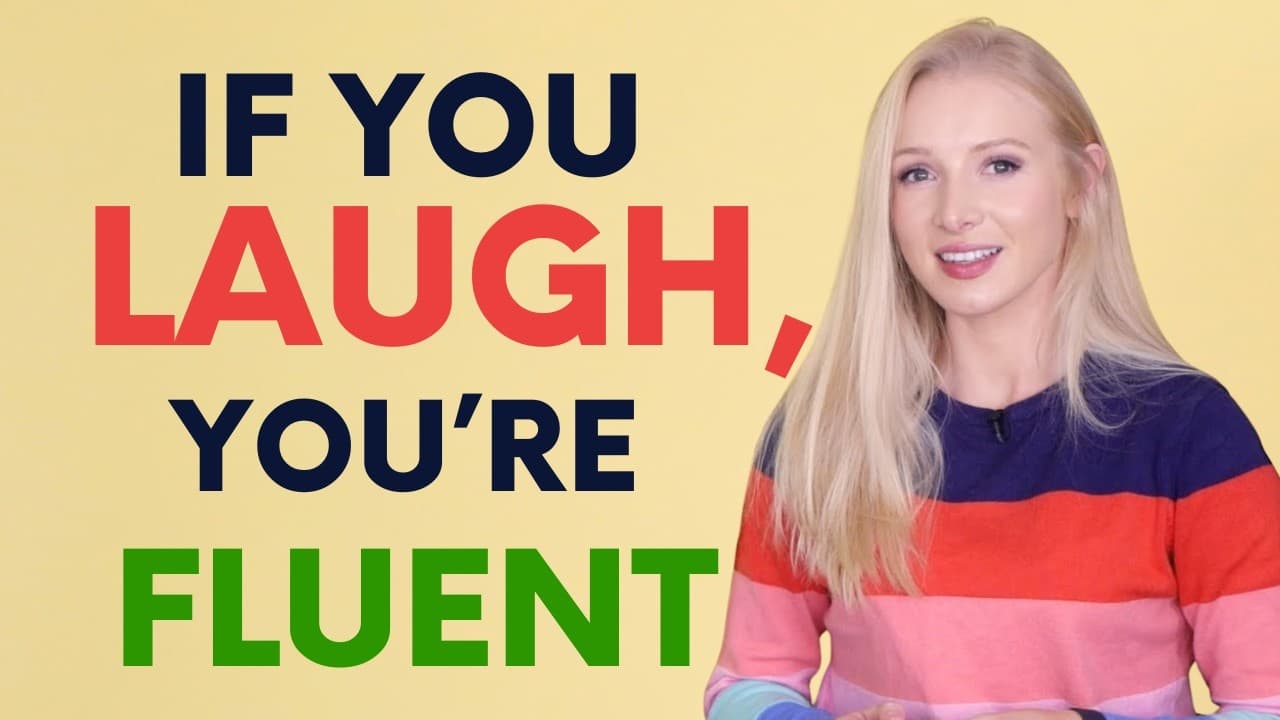
If you can understand these jokes, you are basically fluent in English. All of the jokes today rely on word play, which we use heavily in Britain. Understanding humor in a second language can be really difficult. It often depends on knowing two meanings of the same word and recalling those two meanings very quickly. Those are really advanced skills... Read More
Key Insights
- English wordplay is an advanced listening skill because it requires recognizing two meanings of the same word or phrase and recalling both quickly. Understanding the vocabulary alone may be insufficient when a joke also depends on context, pronunciation, stress, or cultural knowledge.
- “Put your foot down” has both literal and figurative meanings. A person impersonating a flamingo can literally lower a raised foot, while someone opposing an instruction can figuratively put their foot down by taking a firm position.
- “Rub somebody the wrong way” can describe unpleasant physical rubbing or emotional irritation. A masseuse may use an uncomfortable technique while also annoying a client, allowing both interpretations to explain why the client dismissed her from the job.
- The spaghetti-car joke works through matching sounds. “Drove past her” can resemble “drove pasta” when the pronunciation is adjusted, connecting the act of passing the sister in a car with the absurd idea that the vehicle is made from spaghetti.
- Pronunciation can be deliberately altered to make a pun work. The speaker explains that “past” and “pasta” need matching vowel sounds, and the h sound in “her” is dropped so the phrase can be heard as either “past her” or “pasta.”
- “Make up” can mean to constitute something or to invent something untrue. Atoms literally constitute matter, including bodies, air, water, rocks, and stars, but the joke treats their ability to “make up everything” as evidence that they lie.
- The termite joke depends on stress placement and background knowledge. A bartender is a person serving drinks, but “bar tender” asks whether the wooden bar is soft and easy to bite through, which matters because termites eat wood.
- British humor relies heavily on wordplay, including puns, irony, and sarcasm. Following this humor can help an English learner participate in conversations in the UK, but successful comprehension may require knowledge of idioms, informal contractions, familiar joke structures, and accent differences.
Install to Summarize YouTube Videos and Get Transcripts
Explore YouTube Video Summarizer or Get YouTube Transcript Extractor
Questions & Answers
Q: How can English learners understand jokes and puns?
English learners can understand jokes and puns by looking for words or phrases that support two interpretations. One meaning may be literal, while the other is figurative, idiomatic, or based on a similar sound. Learners should also notice pronunciation, sentence stress, cultural setups, and contextual clues that make both interpretations possible at the same time.
Q: Why is understanding humor difficult in a second language?
Understanding humor in a second language is difficult because wordplay often requires a listener to know two meanings of one expression and recall them very quickly. Some jokes also depend on idioms, accent differences, omitted sounds, scientific knowledge, or familiar cultural formats. These combined demands make humor comprehension an advanced language skill.
Q: What does “put your foot down” mean in the flamingo joke?
“Put your foot down” has two relevant meanings in the flamingo joke. Literally, someone standing on one leg while impersonating a flamingo must lower the raised foot to the ground. Figuratively, the expression means to oppose someone or something firmly, so the person can also be understood as refusing the wife’s instruction to stop.
Q: What does “rub somebody the wrong way” mean?
“Rub somebody the wrong way” means to annoy someone or make that person feel uncomfortable. In the masseuse joke, it also refers literally to being rubbed with an unpleasant or incorrect massage technique. British English commonly adds “up” and says “rub somebody up the wrong way,” although the shorter version makes the joke work more effectively.
Q: How does the spaghetti car joke use pronunciation?
The spaghetti-car joke makes “drove past her” sound like “drove pasta.” Because spaghetti is a type of pasta, the second interpretation suggests that the speaker drove a vehicle made from pasta. The vowel sounds in “past” and “pasta” must be matched, and the h in “her” is dropped to strengthen the similarity.
Q: Why do scientists not trust atoms in the joke?
Scientists do not trust atoms because they “make up everything.” The first meaning is that atoms constitute matter, including bodies, air, water, rocks, and stars. The second meaning is that they invent things or lie, as when someone makes up a false story. The joke treats a scientific fact as evidence of dishonesty.
Q: What makes the termite and bartender joke funny?
The termite joke becomes funny when “bartender” is reinterpreted as “bar tender.” A bartender is a person who works behind a bar and serves drinks. However, tender can also describe food that is soft and easy to bite through. Because termites eat wood, the insect may actually be asking whether the wooden bar is easy to eat.
Q: What language skills do English wordplay jokes test?
English wordplay jokes test vocabulary, idiom recognition, listening speed, pronunciation awareness, and the ability to hold two meanings in mind. They may also test knowledge of informal speech, such as “should’ve,” familiar joke setups, and contextual facts, such as flamingos standing on one leg, atoms constituting matter, or termites eating wood.
Summary & Key Takeaways
-
English wordplay often depends on one expression carrying two meanings simultaneously. The flamingo joke contrasts physically lowering a raised foot with firmly opposing a request, while the masseuse joke connects literal rubbing during a massage with the figurative meaning of annoying someone or making that person uncomfortable.
-
The spaghetti-car joke uses similar sounds rather than identical meanings. “Drove past her” can be made to sound like “drove pasta,” with pronunciation adjusted so the words match. The joke also uses the familiar expression “you should have seen her face” to suggest a shocked or amazed reaction.
-
The final jokes require scientific knowledge and sensitivity to spoken stress. Atoms “make up everything” because they constitute matter, but the phrase can also mean inventing lies. In the termite joke, shifting stress changes “bartender,” a person serving drinks, into a question about whether the wooden bar is tender enough to eat.
Read in Other Languages (beta)
Share This Summary 📚
Summarize YouTube Videos and Get Video Transcripts with 1-Click
Try YouTube Summary with ChatGPT & Claude or YouTube Transcript Generator
Explore More Summaries from English with Lucy 📚



Summarize YouTube Videos and Get Video Transcripts with 1-Click
Try YouTube Summary with ChatGPT & Claude or YouTube Transcript Generator