Why Do People Quit Posting on Social Media?
TL;DR
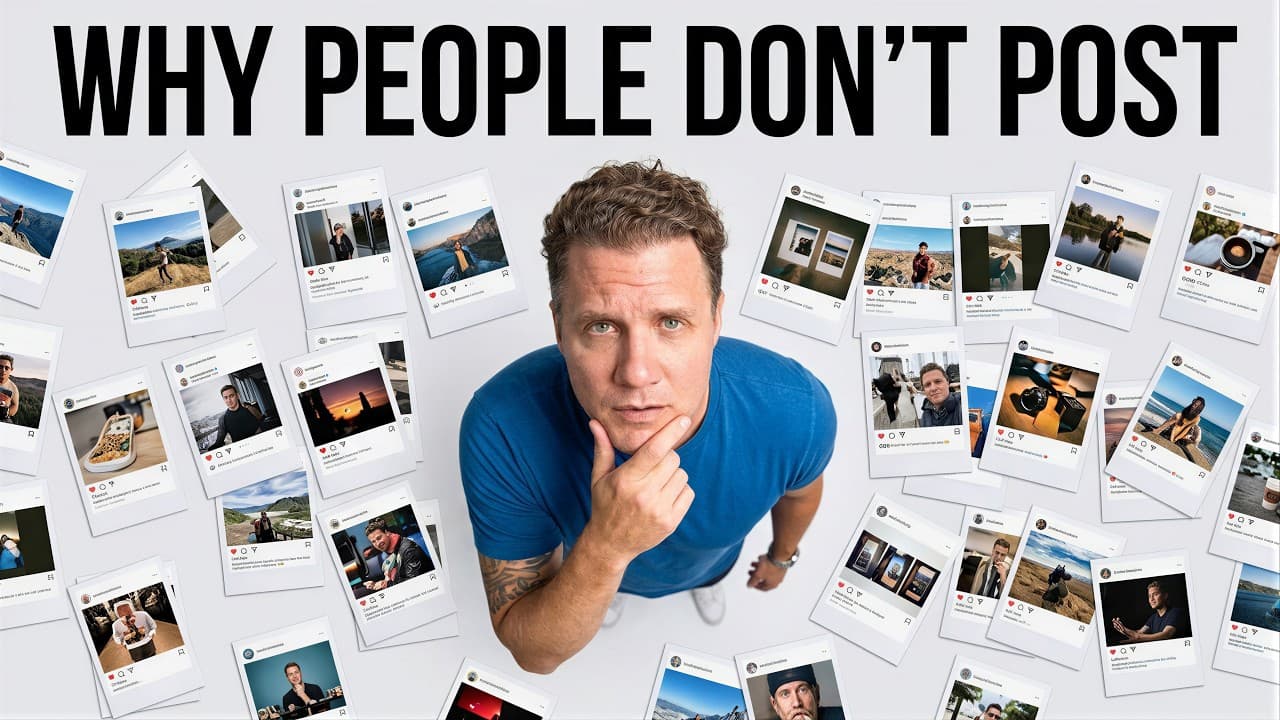
People often stop posting because taking photos disrupts their presence, online comparison worsens insecurity, and social platforms tend to suit extroverted behavior. Leaving can reduce exposure to other people's highlight reels and replace fear of missing out with joy in focusing on immediate experiences, although photos and videos can still preserve valuable memories.
Transcript
There's a certain type of person in the world who goes on an incredible vacation or eats an unbelievable meal or has a big birthday party and then doesn't post any of it online. The only proof that it ever happened was that they tell you about it in person. I mean, if somebody has a birthday party and doesn't post about it on Instagram, did it ever... Read More
Key Insights
- Photographing an experience is a tradeoff between presence and preservation. Stopping for several pictures, formats, lenses, and angles can interrupt attention and flow, yet the resulting photos and videos may become cherished records of experiences after many years.
- Social comparison is presented as a major reason people disengage from social media. The mind continually evaluates social standing, but online platforms vastly expand the number of people available for comparison beyond those encountered in ordinary, face-to-face life.
- Online comparison is structurally uneven because users see other people's selected highlights while living through their own routine moments. This contrast can make ordinary life feel inadequate, especially when someone treats curated online content as an accurate representation of how everyone lives.
- Social media affects different people in different ways. The transcript says some users become happier while others become miserable, suggesting that the medium does not produce one uniform psychological outcome across every personality, habit, or pattern of use.
- Social media can amplify existing personal tendencies rather than simply turning a happy person into an unhappy one. People already prone to insecurity, compulsive comparison, obsessiveness, narcissism, appearance concerns, or status anxiety may therefore experience its most unpleasant effects.
- Social platforms tend to attract greater engagement from extroverted and social people, according to the video's account of the data. Highly introverted people may feel less deprived when leaving because online connection carries less value for them than it does for more socially oriented users.
- Fear of missing out grows when constant online exposure makes people repeatedly aware of what others are doing. Reducing that exposure can produce the opposite response, described as the joy of missing out, because attention returns to one's own immediate activities.
- A digital detox is proposed as a practical experiment for people who feel chronically online and distressed. Deleting social apps or using a basic phone for a couple of weeks can reveal whether reduced access improves presence and weakens the urge to monitor others.
- More videos from this channel:
- More from this channel: Mark Manson
Install to Summarize YouTube Videos and Get Transcripts
Explore YouTube Video Summarizer or Get YouTube Transcript Extractor
Questions & Answers
Q: Why do some people stop posting photos on social media?
Some people stop posting because photographing and sharing experiences interrupts their ability to remain present. Others want relief from constant social comparison, curated highlight reels, appearance concerns, and perceived status competition. Introverted users may also feel little loss when leaving online interaction, while reduced exposure can make it easier to focus on their immediate lives.
Q: How can taking photos interfere with enjoying an experience?
Taking a photo can pull attention away from an experience and toward documenting it. The interruption may expand as someone tries different angles, vertical and horizontal formats, zoom levels, or lenses. For a person who values presence and flow, this process can feel disruptive, even when the resulting image is beautiful and later becomes a valuable memory.
Q: Is taking photos still worthwhile if it reduces presence?
Taking photos can still be worthwhile because images and videos preserve experiences that might otherwise lack a lasting visual record. The transcript presents this as a devil's bargain: documentation interrupts the present moment, but those records can become deeply appreciated as years pass. The value depends on balancing immediate attention with the desire to remember later.
Q: Why does social media encourage unfair social comparison?
Social media shows users selected highlights from enormous numbers of people while each user remains aware of every routine part of their own life. That creates an unequal comparison between polished moments and an ordinary daily experience. The problem becomes stronger when someone assumes that online posts accurately represent what other people's lives are generally like.
Q: Does social media make everyone less happy?
Social media does not affect everyone in the same way, according to the transcript's discussion of research. Some people benefit from using it and become happier, while others become miserable. The argument is that platforms often amplify existing traits and sensitivities, including insecurity, social comparison, obsessiveness, narcissism, appearance concerns, and anxiety about social ranking.
Q: Why might introverts find it easier to quit social media?
Introverted people may find quitting easier because they do not feel that they are losing as much online social interaction. The transcript says social media engagement tends to favor extroverted and highly social people. If an introverted user is also bothered by comparison, leaving can remove an irritation without creating an equally strong feeling of lost connection.
Q: What is the joy of missing out on social media?
The joy of missing out is the relief of not having to know what everyone else is doing. It contrasts with fear of missing out, which can grow through repeated exposure to other people's activities online. By disengaging, a person can direct attention toward present experiences and enjoy freedom from continuously monitoring other people's lives.
Q: How can someone try a social media digital detox?
A person can test a digital detox by deleting social media apps from their phone and stepping away from online feeds. The transcript also suggests buying a basic burner phone and using it for a couple of weeks. This experiment can show whether reduced access lowers distress, limits comparison, improves presence, and creates greater enjoyment of missing out.
Summary & Key Takeaways
-
Taking and posting photos creates a tradeoff between preserving memories and remaining present. Stopping to capture multiple angles can interrupt an experience or break a flow state. At the same time, a personal archive of photos and videos may become more valuable as years pass, even to someone who initially disliked creating it.
-
Social media exposes users to the curated highlights of millions of people while they experience every ordinary part of their own lives. According to the video's argument, this unequal comparison can amplify existing insecurity, concern about appearance, sensitivity to status, obsessiveness, or narcissism rather than producing the same psychological effect in everyone.
-
Introverted people may find it easier to leave social platforms because they feel less deprived of online interaction. Reducing exposure can also lessen fear of missing out and create joy in not tracking everyone else. The suggested experiment is a digital detox involving deleted apps or a basic phone for a couple of weeks.
Read in Other Languages (beta)
Share This Summary 📚
Summarize YouTube Videos and Get Video Transcripts with 1-Click
Try YouTube Summary with ChatGPT & Claude or YouTube Transcript Generator
Explore More Summaries from Mark Manson 📚

Summarize YouTube Videos and Get Video Transcripts with 1-Click
Try YouTube Summary with ChatGPT & Claude or YouTube Transcript Generator