How to Grow a Personal Brand by Fixing Bottlenecks
TL;DR
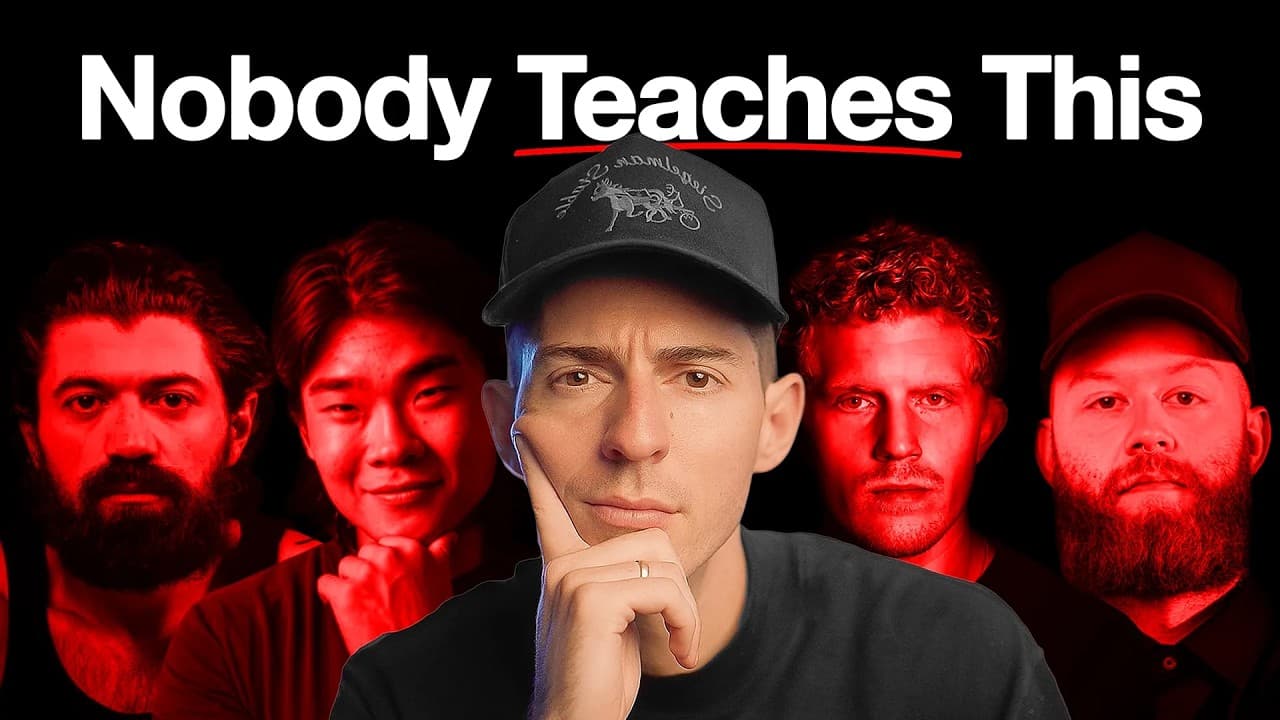
Build expertise first, then concentrate your content effort on high-leverage ideas, especially topics and angles grounded in contrarian insights. Break each workflow into components, identify its largest constraint, and allocate time accordingly. To prevent intelligence from turning into overthinking, limit deliberation with a short decision clock and begin acting while mistakes are still inexpensive to reverse.
Transcript
Three years ago today, I quit my job to go full-time as an entrepreneur. And I really only had one goal. I wanted to become insanely good at making content and eventually build a super valuable personal brand. Now, my highest conviction bet back then was that personal brands would become the single greatest business moat you could possibly build. A... Read More
Key Insights
- Bottleneck theory is the practice of dividing a workflow into component parts, finding the highest-leverage constraint, and directing most time toward it. The creator presents this approach as the central principle behind his work in content, personal branding, and business.
- Most activities are lower leverage than they appear, according to the creator's experience. He argues that only a few tasks meaningfully move a project toward its desired result, so productive time allocation requires resisting work that feels useful but does not address the main constraint.
- A video's idea is primarily determined by its topic and angle. The creator considers these components capable of producing dramatically different view counts with relatively little additional effort, while format, scripting, storytelling, visuals, audio, and editing generally have less leverage over the outcome.
- A winning content idea can perform across different formats, script structures, and editing styles. A losing idea is unlikely to perform well even when its hook, format, story structure, and editing are executed carefully, which makes idea development the priority in the content workflow.
- A personal brand is defined as expertise or association at scale, shared through content. Expertise must therefore come before publishing for someone starting without established knowledge, while an experienced professional can treat expertise as solved and focus on the next bottleneck, creating effective content.
- Contrarian insights are created by identifying an audience's common beliefs, listing why those beliefs may be untrue, and articulating what is true instead. This contrast supplies the angle for an idea and gives the creator a systematic route from expertise to differentiated content.
- The recommended order for building a personal brand is expertise, contrarian insights, ideas and angles, formats, and attention-grabbing hooks. This sequence follows bottleneck theory by solving foundational constraints before spending substantial effort on downstream execution details.
- The smart kid problem is a tendency for intelligent people to think longer instead of acting. The proposed safeguard is a decision shot clock: beginners should deliberate for about five minutes, while the creator personally limits any single decision to fifteen minutes, then begins acting.
Install to Summarize YouTube Videos and Get Transcripts
Explore YouTube Video Summarizer or Get YouTube Transcript Extractor
Questions & Answers
Q: How do you apply bottleneck theory to content creation?
Break content creation into its component parts: topic, angle, format, hook, substance, call to action, story structure, visual layout, visuals, and audio. Then determine which component has the greatest effect on results. The creator identifies the topic and angle, together forming the idea, as the highest-leverage area and recommends spending most planning time there before distributing effort across the remaining tasks.
Q: What matters most when trying to grow a content audience?
The content idea matters most, particularly its topic and angle. According to the creator, a winning idea can work with many formats, script structures, or editing styles, while excellent execution usually cannot rescue a losing idea. Someone seeking faster follower growth should therefore devote disproportionate time to developing and testing stronger ideas instead of letting lengthy scripting or editing absorb most of the schedule.
Q: How should a beginner start building a personal brand?
A beginner should first develop real expertise in a subject that can support the personal brand. The creator defines a personal brand as expertise or association at scale shared through content, so publishing without knowledge leaves the foundation unresolved. Once expertise exists, the next priority is turning that knowledge into contrarian insights and strong ideas, followed by formats, hooks, and other execution elements.
Q: How can an expert professional build a personal brand?
An experienced professional already possesses the expertise needed to support a personal brand. The transcript uses an accountant with fifteen years of experience as an example of someone whose expertise bottleneck is solved but who may know little about content. That person should move to the content workflow, prioritize idea development, and then translate distinctive insights into suitable formats, hooks, scripts, visuals, and audio.
Q: How do you create contrarian insights for content?
Start by identifying the common beliefs held by the core viewer. Next, write down every reason you believe those assumptions are untrue, then state what you believe is true instead. The contrast between the accepted belief and the alternative conclusion produces a contrarian insight. That insight can supply the angle for a stronger idea before work begins on formats, hooks, storytelling, or editing.
Q: Why can polished editing fail to make a video successful?
Polished editing addresses a downstream component rather than the video's highest-leverage input. The creator argues that a weak topic and angle remain weak even when the hook, format, story structure, and edit are executed well. Editing can improve presentation, but it is unlikely to compensate for an idea that lacks appeal. Time should therefore be concentrated on the idea before production details receive attention.
Q: What is the smart kid problem in entrepreneurship?
The smart kid problem is the tendency of intelligent people to trust their thinking ability and spend too much time deliberating instead of doing. The creator does not argue that being less intelligent is preferable. He argues that intelligent people need guardrails against overthinking because delayed action can be more harmful than choosing an imperfect path, learning from it, and retracing a few steps if necessary.
Q: How long should a beginner spend making a decision?
A beginner should use a five-minute shot clock for decisions, according to the creator's recommendation. When those five minutes end, the person should choose a direction and start acting. The reasoning is that early decisions usually involve smaller consequences than beginners imagine, and a wrong choice can often be corrected by retracing several steps. The creator personally allows no more than fifteen minutes for one decision.
Summary & Key Takeaways
-
The creator attributes growth to more than two million followers, billions of content views, two personal brands, and three businesses reaching millions in revenue to an unusual approach to content and entrepreneurship. The central method is to deconstruct every workflow and spend most available time on its highest-leverage component or largest bottleneck.
-
For content creation, the workflow includes the topic, angle, format, hook, substance, call to action, story structure, visual layout, visuals, and audio. Topic and angle form the core idea and carry the greatest leverage. A strong idea can survive ordinary execution, while polished production rarely rescues a fundamentally weak idea.
-
Personal branding begins with genuine expertise because content without expertise is likely to fall flat. Once expertise exists, identify the audience's common beliefs, explain why those beliefs may be wrong, and state what is true instead. These contrarian insights produce stronger angles, after which the creator can address formats, hooks, and later production stages.
Read in Other Languages (beta)
Share This Summary 📚
Summarize YouTube Videos and Get Video Transcripts with 1-Click
Try YouTube Summary with ChatGPT & Claude or YouTube Transcript Generator
Explore More Summaries from Kallaway 📚
Summarize YouTube Videos and Get Video Transcripts with 1-Click
Try YouTube Summary with ChatGPT & Claude or YouTube Transcript Generator