How to Beat Social Media Algorithms for More Views
TL;DR
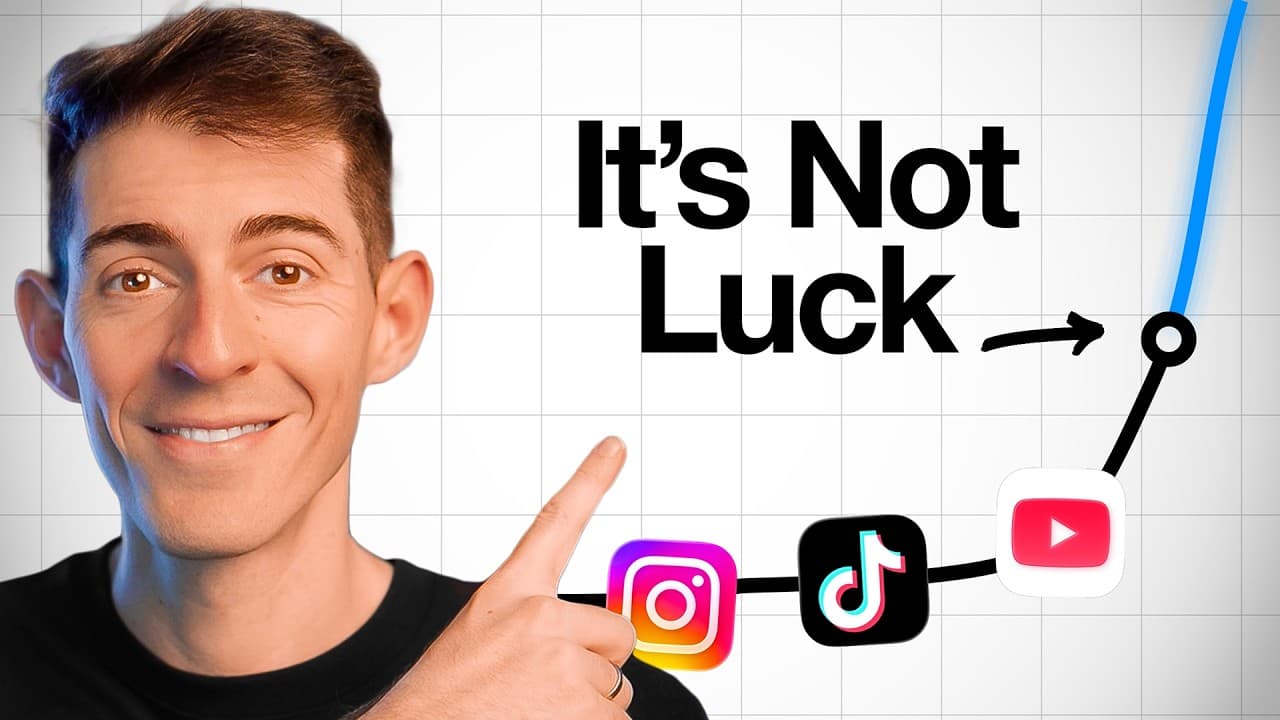
Social media algorithms aim to keep users engaged by matching them with content they enjoy. To leverage this, creators should focus on building a consistent audience by narrowing their content topics and ensuring high engagement through relevant, non-obvious, and actionable content. This targeted approach helps algorithms push content to more viewers.
Transcript
Today we're talking about the social media algorithm. If you want to get more views with less effort, it's critical you understand how the algorithms actually work. And once you learn this, I guarantee you will never look at content the same way again. In this video, I'm going to break down how social algorithms work, why they pick certain videos t... Read More
Key Insights
- Social media algorithms are designed to keep users engaged by matching them with content they enjoy.
- Algorithms analyze videos using computer vision, audio fingerprinting, and metadata to create topic mappings.
- Initial testing involves showing content to a small group of non-followers to gauge interest.
- Positive feedback from this group leads to broader distribution, while negative feedback limits reach.
- Consistency in content topics helps algorithms identify target audiences, improving fit scores.
- High engagement rates are critical for algorithmic success, focusing on watch time and interaction.
- Relevant, non-obvious, and actionable content increases viewer engagement and algorithmic favor.
- Controversial or emotionally charged content can drive more comments, boosting algorithmic reach.
Install to Summarize YouTube Videos and Get Transcripts
Explore YouTube Video Summarizer or Get YouTube Transcript Extractor
Questions & Answers
Q: How do social media algorithms work?
Social media algorithms work by analyzing content to match it with users who are likely to enjoy it, thereby increasing engagement. They use computer vision, audio fingerprinting, and metadata to understand the content and create topic mappings. Initial testing involves showing the content to a small group of non-followers to gauge interest, with positive feedback leading to broader distribution.
Q: How can I make social media algorithms favor my content?
To make algorithms favor your content, focus on creating consistent content topics that align with a specific audience. This helps the algorithm build accurate fit scores for your content. Additionally, ensure your content is relevant, non-obvious, and actionable to boost engagement rates, which are critical for gaining algorithmic favor and expanding reach.
Q: Why is consistency important for social media content?
Consistency in social media content is important because it helps algorithms identify and target the right audience for your content. By consistently focusing on specific topics, you enable the algorithm to build accurate fit scores, improving the chances of your content being shown to users who are likely to engage with it, thus expanding your reach.
Q: What role does engagement play in social media algorithms?
Engagement plays a crucial role in social media algorithms as it signals content quality and viewer interest. High engagement rates, including watch time and interactions like comments and shares, indicate that a piece of content is successful in capturing audience interest, prompting the algorithm to promote it to a broader audience.
Q: How can I increase engagement on my social media content?
To increase engagement, create content that is relevant to your audience, offers non-obvious insights, and provides actionable steps. Additionally, take a strong stance or evoke emotions to encourage comments and interactions. These strategies help boost engagement rates, signaling to algorithms that your content is worth promoting.
Q: What is the initial sample test group in social media algorithms?
The initial sample test group is a small set of approximately 200 users, primarily non-followers, to whom the algorithm first shows a piece of content. This group is used to gauge the content's appeal and potential for broader distribution. Positive feedback from this group can lead to wider exposure, while negative feedback can limit reach.
Q: Why do social media algorithms prioritize non-followers in initial tests?
Social media algorithms prioritize non-followers in initial tests to assess the content's appeal beyond the creator's existing audience. This approach helps determine if the content can attract new viewers and engage a broader audience, which is crucial for the algorithm to decide whether to promote the content more widely.
Q: How can controversial content affect social media engagement?
Controversial content can significantly affect social media engagement by provoking strong reactions, leading to increased comments and interactions. Taking a clear stance or presenting a contrarian view can drive discussions and debates, enhancing the content's visibility and encouraging the algorithm to promote it to a wider audience due to the heightened engagement.
Summary & Key Takeaways
-
Social media algorithms function by matching users with content they are likely to enjoy, thereby increasing platform engagement. To exploit this, creators should focus on consistent content topics to help algorithms identify target audiences more effectively. High engagement through relevant and actionable content is crucial for gaining algorithmic favor and expanding reach.
-
The algorithm initially tests content with a small, non-follower audience to determine broader appeal. Positive responses lead to wider distribution, while negative feedback restricts exposure. Consistency in content topics aids in audience matching, improving the algorithm's ability to predict viewer interest.
-
Creators can boost engagement by producing content that is relevant, non-obvious, and actionable, thus increasing the likelihood of algorithmic promotion. Additionally, taking a strong stance or evoking emotions can drive more comments, further enhancing algorithmic reach and audience engagement.
Read in Other Languages (beta)
Share This Summary 📚
Summarize YouTube Videos and Get Video Transcripts with 1-Click
Try YouTube Summary with ChatGPT & Claude or YouTube Transcript Generator
Explore More Summaries from Kallaway 📚
Summarize YouTube Videos and Get Video Transcripts with 1-Click
Try YouTube Summary with ChatGPT & Claude or YouTube Transcript Generator