How to Choose the Best Exercises for Chest Growth
TL;DR
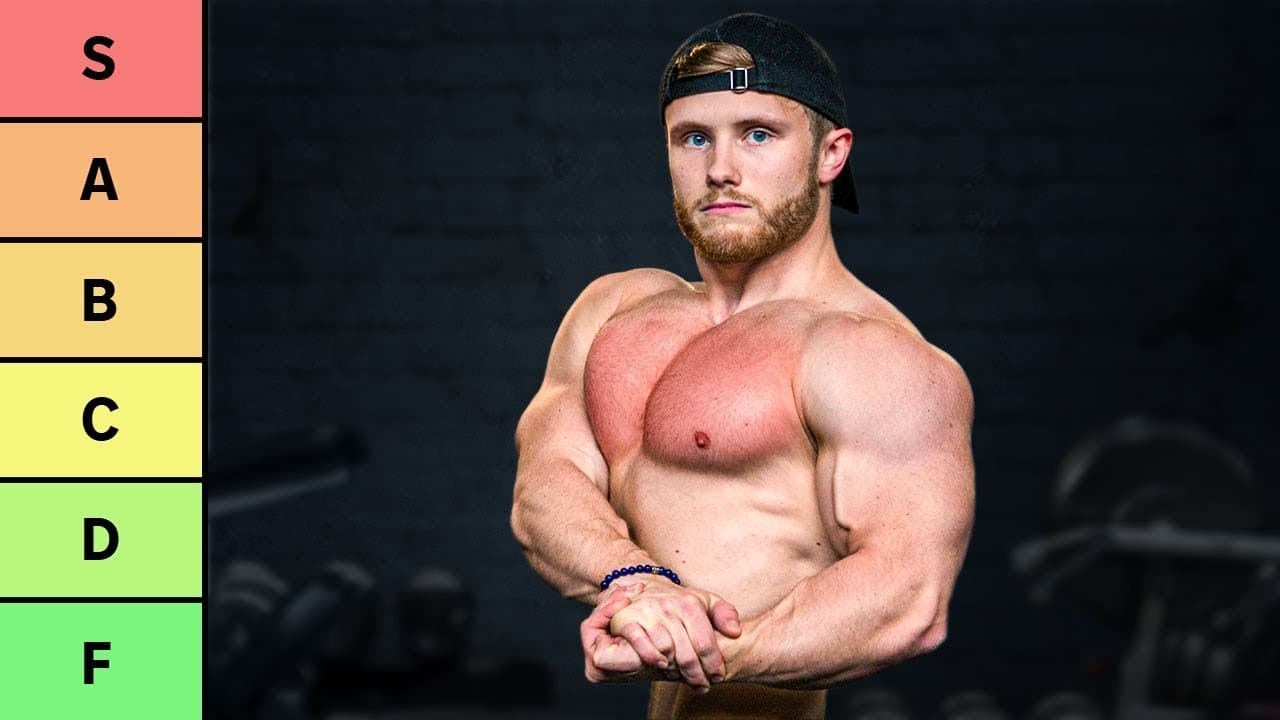
Choose chest exercises that load the pecs under high tension in a deep stretch, feel smooth and pain-free, and allow straightforward progressive overload. The machine chest press earns S tier because it combines these qualities with stability and safer failure training, while hex presses, plate presses, and barbell guillotine presses receive F rankings for limited stretch, poor overload potential, or unnecessary risk.
Transcript
what are the best and worst chest exercises for muscle growth well for a chest movement to rank highly it needs to tick three boxes one a big stretch with high tension if it doesn't offer high tension in a deep stretch I'm putting in an F tier no exceptions two it needs to feel good it shouldn't cause pain and it should have a smooth resistance pro... Read More
Key Insights
- Effective chest exercises combine high tension with a deep pec stretch. A movement that fails to challenge the chest strongly in the stretched position is placed in F tier under the ranking system, regardless of its popularity or theoretical appeal.
- Progressive overload is a central requirement for chest growth. Exercises rank more favorably when trainees can consistently add weight or repetitions, while movements become less attractive when resistance is unstable, equipment limits progression, or stronger lifters struggle to handle increasingly bulky dumbbells.
- The machine chest press is an S-tier muscle-building exercise when the machine provides a deep stretch and strong tension. Its fixed setup can improve chest focus, simplify weekly progression, create a substantial pump, and make training to failure safer than with free weights.
- The incline bench press can emphasize the upper pecs without sacrificing mid or lower pec development. The cited comparison found the same growth in the mid and lower regions as the flat bench press, alongside better growth in the upper region.
- Dumbbell presses provide a deeper pec stretch than barbell presses because the dumbbells can travel beyond the rib cage. Their primary limitation appears at advanced strength levels, when gym weight limits and large, awkward dumbbells make continued overload more difficult.
- Dips offer a particularly deep pec stretch, high tension, and several progression methods. Trainees can reduce assistance, add repetitions, slow the negative, or attach external weight, although shoulder irritation and a less smooth movement feel keep dips below S tier.
- Deficit push-ups improve chest training by allowing a deeper stretch than floor push-ups. They remain somewhat difficult to overload, but pausing for 2 to 3 seconds at the bottom can increase difficulty and makes them the preferred push-up variation in the ranking.
- The barbell guillotine press can stretch the pecs more than other discussed barbell presses, but its hazard outweighs potential marginal gains. Lowering a bar toward the neck creates a severe consequence if the weight is dropped, resulting in an F-tier ranking.
Install to Summarize YouTube Videos and Get Transcripts
Explore YouTube Video Summarizer or Get YouTube Transcript Extractor
Questions & Answers
Q: What makes a chest exercise effective for muscle growth?
An effective chest exercise should create high tension while the pecs are deeply stretched, feel comfortable through a smooth resistance profile, and support straightforward progressive overload. A good pump and clear mind-muscle connection are additional advantages. Movements rank poorly when they provide little stretch, cause pain, shift the limiting effort toward another muscle, or make adding weight and repetitions unnecessarily difficult.
Q: What is the best chest exercise in the ranking?
The machine chest press is the first exercise awarded S tier in the provided discussion. A good machine can place the pecs in a deep stretch, maintain high tension throughout the movement, and provide enough stability to improve chest focus and produce a substantial pump. It also makes adding weight or repetitions simple and can be safer to push to failure than free-weight presses.
Q: Why is the barbell bench press ranked below S tier?
The barbell bench press provides high pec tension when the bar is lowered fully to the chest, and it supports simple long-term loading. However, the bar stops against the rib cage, preventing the deeper stretch available with dumbbells. Some trainees also report shoulder discomfort or limited pec activation, so the exercise is placed in A tier despite its strong muscle-building potential.
Q: Is incline bench pressing better than flat bench pressing for chest growth?
The incline bench press receives the same A-tier ranking as the flat bench press while placing slightly more emphasis on the upper pecs. A cited study found that incline pressing produced the same mid and lower pec growth as flat pressing, plus better upper pec growth. This challenges the belief that using an incline necessarily compromises development in the other chest regions.
Q: Why are dumbbell presses effective for building the chest?
Dumbbell presses allow the hands and arms to move beyond the rib cage, creating a deeper pec stretch than a barbell permits. They also feel comfortable and can produce a strong chest pump. Beginners and intermediate trainees can progress by adding repetitions or weight, but advanced lifters may encounter limited dumbbell availability and increasingly awkward equipment as their strength rises.
Q: Are dips good for chest muscle growth?
Dips are strongly recommended because they create a massive pec stretch, provide high tension, and offer several progression routes. A trainee can reduce assistance, add bodyweight repetitions, slow the negative phase, or use a weight belt for external resistance. They receive an A-tier rather than S-tier ranking because some people experience shoulder irritation and the movement may not feel especially smooth.
Q: How can push-ups be improved for chest growth?
Deficit push-ups improve standard push-ups by allowing the chest to descend farther and placing the pecs in a deeper stretch. Progression is still less direct than with loaded presses, but a 2 to 3 second pause in the bottom position can make the exercise more challenging. Standard push-ups become inefficient when stronger trainees require more than 30 repetitions to approach failure.
Q: Why is the guillotine press ranked in F tier?
The guillotine press can stretch the pecs more deeply than the other barbell presses discussed, and some trainees may perform it without shoulder discomfort. However, it requires lowering the bar toward the neck, making a dropped bar potentially catastrophic. The ranking therefore places it in F tier because the safety hazard is not justified by any marginal muscle-building advantage it may provide.
Summary & Key Takeaways
-
Chest exercises are judged by three muscle-building criteria: high tension while the pecs are deeply stretched, a comfortable and smooth resistance profile, and simple progressive overload through additional weight or repetitions. Exercises lose value when other muscles limit performance, the chest receives little stretch, or progression becomes awkward as strength increases.
-
The machine chest press receives the strongest ranking in the provided discussion because it can create a deep stretch, maintain tension, improve chest focus, produce a strong pump, and support reliable progression. Barbell, dumbbell, and incline presses remain highly recommended, although shoulder comfort, equipment limits, or reduced stretch prevent S-tier placement.
-
Exercise selection depends partly on individual comfort and training context. Dips provide exceptional stretch but may bother some shoulders, while deficit push-ups improve the limited range of standard push-ups. Hex presses, plate presses, pullovers, plyometric push-ups, and barbell guillotine presses rank poorly because of inadequate stretch, weak chest sensation, or safety concerns.
Read in Other Languages (beta)
Share This Summary 📚
Summarize YouTube Videos and Get Video Transcripts with 1-Click
Try YouTube Summary with ChatGPT & Claude or YouTube Transcript Generator
Explore More Summaries from Jeff Nippard 📚

Summarize YouTube Videos and Get Video Transcripts with 1-Click
Try YouTube Summary with ChatGPT & Claude or YouTube Transcript Generator