How to Master 15 Everyday English Phrases
TL;DR
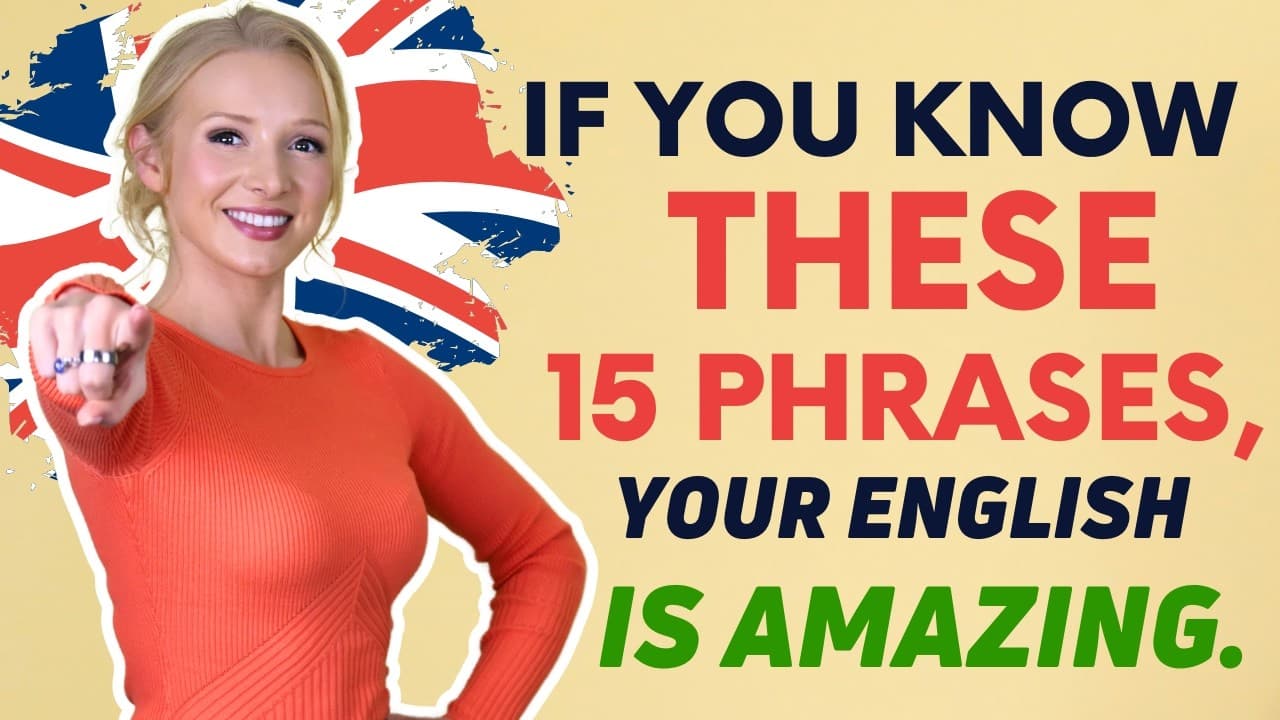
Master these 15 everyday English phrases by understanding when and why proficient speakers use them, from “in hindsight” for looking back clearly to “how come” for asking why casually. The quiz also covers natural ways to estimate, reject ideas, change topics, soften criticism, and reassure someone. Read on for specific meanings, examples, and guidance on using the phrases naturally.
Transcript
Hello, lovely students, and welcome excited about today's lesson because Today, we're going to discuss proficient English speakers use daily. But I'm not just going to give we're going to do it in the form of a quiz. I will give you part of a sentence and you'll have a few seconds Then I'll explain the full phrase and This way, you're not just you'... Read More
Key Insights
- Proficient English speakers use certain phrases daily to sound more natural.
- The phrase 'in hindsight' means understanding a situation after it has happened.
- 'Will do' is an informal way of saying 'I will do it.'.
- 'More or less' is used to mean 'almost' or 'approximately'.
- 'Here and there' describes something that occurs occasionally.
- 'Out of the question' strongly indicates something is not possible.
- 'Don't get me wrong' is used to clarify or soften a statement.
- 'How come' is a casual way to ask 'why'.
Install to Summarize YouTube Videos and Get Transcripts
Explore YouTube Video Summarizer or Get YouTube Transcript Extractor
Questions & Answers
Q: What are some everyday English phrases that can help you sound more natural?
The lesson teaches 15 phrases used by proficient English speakers, including “in hindsight,” “will do,” “more or less,” “here and there,” and “out of the question.” It presents each phrase as a fill-in-the-blank quiz and then explains its meaning and use.
Q: How do you use “in hindsight” correctly?
Use “in hindsight” when looking back at a situation and understanding it more clearly afterward. The lesson’s example is: “In hindsight, I realise I should have…”
Q: What does “will do” mean in English?
“Will do” is a short, informal way to say that you will complete a requested action. For example, it can answer the request, “Can you send me the files before 5 pm?”
Q: When should you use “more or less” and “here and there”?
Use “more or less” to mean “almost” or when you do not want to give a firm yes or no. “Here and there” describes something that happens randomly or occasionally, and it can also refer literally to things scattered in different places.
Q: What does “out of the question” mean?
“Out of the question” is a strong, emphatic way to say “absolutely not” or give a firm no. It is more forceful than simply saying “no” and is useful when something is not open to negotiation.
Q: How do you use “speaking of which” in a conversation?
“Speaking of which” helps you smoothly change the topic or add something related to the current topic. The lesson connects buying a new laptop to the question, “Speaking of which, how’s your new MacBook?”
Q: What does “don’t get me wrong” mean?
“Don’t get me wrong” is used when you think someone may misunderstand you or when you want to soften a potentially negative statement. The example contrasts loving chocolate with thinking a particular cake was much too sweet.
Q: How do you use “how come” in English?
“How come” is a friendly, casual way to ask why something happened. The lesson explains that it feels softer, more relaxed, and more natural than demanding, “Why didn’t…?”
Summary & Key Takeaways
-
This video teaches 15 everyday English phrases through a quiz format, allowing learners to test their understanding and usage. Each phrase is explained in detail, providing context and examples to help viewers incorporate them into their daily conversations.
-
Viewers can download a free PDF that includes additional phrases, examples, and exercises for further practice. The video also offers a vocabulary level test to help learners assess their proficiency in English.
-
The video emphasizes the importance of using these phrases to sound more natural and fluent in English. It also highlights the subtle differences in phrase usage between British and American English.
Read in Other Languages (beta)
Share This Summary 📚
Summarize YouTube Videos and Get Video Transcripts with 1-Click
Try YouTube Summary with ChatGPT & Claude or YouTube Transcript Generator
Explore More Summaries from English with Lucy 📚

Summarize YouTube Videos and Get Video Transcripts with 1-Click
Try YouTube Summary with ChatGPT & Claude or YouTube Transcript Generator