What makes Yakutsk the coldest major city in the world
TL;DR
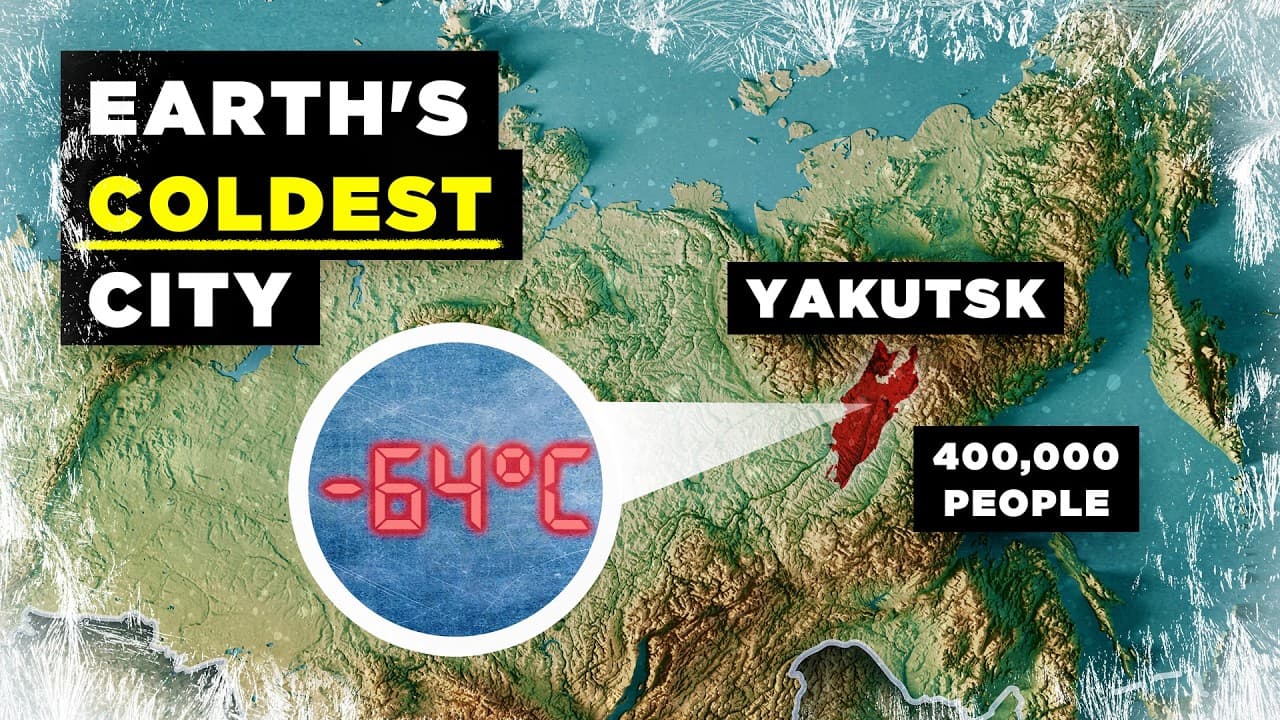
Yakutsk is dominated by brutal cold that affects daily life and infrastructure. The city sits in a permafrost region, where winter lows routinely reach extreme depths and even fuel systems, batteries, and engines struggle. Its growth came from gold mining and river trade, despite the harsh climate.
Transcript
Of all the major cities in the world with uh questionable locations, there's got to be one of them that's the most questionable of all. And I'd argue that it's probably this place in the middle of Siberia. Here in the depths of winter, the average low temperature will hover around -42° C. An entire weeks can pass by where it never gets above -40 at... Read More
Key Insights
- Yakutsk experiences brutal winter cold with average lows around minus 42 degrees Celsius, making outdoor exposure dangerous within minutes.
- Fuel lines, batteries, and engine oil are severely affected by the cold, causing vehicles to require extended idling and manual maintenance to function in winter.
- The Lena River provides a seasonal navigable route that enhances trade and transportation during limited summer periods, shaping Yakutsk’s historical role as a frontier port.
- Yakutsk grew from a small fur trading fort into a major city driven by the discovery of gold and large scale labor during the Stalin era, transforming its demographics.
- The region of Sakha, though vast, has a sparse population, with nearly 40 percent concentrated in Yakutsk, while surrounding lands remain agriculturally limited.
- The permafrost geography restricts agriculture and sustains a resource-based economy, contributing to the city’s isolation and dependence on seasonal transport and mining activity.
- During the Stalin era, thousands of prisoners were used in gulag labor in the Sakha region to exploit gold resources, drastically increasing Yakutsk’s population and altering its ethnic makeup.
- Yakutsk is notable for being the largest city in the world founded within permafrost and for its continued role as a regional cultural and economic center despite extreme conditions.
Install to Summarize YouTube Videos and Get Transcripts
Explore YouTube Video Summarizer or Get YouTube Transcript Extractor
Questions & Answers
Q: What makes Yakutsk the coldest major city in the world?
Yakutsk is defined as the coldest major city due to its location in a permanently frozen region where winter temperatures regularly stay extremely low. Exposed skin can suffer frostbite within minutes, and everyday activities such as heating fuel lines and keeping engines running become critical challenges for residents. The city’s climate has shaped its infrastructure and daily life, from heating to transportation, and it remains a defining feature of life in Sakha.
Q: How cold does it get in Yakutsk during winter?
Winter temperatures in Yakutsk can reach lows around minus 42 degrees Celsius on average, with recorded extremes as cold as minus 64 degrees Celsius in the area. Such temperatures affect exposed skin, vehicle performance, and even the stability of metals and plastics, necessitating protective clothing, special vehicle maintenance routines, and a lifestyle adapted to severe cold exposure.
Q: Why did Yakutsk grow into a large city despite the cold?
Yakutsk grew due to its strategic position along the Lena River which allowed summer navigation and trade, plus a later gold rush that drew large waves of workers. The Soviet era intensified settlement through labor camps and infrastructure development, transforming a frontier fort into a major administrative and cultural hub in the region.
Q: What role did the Lena River play in Yakutsk’s history?
The Lena River provided a crucial summer transportation corridor that extended thousands of kilometers and enabled the movement of furs and goods to European Russia. This navigability, limited to a few months a year, established Yakutsk as an inland port during the warm season and influenced regional trade patterns and settlement growth.
Q: How did the gold rush affect Yakutsk’s population?
The gold rush in Sakha brought a flood of laborers, including over 13,000 ethnic Slavs by 1925, increasing the city’s population and changing its ethnic composition. The influx, paired with later forced labor programs, dramatically expanded Yakutsk’s urban footprint and altered its demographic balance during the Soviet era.
Q: What challenges do residents face with permafrost?
Permafrost creates a harsh environmental baseline that limits agricultural potential, increases the importance of heating and infrastructure resilience, and influences settlement patterns. The cold also shapes daily life by making fuel, battery, and machinery reliability a constant concern, requiring ongoing adaptation and maintenance.
Q: How did Yakutsk become a capital within Sakha?
Founded as part of the Sakha region in Siberia, Yakutsk emerged as the capital due to its strategic location, infrastructure development in the Soviet era, and its role in resource exploitation such as fur and later gold. Over time it became the central urban, educational, and cultural hub for Sakha.
Q: What was the role of gulag labor in Sakha during the Stalin era?
During Stalin's reign, the Sakha region relied on gulag labor to extract resources, with many camps established to mine gold and support industrial projects. This system significantly increased Yakutsk’s population and entrenched the region’s reputation for harsh political and labor conditions, contributing to population growth and demographic shifts.
Summary & Key Takeaways
-
Yakutsk sits in a Siberian permafrost region where winter lows can reach extreme depths and cause widespread mechanical and logistical challenges.
-
The city developed as a frontier hub for fur trade and river transport along the Lena, then expanded rapidly due to a gold rush and Soviet era labor and infrastructure projects.
-
Today Yakutsk is a large regional capital with universities and malls, yet its population center remains tightly clustered in a vast, sparsely agricultural hinterland.
Read in Other Languages (beta)
Share This Summary 📚
Summarize YouTube Videos and Get Video Transcripts with 1-Click
Try YouTube Summary with ChatGPT & Claude or YouTube Transcript Generator
Explore More Summaries from RealLifeLore 📚


Summarize YouTube Videos and Get Video Transcripts with 1-Click
Try YouTube Summary with ChatGPT & Claude or YouTube Transcript Generator