How deep can humans dig with current tech
TL;DR
The deepest hole drilled by humans is 12,376 meters, reached by the Z44-Chavyo oil and gas well. The Earth’s crust can extend to about 70,000 meters with the planet’s center roughly 6,731 kilometers below the surface. Drilling temperatures become prohibitive well before reaching the center.
Transcript
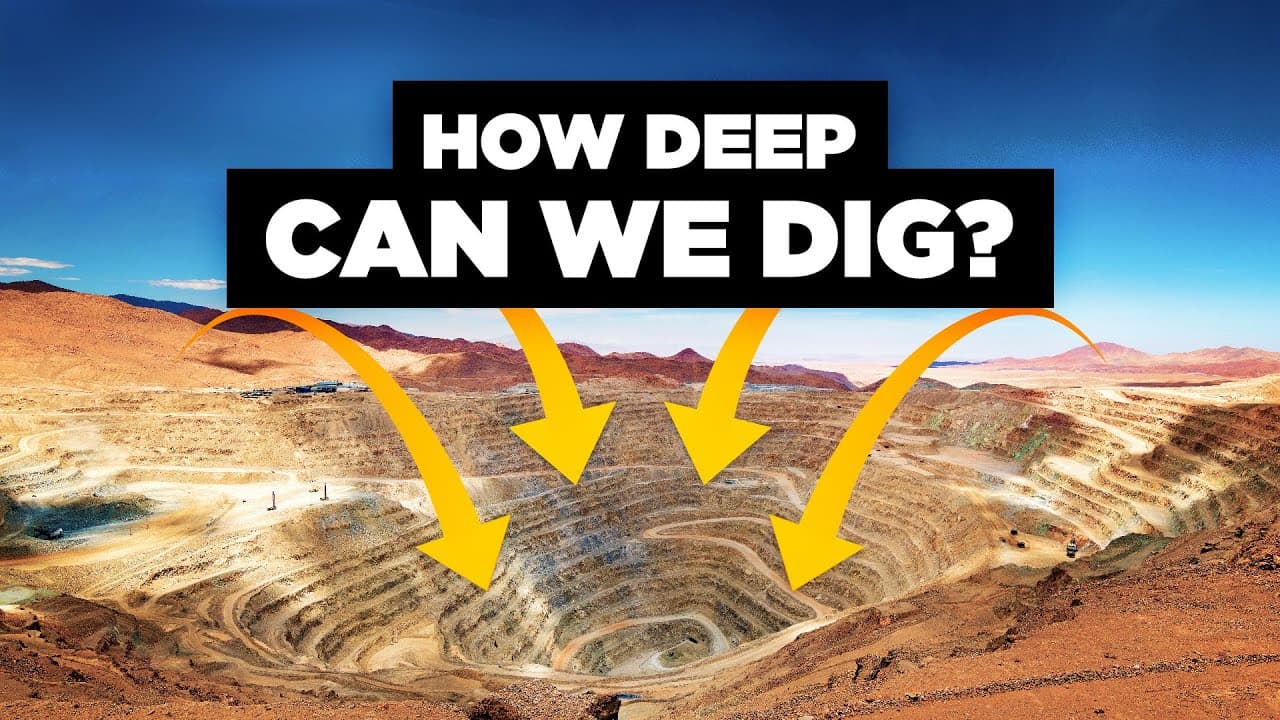
So at some point in their lives, nearly everybody has wanted to dig a hole down to the center of the Earth. The only problem is, nobody ever has actually dug a hole down that far. This leads us to the question that this video is all about: If humanity decided that digging a hole was the #1 objective of our species, then how deep down could we actua... Read More
Key Insights
- The deepest man made hole is 12,376 meters deep in the Z44-Chavyo oil and gas well.
- Kola Superdeep Borehole reached 12,262 meters but the Z44-Chavyo depth surpassed it.
- The Earth’s crust can extend to about 70,000 meters below the surface.
- The center of the planet is about 6,731 kilometers from the surface.
- Drilling deeper is limited by heat, with the Kola Borehole hitting 180 degrees Celsius.
- The Moab Khotsong mineshaft bottom is 3,132 meters deep and was reached by mining operations.
- The deepest cave is 2,197 meters beneath the surface in Georgia.
- The deepest multicellular organism found alive is at 3,600 meters below the surface.
- More videos from this channel:
- More from this channel: RealLifeLore
Install to Summarize YouTube Videos and Get Transcripts
Explore YouTube Video Summarizer or Get YouTube Transcript Extractor
Questions & Answers
Q: How deep is the deepest hole ever drilled by humans?
The deepest hole ever drilled by humans is 12,376 meters deep, achieved by the Z44-Chavyo oil and gas well. This depth surpasses the earlier record of 12,262 meters from the Kola Superdeep Borehole. The record demonstrates how far engineering and geology have taken humanity, though heat and technical limits still prevent reaching the Earth’s center.
Q: What limits drilling that prevent reaching the Earth’s core?
Drilling depth is constrained by high temperatures encountered at depth; for example, the Kola Borehole reached 180 degrees Celsius, which became too hot for the drill to continue. Beyond that, equipment and rock pressure, as well as practical concerns like maintaining borehole stability, make deeper exploration increasingly difficult and dangerous.
Q: How deep is the Earth’s crust, and how far is the center?
The Earth’s crust can extend down to about 70,000 meters beneath the surface, while the planet’s center is located roughly 6,731 kilometers below. This contrast shows why direct access to the center is beyond current capabilities and highlights the vast difference between crustal depths and planetary scale.
Q: What is notable about the Moab Khotsong mineshaft?
The Moab Khotsong mineshaft is notable because it represents one of the deepest human-made mine shafts reaching about 3,132 meters below ground. It demonstrates how mining operations progressively extend depth through engineering, while still remaining within the limits of heat, pressure, and safety considerations.
Q: What is the deepest cave on Earth and how deep is it?
The deepest cave on Earth is located in Georgia and reaches 2,197 meters beneath the surface. This value illustrates a natural limit to subterranean exploration, independent of human digging, and serves as a contrast to the deepest man-made holes showcasing how natural formations can extend deep underground.
Q: How deep is the deepest open sky hole, and where is it?
The deepest open sky hole mentioned is the Bingham Canyon open pit mine in Utah, at a depth of 970 meters with open sky above. This illustrates a deep excavation where the surface remains exposed, contrasting with vertical shafts and tunnels that are completely underground.
Q: What is the deepest point a multicellular organism has been found alive at?
The deepest point where a multicellular organism has been found alive is at 3,600 meters depth. This highlights biological resilience and the variety of life that can survive in extreme subsurface environments, even as engineering and drilling pursue greater depths.
Q: How does the 12,376 meter depth compare to other notable depths listed?
The 12,376 meter depth surpasses prior records like the Kola Superdeep Borehole at 12,262 meters and demonstrates sustained progress in drilling technology. It sits within a wider spectrum of demonstrated depths ranging from shallow graves at a few meters to the deepest mine shafts and open pit depths, illustrating human ambition to explore below the surface.
Summary & Key Takeaways
-
The video traces a sequence of depth milestones from surface to extreme depths, illustrating how different measurements relate to everyday objects, natural features, and engineered structures.
-
It highlights notable depths such as graves, tombs, catacombs, pools, nuclear waste depths, tunnels, wells, and mines to show a progression of what has been reached by humans so far.
-
It concludes with the idea that while the crust is many tens of kilometers thick, there are much deeper limits set by technology and extreme heat, with the center of the Earth far beyond current reach.
Read in Other Languages (beta)
Share This Summary 📚
Summarize YouTube Videos and Get Video Transcripts with 1-Click
Try YouTube Summary with ChatGPT & Claude or YouTube Transcript Generator
Explore More Summaries from RealLifeLore 📚





Summarize YouTube Videos and Get Video Transcripts with 1-Click
Try YouTube Summary with ChatGPT & Claude or YouTube Transcript Generator