What Are Black Holes and How Do They Form?
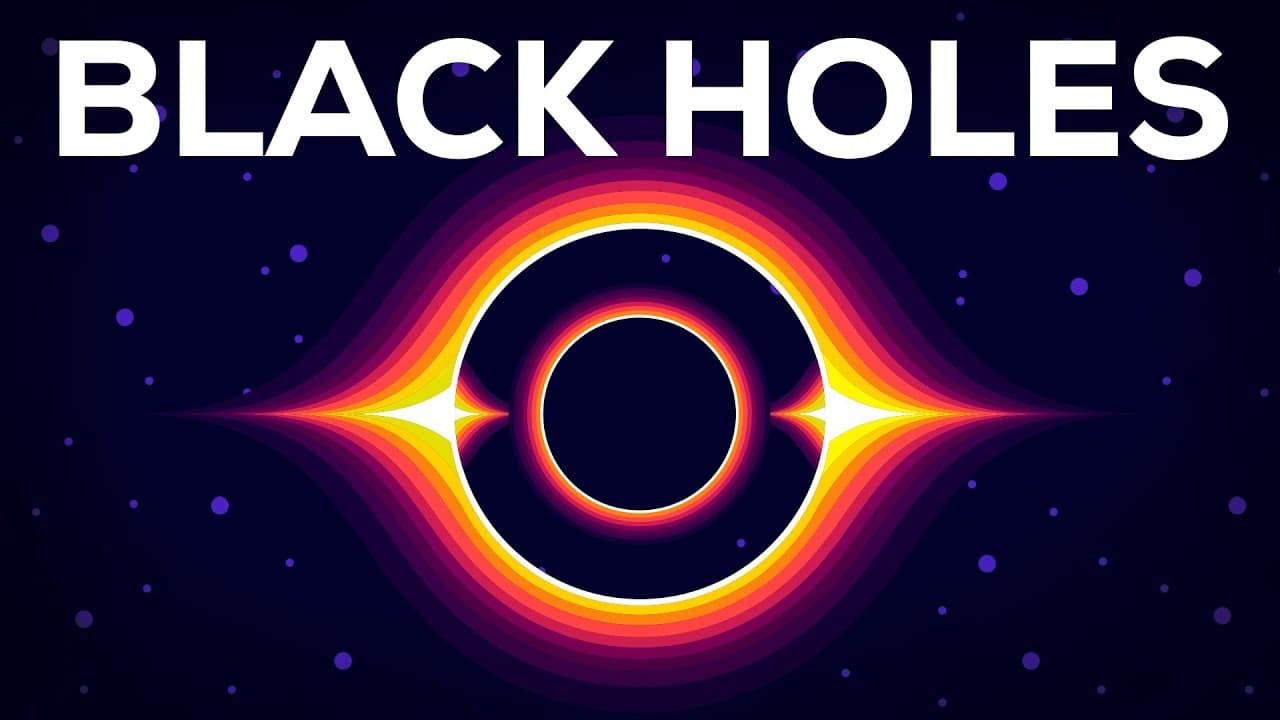
TL;DR
Black holes form when massive stars collapse under their own gravity after exhausting their nuclear fuel, leading to a core implosion. They have event horizons beyond which nothing can escape and distort time perception; eventually, they evaporate through Hawking radiation over an incredibly long timescale.
Transcript
Black holes are one of the strangest things in existence. They don't seem to make any sense at all. Where do they come from... ...and what happens if you fall into one? Stars are incredibly massive collections of mostly hydrogen atoms that collapsed from enormous gas cloud under their own gravity. In their core, nuclear fusion crushes hydrogen atom... Read More
Key Insights
- ✴️ Iron core collapse leads to the formation of neutron stars or black holes.
- 🖤 Black holes have event horizons where nothing can escape, distorting time and perception.
- 🖤 Hawking radiation causes black holes to evaporate slowly, eventually disappearing.
- 🖤 Falling into a black hole results in potential spaghettification or encountering a firewall.
- 🤑 Black holes come in different sizes, from stellar mass to supermassive ones in galaxies.
- 😎 Supermassive black holes, like S5 0014+81, are 40 billion times the mass of our sun.
- 🖤 Despite their power, black holes will eventually evaporate over a long timescale through Hawking radiation.
Install to Summarize YouTube Videos and Get Transcripts
Explore YouTube Video Summarizer or Get YouTube Transcript Extractor
Questions & Answers
Q: How do black holes form from stars?
Black holes form from massive stars collapsing due to iron core collapse, creating neutron stars or black holes based on mass. The implosion generates heavier elements and often results in a supernova explosion.
Q: What happens if you fall into a black hole?
Falling into a black hole results in a distorted time experience where from the outside, one appears frozen in time, turning red and disappearing. Inside, one faces potential death by spaghettification or encountering a firewall.
Q: Do black holes suck things up like a vacuum?
Contrary to popular belief, black holes do not suck things up like a vacuum cleaner. If Earth were replaced by a black hole of equal mass, aside from freezing due to lack of solar heat, not much else would change.
Q: How do black holes eventually dissipate?
Black holes eventually evaporate through Hawking radiation, losing energy as virtual particles near the event horizon. This slow process accelerates as the black hole reduces in mass, culminating in a massive explosive release.
Summary & Key Takeaways
-
Stars collapse into black holes due to iron core collapse, creating neutron stars or black holes.
-
Black holes have event horizons beyond which nothing can escape, distorting time perception.
-
Black holes eventually evaporate through Hawking radiation, a slow process releasing energy.
Read in Other Languages (beta)
Share This Summary 📚
Summarize YouTube Videos and Get Video Transcripts with 1-Click
Try YouTube Summary with ChatGPT & Claude or YouTube Transcript Generator
Explore More Summaries from Kurzgesagt – In a Nutshell 📚






Summarize YouTube Videos and Get Video Transcripts with 1-Click
Try YouTube Summary with ChatGPT & Claude or YouTube Transcript Generator