How will AI become ambient intelligence for all?
TL;DR
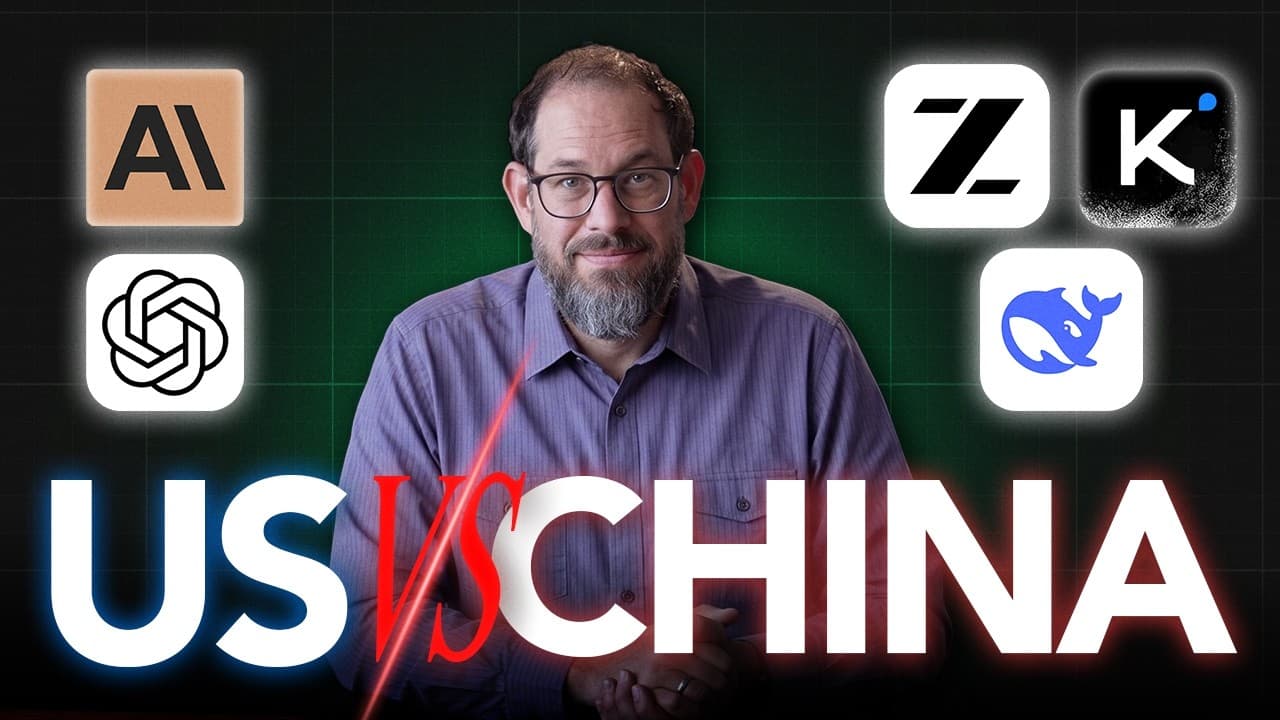
AI will become ambient and accessible to most people, not hoarded by a few firms. The broader view is that intelligence will be distributed through open models rather than a zero-sum race. The key is applying AI to social good, from education to healthcare, while avoiding concentration of power.
Transcript
I am shocked by how much of a barrier that sense of willingness is. Like I talked to a lot of folks in the business um in enterprises and they're like I don't like my engineers care about codecs. That's fine. Good for them. I'm not going to make everyone a coder in my company. >> I have other things to do with my business. When you look at the next... Read More
Key Insights
- AI arms race is a core misconception that misallocates resources and elevates unnecessary risk.
- Ambience intelligence makes AI available everywhere, reducing monopolization and enabling wider safe use.
- Open, specialized, and scalable AI models outperform oversized, centralized systems for practical tasks.
- The real value lies in applying AI to societal gains such as education, medicine, and energy efficiency.
- Labor markets shift as AI adoption grows, with entrepreneurship expanding alongside changes in hiring.
- Policy and governance are essential to steer AI toward humane, beneficial outcomes rather than weaponization.
- US and China could cooperate on AI policy to preserve safety and shared prosperity.
- Most companies have yet to adopt AI at scale, creating opportunities for responsible implementation and new business models.
- More videos from this channel:
- More from this channel: AI News & Strategy Daily | Nate B Jones
Install to Summarize YouTube Videos and Get Transcripts
Explore YouTube Video Summarizer or Get YouTube Transcript Extractor
Questions & Answers
Q: How is the AI race framing described in the video, and why is it considered misleading?
The video argues that calling AI development a race with a single winner creates a false sense of zero sum competition. This framing leads to misallocation of resources and ignores the reality that intelligence will be widely distributed and accessible. By reframing the goal, policymakers and businesses can focus on collaboration, safety, and practical implementations rather than hoarding power.
Q: What is meant by ambient AI or ambient intelligence in this context?
Ambient AI refers to intelligence that is everywhere and readily usable on consumer hardware and common devices. It implies open, accessible models that do not require expensive infrastructure, enabling widespread adoption. The idea is that intelligence becomes a utility, available on PCs, laptops, and eventually phones, rather than being confined to elite systems.
Q: Why does the speaker compare AI to electricity, and what point does that illustrate?
The comparison to electricity illustrates that powerful technologies tend not to be monopolized forever and that widespread access eventually emerges. Just as electricity became ubiquitous, AI is expected to become pervasive and democratized, reducing incentives for exclusive control and opening up broad opportunities across industries and society.
Q: What role do open models play in the vision for AI, according to the conversation?
Open models contribute to ambient AI by enabling broader participation, lowering barriers to use, and discouraging monopolization. They allow specialized, task-focused systems that can run on common hardware, making AI more affordable and adaptable to various contexts, from healthcare to education, while enhancing safety through transparency and shared incentives.
Q: How might AI affect young workers and the job market, based on the discussion?
The discussion notes that younger workers may be more immediately affected as AI automates routine tasks. However, AI also stimulates entrepreneurship and new business models. The key takeaway is that only a portion of companies have adopted AI well, leaving substantial room for job creation through new applications and services.
Q: What is the speaker’s view on how the US and China should interact over AI policy?
The speaker suggests cooperation rather than pure competition, arguing that generative AI should be governed to maximize safety and human flourishing. By aligning on shared standards and policies, both sides can reduce risks, avoid weaponization, and foster innovation that benefits a broad range of people rather than narrow national interests.
Q: What does the speaker say about the misperception of a finish line or winner in AI development?
The speaker argues there is no finish line or ultimate winner in AI development. Treating AI as a perpetual, open, and evolving technology avoids false bets and supports continuous improvement. This view encourages ongoing investment in safety, ethics, and practical deployments rather than chasing a mythical victory.
Q: What is highlighted as a practical use case where AI can help society most?
A practical use case emphasized is applying AI to material discovery, energy efficiency, education, and healthcare. The idea is to train specialized, smaller models on relevant data so they run efficiently on accessible hardware, delivering tangible benefits without requiring massive, centralized systems or extreme costs. These applications illustrate the social value of ambient AI.
Summary & Key Takeaways
-
AI progress is framed as a race, but the speaker argues this framing is misleading and unsafe. The future lies in ambient intelligence that is hard to hoard and easy to deploy, across society.
-
Open models and distributed intelligence change who benefits from AI, shifting focus from big wins to practical, scalable applications that reach everyday users.
-
The conversation emphasizes policy, safety, and social impact, suggesting collaboration over competition between major powers to maximize societal good and minimize risks.
Read in Other Languages (beta)
Share This Summary 📚
Summarize YouTube Videos and Get Video Transcripts with 1-Click
Try YouTube Summary with ChatGPT & Claude or YouTube Transcript Generator
Explore More Summaries from AI News & Strategy Daily | Nate B Jones 📚






Summarize YouTube Videos and Get Video Transcripts with 1-Click
Try YouTube Summary with ChatGPT & Claude or YouTube Transcript Generator