How Did Bangalore Become the Silicon Valley of Asia? Business Case Study
TL;DR
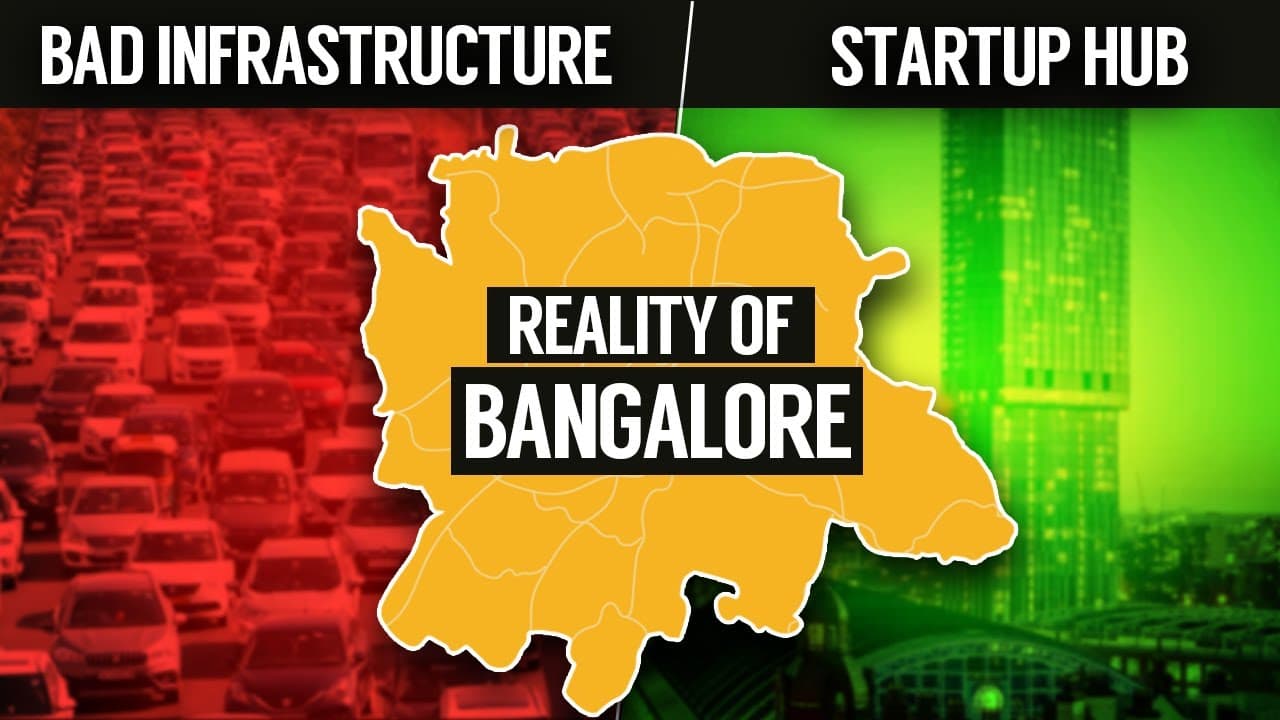
Bangalore became the Silicon Valley of Asia by combining early education, skilled talent, public-sector industry, research institutions, global offshoring demand, and software-friendly policies. Primary education became compulsory in Mysore in 1913, and Bangalore's literacy rate reached 43 percent by 1951, compared with India's 18.3 percent. Read on to see how these foundations produced a major technology ecosystem.
Transcript
it's the fastest growing deck Hub a city leading in I.T Innovation a hot spot for VCS India's beloved Tech City Bengaluru now the city ranks second after Beijing on the list of top technology hubs in the Asia Pacific region for many years Innovation index it is an inclusive City to many the future of technology doesn't lie in Silicon Valley but in ... Read More
Key Insights
- Bangalore's technology success began with educational investment before India's independence. Mysore's economic conference made primary education compulsory in 1913, while the Maharaja provided substantial land grants for institutions including the Indian Institute of Science and National College in Bangalore.
- Bangalore's early literacy advantage created a foundation for skilled employment. In 1951, India's literacy rate was 18.3 percent, while Bangalore's rate was 43 percent, giving the city a stronger talent base for attracting industrial and technical opportunities.
- Public-sector industry strengthened Bangalore's technical ecosystem after independence. The national government established major organizations such as Indian Telephone Industries, Hindustan Aeronautics Limited, Bharat Electronics, and Bharat Heavy Electricals Limited because the city offered literacy, talent, and relative distance from partition-related disruption.
- Research concentration helped Bangalore become a center for advanced technical work. At one point, 40 of India's 77 research and development organizations were located in the city, including ISRO, creating a substantial base of scientists, engineers, institutions, and specialized knowledge.
- Global offshoring was driven by labor cost differences and the availability of skilled workers. Companies divided activities such as design, manufacturing, assembly, and sales across countries, placing each operation where the combination of capabilities, cost, and market proximity was most favorable.
- Microprocessors expanded the need for software by making computers smaller, more powerful, and useful across many electronic devices. Because these processors required coding skills, their widespread adoption helped create growing demand for software development and related technical services.
- The worldwide supply of software professionals was not keeping pace with demand. Software demand was increasing at an annual rate of 12 percent, while the number of software professionals grew by only 4 to 5 percent, producing a widening shortage of developers.
- India's 1980s economic reforms supported Bangalore's software opportunity. Policies recognized software as an industry, simplified licensing, reduced government controls, and lowered customs duties on hardware from 135 to 60 and on software from 100 to 60, easing participation by Indian companies.
- "the actual seeds of bengaluru's Revolution were planted even before India's independence" (3:03)
- "this economic conference in Mysore made a primary education compulsory in 1913 itself which was almost 100 years before the formal government of India" (3:43)
- "while India's literacy rate was just 18.3 percent Bengaluru had a literacy rate of 43 percent" (4:04)
- "at one point out of the 77 r d organizations in India 40 existed only in Bangalore" (4:56)
- "the labor costs had become so high that to manufacture the same products the companies now had to spend five times more on labors" (5:46)
Install to Summarize YouTube Videos and Get Transcripts
Explore YouTube Video Summarizer or Get YouTube Transcript Extractor
Questions & Answers
Q: How did Bangalore become the Silicon Valley of Asia?
Bangalore developed an educated workforce before independence, then attracted public-sector factories and research organizations after independence. Global offshoring, growing demand for software professionals, lower labor costs, and supportive policies accelerated the city's later technology expansion.
Q: When did Bangalore's development as a technology hub begin?
Its foundations were established before India's independence, rather than beginning with the 1990s IT boom. Mysore's economic conference was created in 1911, and primary education became compulsory in 1913.
Q: Why was education important to Bangalore's technology growth?
Education produced the skilled talent needed by industrial and technical employers. By 1951, Bangalore's literacy rate was 43 percent, while India's literacy rate was 18.3 percent.
Q: Which educational institutions helped establish Bangalore's talent base?
The Maharaja provided large land grants for institutions including the Indian Institute of Science and National College in Bangalore. These institutions formed part of the educational foundation that attracted industries and economic opportunities.
Q: What role did public-sector companies play in Bangalore's rise?
The national government established major public-sector factories in Bangalore because the city offered strong literacy and talent. These included Indian Telephone Industries, Hindustan Aeronautics Limited, Bharat Electronics, and Bharat Heavy Electricals Limited.
Q: How important were research organizations to Bangalore's growth?
Research organizations concentrated scientists, engineers, and advanced technical work in the city. At one point, Bangalore hosted 40 of India's 77 research and development organizations, including ISRO.
Q: How did global offshoring help Bangalore's technology industry?
Rising labor costs encouraged companies to divide operations among countries according to cost, skills, technology access, and market proximity. Bangalore's skilled workforce and lower labor costs positioned it to benefit from this international demand.
Q: Which government policies supported Bangalore's software industry?
During the 1980s, Rajiv Gandhi's policies formally recognized software as an industry and encouraged investment. The reforms also eased licensing and reduced customs duties, helping Indian companies participate in the expanding software economy.
Summary & Key Takeaways
-
Bangalore's technology economy grew from foundations established long before India's 1990s IT boom. Mysore's development-oriented leadership supported compulsory primary education, economic planning, and land grants for institutions such as the Indian Institute of Science and National College. Consequently, Bangalore's literacy rate reached 43 percent in 1951, compared with India's 18.3 percent.
-
Bangalore's educated workforce attracted major public-sector factories and research organizations after independence. Indian Telephone Industries, Hindustan Aeronautics Limited, Bharat Electronics, Bharat Heavy Electricals Limited, ISRO, and other organizations created a dense technical ecosystem. At one point, Bangalore reportedly hosted 40 of India's 77 research and development organizations.
-
Global offshoring and the rise of microprocessors created strong demand for affordable technical talent. Software demand was growing faster than the worldwide supply of professionals. During the 1980s, Rajiv Gandhi's policies recognized software as an industry, eased licensing, reduced customs duties, and encouraged investment, helping Indian companies participate in the expanding software economy.
Read in Other Languages (beta)
Share This Summary 📚
Summarize YouTube Videos and Get Video Transcripts with 1-Click
Try YouTube Summary with ChatGPT & Claude or YouTube Transcript Generator
Explore More Summaries from Think School 📚





Summarize YouTube Videos and Get Video Transcripts with 1-Click
Try YouTube Summary with ChatGPT & Claude or YouTube Transcript Generator