How Does THC Affect the Human Body and Brain?
TL;DR
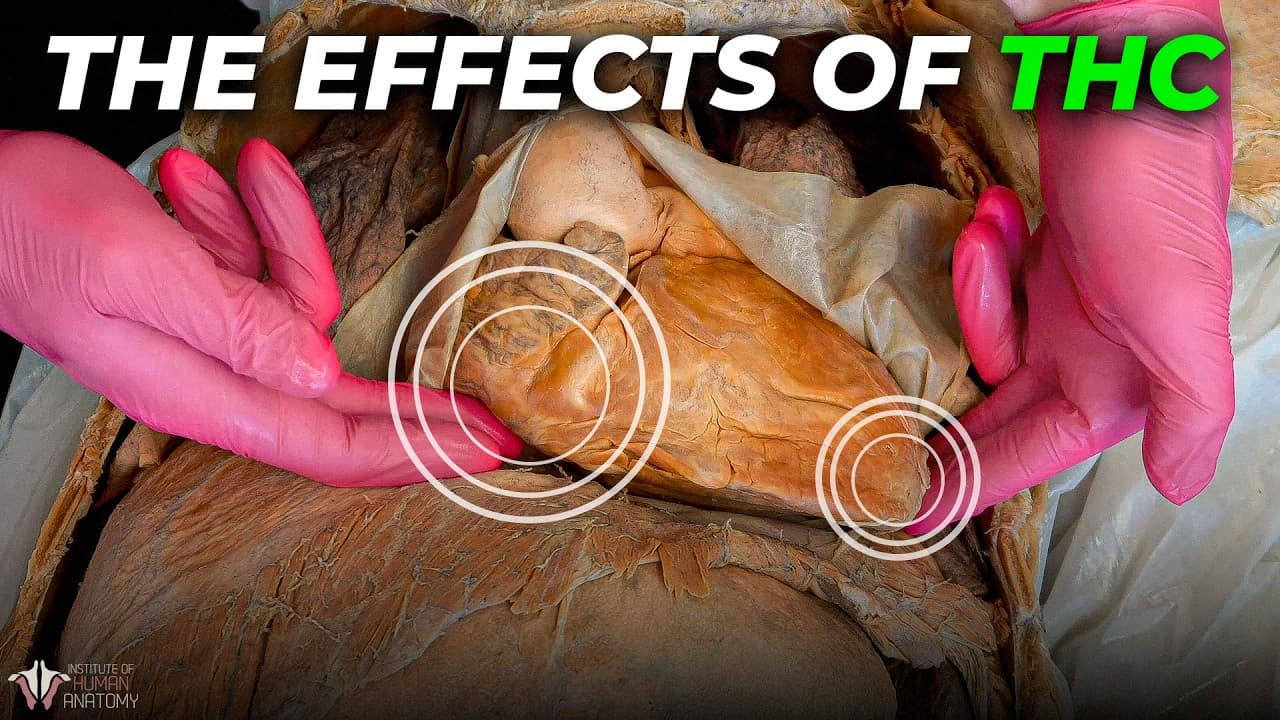
THC activates cannabinoid receptors throughout the body, increasing heart rate, dilating blood vessels, reducing saliva production, and disrupting normal hunger signals in the hypothalamus. Repeated exposure can produce tolerance and dependence, while some users develop cannabis use disorder, particularly when use begins during adolescence or involves frequent, high-potency, or high-dose exposure.
Transcript
Yes, there are a lot of people that partake of cannabis products, and so many people have become acquainted with some of its effects, such as red eyes, dry mouth, and of course, the munchies, but very few people actually know why these things happen. Plus, there seems to be a debate on whether cannabis products are addictive. So, today, using real ... Read More
Key Insights
- THC is the primary psychoactive cannabinoid in cannabis, while CBD is considered mostly non-psychoactive. Both belong to a group of more than 100 known cannabinoids that can interact with cannabinoid receptors on cells throughout the body.
- The endocannabinoid system is a widespread signaling network containing two main cannabinoid receptor types. CB1 receptors occur mostly in the brain and nervous system, while CB2 receptors are found mainly in immune and peripheral tissues, although both are distributed more broadly.
- THC can increase heart rate shortly after consumption while simultaneously relaxing and dilating blood vessels. This vascular dilation can reduce overall blood pressure, meaning that a faster heart rate does not necessarily correspond to an increase in blood pressure.
- Red eyes are caused by vascular changes involving the small blood vessels of the eyes. As THC interacts with cannabinoid receptors and blood pressure falls, ocular capillaries dilate, hold more blood, and gradually give the eyes their characteristic red appearance.
- Dry mouth is caused by reduced saliva production rather than simply by hot, dry smoke. Salivary glands contain many cannabinoid receptors, and THC binding downregulates the secretion of saliva that normally lubricates the mouth and helps break down carbohydrates.
- The route of cannabis consumption changes the timing and duration of THC effects. Smoking or vaping delivers THC through the lungs within minutes, while ingested THC must pass through the digestive tract and liver, so edibles act later but often last longer and may feel more intense.
- Increased appetite is linked to disrupted satiety signaling in the hypothalamus. THC affects cannabinoid receptors and internal signaling in POMC neurons, promoting endorphin release that can override normal fullness signals, with hunger-regulating hormones such as leptin and ghrelin also involved.
- Cannabis dependence is different from addiction. Dependence reflects physiological adjustment and possible withdrawal after stopping, while addiction involves cravings, impaired control, continued use despite harmful consequences, and disruption of daily life, clinically described as cannabis use disorder.
Install to Summarize YouTube Videos and Get Transcripts
Explore YouTube Video Summarizer or Get YouTube Transcript Extractor
Questions & Answers
Q: How does THC affect the body?
THC binds to cannabinoid receptors that form part of the endocannabinoid signaling system. Because these receptors occur throughout the body, its effects extend beyond the brain. THC can initially increase heart rate, relax blood vessels, lower blood pressure, dilate eye capillaries, reduce saliva production, alter hypothalamic hunger signaling, and affect neural circuits involved in reward, motivation, mood, and stress regulation.
Q: Why does THC make the eyes red?
THC relaxes and dilates blood vessels while potentially lowering overall blood pressure. The eyes and the vessels supplying them contain a high density of cannabinoid receptors. As the small ocular vessels, especially the capillaries, dilate, they hold more blood and create a red appearance. This process takes time, so eye redness does not necessarily appear immediately after THC consumption.
Q: Why does cannabis cause dry mouth?
Cannabis causes dry mouth because THC binds to cannabinoid receptors in the salivary glands and downregulates saliva production. The parotid, submandibular, and sublingual glands normally release saliva that lubricates the mouth and contains enzymes involved in carbohydrate breakdown. When less saliva moves into the mouth, dryness develops. The effect can occur with edibles, showing that smoke alone is not responsible.
Q: Why does THC increase appetite and cause the munchies?
THC increases appetite partly by disrupting normal satiety signaling in the hypothalamus, a brain region involved in hunger and other homeostatic functions. It affects cannabinoid receptors and internal signaling in POMC neurons, including interactions involving mitochondria. Instead of producing a typical fullness signal, these changes promote endorphin release that can override satiety. Leptin and ghrelin also participate in regulating hunger and fullness.
Q: How do edible and inhaled cannabis affect the body differently?
Smoking or vaping allows THC to enter the bloodstream through the lungs and reach the brain and other tissues within minutes. Edible cannabis must first travel through the digestive tract and liver, so its effects take longer to begin. However, those effects often last much longer and can sometimes feel more intense. The consumption route therefore changes both the timing and duration of the response.
Q: What is the difference between cannabis tolerance and dependence?
Tolerance develops when repeated THC stimulation makes cannabinoid receptors less responsive, requiring higher amounts to produce the same effects. Dependence occurs when the brain adjusts to THC being present regularly. If use then stops suddenly, the system needs time to recalibrate. During this period, a person may experience irritability, anxiety, sleep changes, or reduced appetite, which typically resolve with time.
Q: Is cannabis dependence the same as cannabis addiction?
Cannabis dependence is not the same as addiction. Dependence describes the brain's physiological adjustment to regular THC exposure and may lead to withdrawal symptoms when use stops. Addiction describes a behavioral pattern involving impaired control, cravings, continued use despite negative consequences, and disruption of daily life. Clinically, this pattern is called cannabis use disorder and ranges from mild to severe.
Q: How common is cannabis use disorder?
The population data cited in the source suggests that roughly one in 10 adults who use cannabis will develop dependence or meet criteria for cannabis use disorder at some point. For people who begin during adolescence, the stated risk rises to about one in six. In the United States, an estimated 14 million people aged 12 and older met the criteria in 2020, rising to about 19 million by 2023.
Summary & Key Takeaways
-
THC is the primary psychoactive cannabinoid in cannabis, while CBD is considered mostly non-psychoactive. Cannabinoids interact with receptors belonging to the endocannabinoid system. CB1 receptors are concentrated mainly in the brain and nervous system, while CB2 receptors occur mainly in immune and peripheral tissues, although both types appear throughout the body.
-
THC can initially raise heart rate while relaxing and dilating blood vessels, potentially lowering overall blood pressure. Capillary dilation in the eyes produces redness, while cannabinoid receptor activation in the salivary glands reduces saliva production and causes dry mouth. These effects also occur with edibles, showing that smoke is not their primary cause.
-
THC disrupts satiety signaling within the hypothalamus, helping explain increased appetite. Repeated exposure can make cannabinoid receptors less responsive, producing tolerance and sometimes dependence with withdrawal symptoms after stopping. Addiction is distinct from dependence and involves impaired control, cravings, continued use despite negative consequences, and disruption of everyday life.
Read in Other Languages (beta)
Share This Summary 📚
Summarize YouTube Videos and Get Video Transcripts with 1-Click
Try YouTube Summary with ChatGPT & Claude or YouTube Transcript Generator
Explore More Summaries from Institute of Human Anatomy 📚





Summarize YouTube Videos and Get Video Transcripts with 1-Click
Try YouTube Summary with ChatGPT & Claude or YouTube Transcript Generator