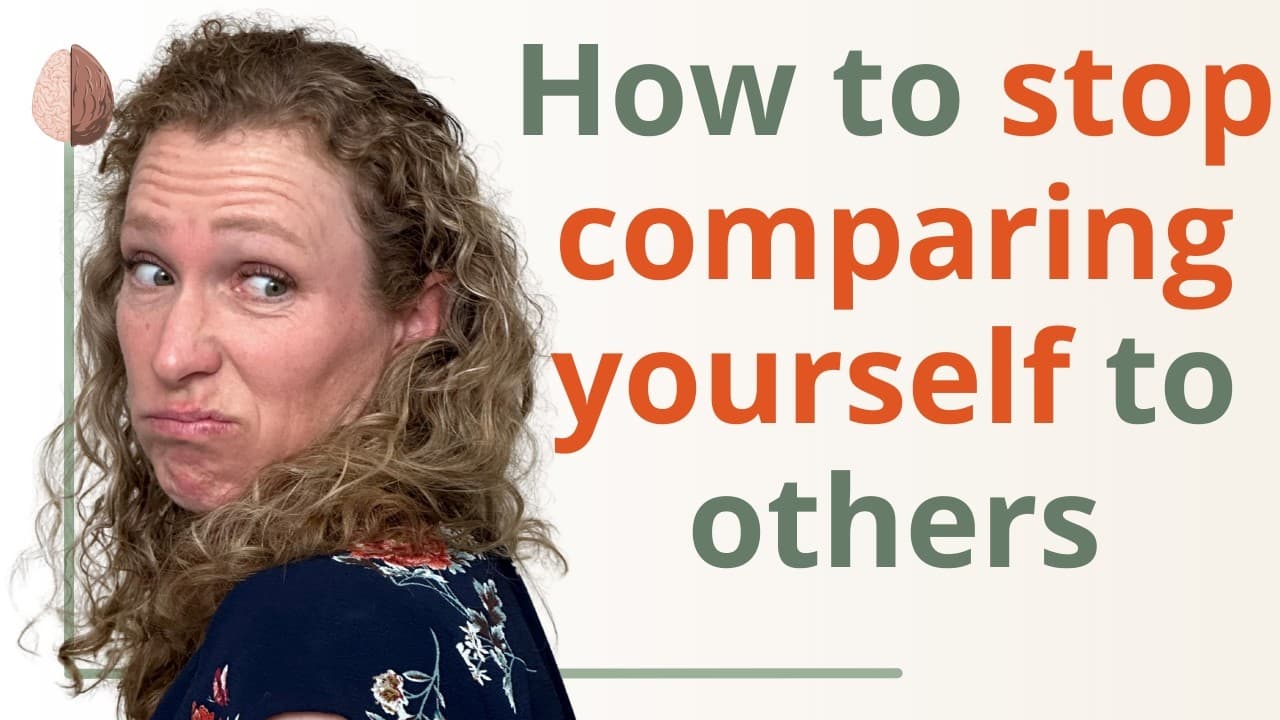
How to Turn Jealousy and Comparison Into Growth
TL;DR
Jealousy is a signal, not a character flaw: it points to what you deeply desire and to the parts of yourself that feel unseen or unworthy. When comparison hits, pause, name the emotion, and ask what you are really jealous of, what they have that you lack, and how you would feel if you had it. Then convert that wanted feeling into a value you can act on.
Transcript
Hey, everyone! I'm Emma McAdam and this is Therapy in a Nutshell. And because you're seeing me on YouTube, that means you're on social media. That also means you probably run into something that most of us experience, but almost no one wants to admit. Jealousy. You get stuck comparing yourself to others. Now, we usually think of jealousy ... Read More
Key Insights
- Jealousy functions as an arrow pointing to something that matters to you. It reveals the parts of yourself that feel unseen, unworthy, or unloved, along with the things you deeply desire, which makes it information rather than a character defect.
- Shaming yourself for being petty and resenting the other person are both defense mechanisms. They protect you from vulnerability, because comparison makes you feel not enough: not rich enough, not loved enough, not safe enough, not good enough.
- The three diagnostic questions for comparison are: What am I really jealous of? What do they have that I don't? What is the feeling I would experience if I were more like them? Answering them shifts attention from the external person to your internal longing.
- What you envy is usually not the object itself but the feeling imagined to come with it, such as safety, power, lovability, freedom, or confidence. Envy of a body often means wanting to feel strong and healthy rather than wanting that specific body.
- Jealousy works as a mirror. It is not about the other person but about you, showing which areas of your life you want to nurture, where you want to grow, or at minimum prompting the question of whether this longing is as important as you think it is.
- You cannot force yourself to feel confident or loved, but you can always move toward a value, because values are actionable. Values include being authentic, courageous, hardworking, or hopeful, and acting on them is what eventually produces the wanted feeling.
- Extraversion is a trait, not a feeling or a value. Emma realized she never actually wanted to be extroverted or to enjoy small talk; what she wanted was to feel bold, which sits on the values of self-acceptance and courage.
- Confidence does not come from thinking about being confident or waiting until you feel confident to act. According to a book on confidence Emma read, it comes from taking small risks each day, such as sharing an opinion or asking one deep question per day.
Install to Summarize YouTube Videos and Get Transcripts
Explore YouTube Video Summarizer or Get YouTube Transcript Extractor
Questions & Answers
Q: How do you stop comparing yourself to others?
Rather than pushing the comparison away, pause and name it: 'This is jealousy' or 'This is comparison. It feels uncomfortable, but it's trying to show me something.' Then notice specifically what about that person pulls on the feeling and ask three questions: what am I really jealous of, what do they have that I don't, and what would I feel if I were more like them. This shifts attention from the external person to the internal longing, which is where you can actually take action. The comparison stops driving you when you use it as data about your own values instead of as a scoreboard against someone else.
Q: What is jealousy actually telling you?
Jealousy is a signal and an opportunity, like an arrow pointing to something that matters to you. It tells you about the parts of yourself that feel unseen, unworthy, or unloved, and about the things you deeply desire. It is just information, a messenger, and if you can stop judging it, you can start learning from it. Underneath the surface, 'I'm jealous of her body' may mean you want to feel strong and healthy, 'I'm jealous of their relationship' may mean you long for emotional connection and being chosen, and 'I'm jealous of their success' may mean you want to feel capable and proud of yourself.
Q: Why does comparison make you feel so bad about yourself?
Comparison makes you feel like you are not enough: not rich enough, not loved enough, not safe enough, not good enough. Most people respond in one of two ways, either shaming themselves ('What's wrong with me for being so petty?') or resenting the other person ('She's probably fake anyway'). Both are defense mechanisms that protect against vulnerability. When you are fused with jealousy, you might feel a burning sense of competition, victimhood, or hatred toward others, which feels gross, so the instinct is to judge the feeling and push it away rather than examine what it is pointing at.
Q: What are the three questions to ask when you feel jealous?
First, what am I really jealous of? The surface answer might be that the person has it easy or seems popular, but digging deeper might reveal it is confidence. Second, what do they have that I don't? For example, they feel free to say what they want and act self-assured. Third, what is the feeling I would experience if I were more like them? This may require imagining yourself in their shoes, for instance imagining that with more confidence you would not worry about every social situation, could relax more around people, and would feel safe being yourself. You can go further and ask what it is you really want.
Q: How do you turn a feeling you want into something you can act on?
You cannot just make yourself feel something. You cannot force yourself to feel confident or loved, so the wish has to be flipped into a value-based action. Values are things like being authentic, courageous, hardworking, or hopeful, and the reason to work from values is that while you cannot force a feeling, you can always move toward a value. Values are actionable. Wanting to feel strong and healthy becomes the value of physical health. Longing for emotional connection and being chosen becomes the value of love, which is actionable because it lives inside you, whereas being chosen is outside of you. Wanting to feel capable becomes valuing hard work.
Q: Why should you focus on values instead of on the outcome you want?
Emma compares it to hiking a mountain. You can focus on wishing you were at the top and how unfair it is that others are already at the summit, or you can focus on moving your feet in the right direction. Checking the map is your values, and then you choose to make the next few steps. Instead of focusing on what you want, you pay attention to the next few steps you take in that direction. Once you are clear on the value you are going to build on, the question becomes how to start taking action that fuels the feelings the value is aligned with.
Q: How do you actually build confidence according to this video?
Emma read a book on confidence and learned that confidence does not come from thinking about being confident or from waiting until you feel confident to take action. It comes from taking small risks each day. Her own plan was to start sharing her opinion, to act in a more confident way, and to ask others one deep question per day. As she does this, she is living in line with her values of being more bold, and she expects the feeling of confidence to follow. The sequence runs from value to action to feeling, not from feeling to action.
Q: What should you do if you feel powerless to change how others see you?
The essential shift is from seeking external validation to internal assurance. Wanting to be seen as something is a poor substitute for actually being it. We imagine that if other people loved us we would love ourselves, that if they liked us we would feel confident, that if they praised us we would be proud, and that if they recognized our accomplishments we would feel valuable. But outside approval is a hollow substitute for the deep internal confidence that comes from facing your demons and living a life full of integrity. So instead of wanting to be seen as kind, focus on being kind; instead of wanting to be seen as powerful, focus on your locus of control, accepting what you cannot change and putting energy into what you can.
Summary & Key Takeaways
-
Emma McAdam of Therapy in a Nutshell reframes jealousy, envy, and comparison as a messenger rather than a shameful or toxic emotion. Most people respond by shaming themselves for being petty or resenting the other person, but both reactions are defense mechanisms that protect against vulnerability and block the useful information jealousy carries.
-
The first step is to pause and name the emotion, saying something like 'This is jealousy' or 'This is comparison,' then notice exactly what about that person pulls on the feeling. Three questions follow: What am I really jealous of? What do they have that I don't? What would I feel if I were more like them?
-
Because feelings cannot be forced, the wanted feeling gets flipped into a value, which is actionable. Confidence maps to self-acceptance and courage, envy of a body maps to physical health, envy of a relationship maps to love, envy of success maps to hard work. Action on the value then fuels the feeling.
Read in Other Languages (beta)
Share This Summary 📚
Summarize YouTube Videos and Get Video Transcripts with 1-Click
Try YouTube Summary with ChatGPT & Claude or YouTube Transcript Generator
Explore More Summaries from Therapy in a Nutshell 📚





Summarize YouTube Videos and Get Video Transcripts with 1-Click
Try YouTube Summary with ChatGPT & Claude or YouTube Transcript Generator