How to spot real extra virgin olive oil at the store
TL;DR
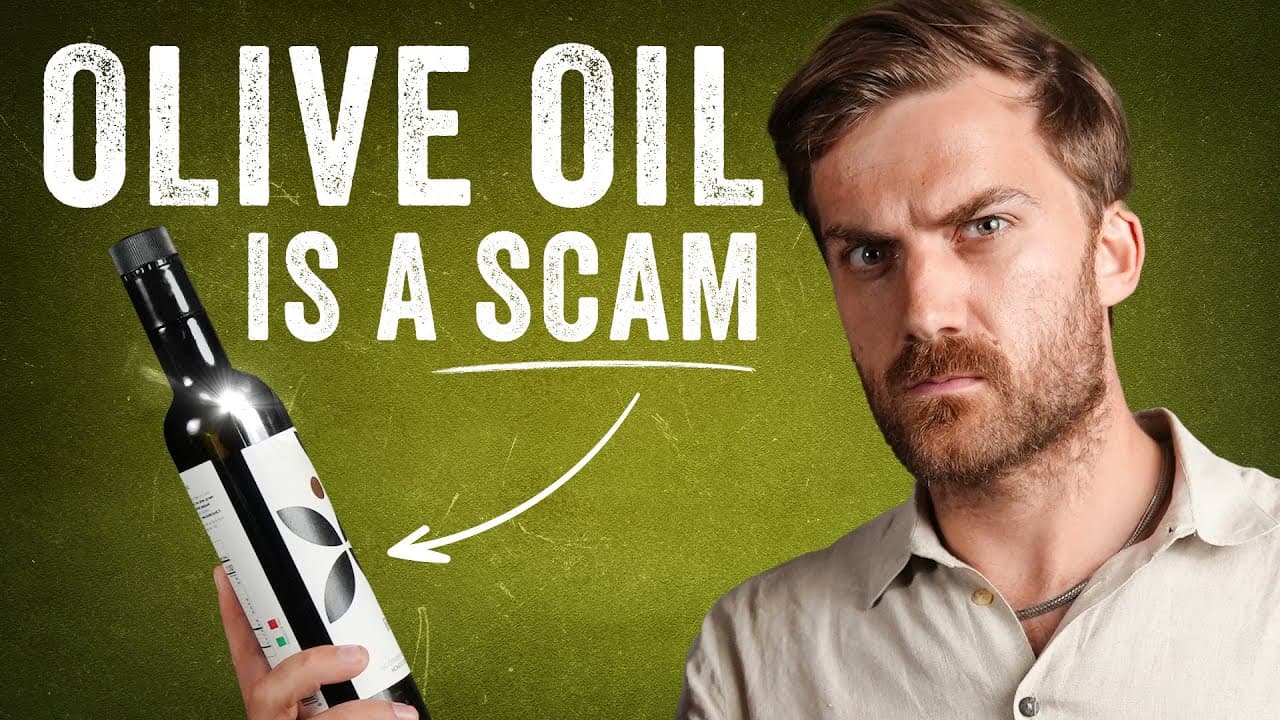
Real EVOO is fresher, darker, and labeled with authenticity indicators, while many oils are fakely branded as extra virgin. The fraud often uses cheap seed oil dyed to look like olive oil and ships through complex middlemen. To avoid deception, buy from trusted sources, check origin, and understand the supply chain.
Transcript
(gentle dramatic music) - Your olive oil may not be what it claims to be. claims to be. - [Johnny] A couple years ago in southern Italy the police were spying on an organized crime network. (Person speaking Italian) - [Johnny] Their undercover footage shows these large tanker trucks passing into their compound. They started tracking these trucks wi... Read More
Key Insights
- Real EVOO is delicate to produce and requires careful handling from harvest to bottle.
- The traditional Mediterranean supply chain creates opportunities for middlemen to disguise cheap oil as premium EVOO.
- Italy commands a higher price for EVOO due to brand perception and perceived quality, influencing consumer choices.
- Mafias historically manipulated the market by moving cheap pumice oil labeled as EVOO from Calabria to international markets.
- Fraudulent EVOO often involves coloring with substances like chlorophyll to mimic authentic olive oil.
- Consumer education and verification of origin can reduce the impact of fraud on the market.
- The production process for true EVOO is time sensitive and requires minimal processing to preserve quality.
- Awareness of regional production and known fraud hotspots helps shoppers avoid counterfeit products.
- More videos from this channel:
- More from this channel: Johnny Harris
Install to Summarize YouTube Videos and Get Transcripts
Explore YouTube Video Summarizer or Get YouTube Transcript Extractor
Questions & Answers
Q: How can a shopper tell if EVOO is authentic at the point of purchase?
Authentic EVOO should come from a known olive producing region with clear labeling of origin, and it should be handled in a way that preserves freshness and darkness of the bottle. The video emphasizes understanding the supply chain and avoiding oils shipped through a long chain of middlemen, which increases the risk of mislabeling. Look for certifications, proper bottling practices, and up to date best before dates to maximize likelihood of genuine EVOO.
Q: What role do middlemen play in olive oil fraud?
Middlemen in the supply chain can dilute quality by bundling oil from various sources and then selling it as authentic EVOO from Italy or another region. This creates a profit margin for criminals while deceiving importers and consumers who pay premium prices for supposed regional oils. Reducing the number of hands the oil passes through can help ensure authenticity.
Q: Why is Italian EVOO more expensive and more scrutinized?
Italian EVOO carries a higher price because it is perceived as premium quality and is tightly associated with Italian food culture. This perception, combined with the mafia’s historical influence in certain producing regions, raises both the potential value and risk of mislabeling. Consumers often equate higher price with authenticity, which fraudsters exploit.
Q: What historical context connects olive oil fraud to organized crime?
The video recounts cases where criminal groups controlled olive oil production and distribution, manipulating it to appear as high quality EVOO from Italy. They used cheap seed oil, chemically treated and colored to imitate premium oil, and shipped it to markets in the United States. Police actions in the Calabria region exposed these schemes and their global reach.
Q: What is pumice oil and how does it relate to fraud?
Pumice oil is a cheap, chemically treated oil used by some criminal networks to imitate authentic EVOO. By labeling it as extra virgin olive oil from Italy, they could command higher prices in import markets. This practice exploits consumers who trust regional branding and mixes of origin claims.
Q: What practical steps can consumers take to find real EVOO?
Consumers should verify the origin and look for trustworthy labeling indicating region and producer, purchase in smaller reputable shops or from producers directly, and be wary of unusually low prices that suggest dilution with cheaper oils. Being informed about typical processing standards and the importance of minimal processing helps in making better choices.
Q: How does the video describe the health benefits of real EVOO?
The video describes EVOO as heart, brain, and bone friendly when produced properly, emphasizing that its health claims are tied to the quality and integrity of the oil. This underscores why consumers seek genuine EVOO and are willing to pay premium prices for oils that meet strict production and sourcing standards.
Q: What narrative does the video use to connect olive oil to culture and tradition?
The video frames olive oil as a sacred, ancient commodity with deep cultural significance in Mediterranean history, valued for its culinary and ritual uses. This cultural reverence contrasts with modern fraud, highlighting the tension between tradition and the need for authenticity in today’s global supply chains.
Summary & Key Takeaways
-
A concise overview explains that authentic EVOO requires careful sourcing and is often misrepresented due to a complex global supply chain, making consumer vigilance essential.
-
The video outlines how cheap seed oil is colored and sold as EVOO, and emphasizes the importance of provenance and quality control to ensure you are buying genuine extra virgin olive oil.
-
The conclusion stresses the health and taste benefits of real EVOO and guides viewers on practical steps to verify authenticity before purchase.
Read in Other Languages (beta)
Share This Summary 📚
Summarize YouTube Videos and Get Video Transcripts with 1-Click
Try YouTube Summary with ChatGPT & Claude or YouTube Transcript Generator
Explore More Summaries from Johnny Harris 📚






Summarize YouTube Videos and Get Video Transcripts with 1-Click
Try YouTube Summary with ChatGPT & Claude or YouTube Transcript Generator