Why Do People Believe the Government Killed JFK?
TL;DR
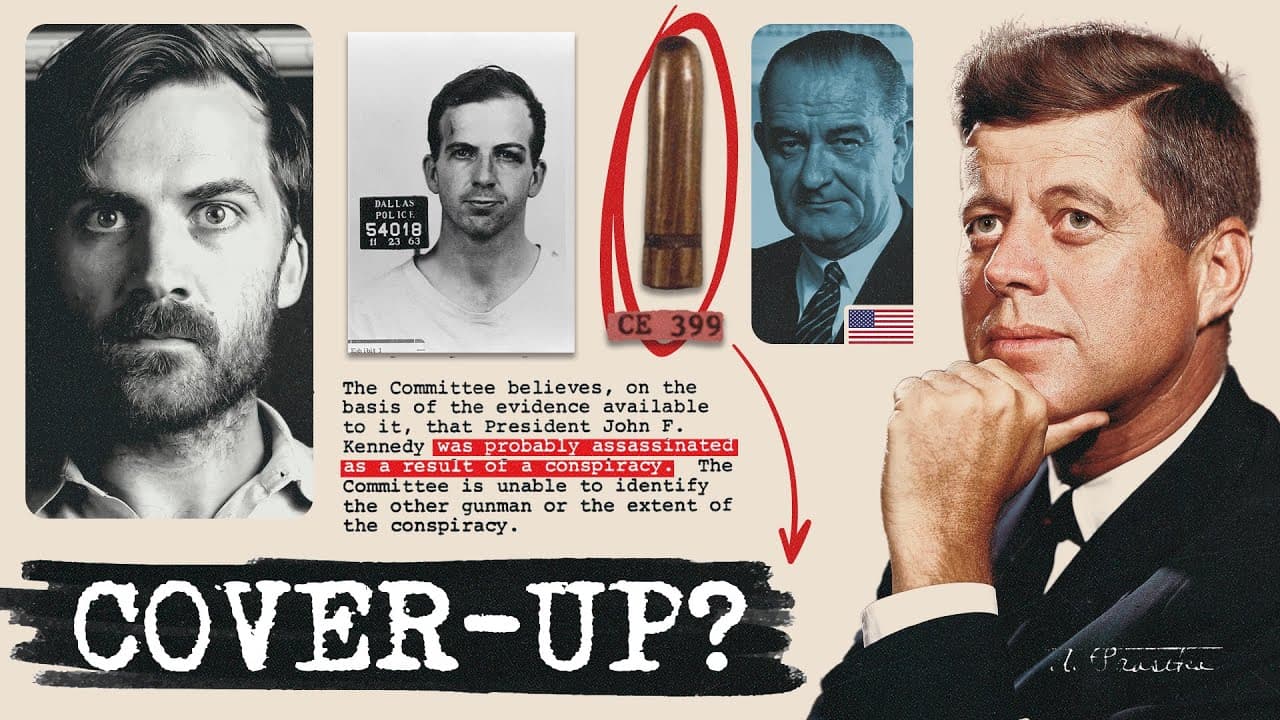
Many believe the government killed JFK due to a lack of transparency and conflicting evidence surrounding his assassination. The Warren Commission's conclusion that Lee Harvey Oswald acted alone has faced widespread skepticism, particularly after subsequent investigations indicated a likely conspiracy. The combination of suppressed information, a desire to prevent public panic during the Cold War, and the release of significant evidence have kept conspiracy theories alive.
Transcript
Read and summarize the transcript of this video on Glasp Reader (beta).
Key Insights
- The JFK assassination has been shrouded in mystery and conspiracy theories, fueled by government secrecy and conflicting reports.
- The Warren Commission's investigation focused on Lee Harvey Oswald as the sole perpetrator, but many questioned its conclusions due to ignored evidence.
- The U.S. government was concerned about public panic and geopolitical tensions during the Cold War, influencing their narrative of the assassination.
- The release of the Zapruder film and subsequent Congressional investigations reignited public skepticism about the official story.
- The House Select Committee on Assassinations concluded there was likely a conspiracy, contradicting the Warren Commission's findings.
- The release of 5 million documents in 2017 failed to provide a definitive answer, leaving conspiracy theories to persist.
- The lack of transparency and destruction of evidence by the FBI and CIA contributed to public distrust in the government.
- Despite extensive investigations, no concrete evidence has emerged to prove an alternative theory to Oswald acting alone.
Install to Summarize YouTube Videos and Get Transcripts
Explore YouTube Video Summarizer or Get YouTube Transcript Extractor
Questions & Answers
Q: What was the Warren Commission's conclusion about the JFK assassination?
The Warren Commission concluded that Lee Harvey Oswald acted alone in the assassination of President John F. Kennedy. Their report emphasized that there was no conspiracy, domestic or foreign, and that all shots were fired by Oswald from the sixth floor of the Texas School Book Depository.
Q: Why did the U.S. government emphasize Oswald acting alone?
The U.S. government emphasized Oswald acting alone to prevent public panic and geopolitical tensions during the Cold War. If the assassination were perceived as a conspiracy, especially involving foreign powers, it could have escalated into a larger conflict and destabilized the country.
Q: How did the release of the Zapruder film impact public perception?
The release of the Zapruder film, which visually documented JFK's assassination, reignited public skepticism about the official story. It contradicted some aspects of the Warren Commission's findings and fueled demands for a more thorough investigation, as it suggested the possibility of multiple shooters.
Q: What did the House Select Committee on Assassinations conclude?
The House Select Committee on Assassinations concluded that there was a high probability of a conspiracy in JFK's assassination. They criticized the Warren Commission for its narrow focus and asserted that the investigation had been influenced by preconceived conclusions, highlighting the possibility of multiple gunmen.
Q: Why did the government withhold information about the assassination?
The government withheld information about the assassination due to Cold War fears, concerns about public panic, and a desire to maintain a simplified narrative. The CIA and FBI were also involved in covert operations, and revealing too much could have exposed sensitive activities and damaged national security interests.
Q: What impact did the release of government documents have on the conspiracy theories?
The release of millions of government documents in 2017 failed to provide a definitive answer to the JFK assassination, leaving conspiracy theories to persist. While it confirmed some suspicions of a cover-up, it did not uncover any solid evidence of a conspiracy, perpetuating public distrust and speculation.
Q: What role did the Cold War play in shaping the investigation?
The Cold War played a significant role in shaping the investigation, as the U.S. government was concerned about maintaining public calm and preventing geopolitical escalation. They feared that acknowledging a conspiracy, particularly involving foreign powers, could lead to conflict and destabilize the nation.
Q: How has public trust in the government been affected by the assassination investigation?
Public trust in the government has been significantly affected by the assassination investigation due to the lack of transparency and the destruction of evidence by the FBI and CIA. The perception of a cover-up has led to enduring skepticism and conspiracy theories, contributing to a broader distrust of government institutions.
Summary & Key Takeaways
-
The JFK assassination has been a subject of intense speculation and conspiracy theories due to government secrecy and conflicting evidence. The Warren Commission's report, which concluded that Lee Harvey Oswald acted alone, has been widely criticized for its selective use of evidence and lack of transparency.
-
Subsequent investigations, including the House Select Committee on Assassinations, suggested a likely conspiracy, further fueling public skepticism. The release of the Zapruder film and government documents only added to the controversy, as they failed to provide conclusive answers.
-
The U.S. government's handling of the investigation, driven by Cold War fears and a desire to maintain public calm, has left a lasting impact on public trust. Despite the release of millions of documents, the truth behind JFK's assassination remains elusive, perpetuating conspiracy theories.
-
(Content reviewed on 2026-08-27.)
Read in Other Languages (beta)
Share This Summary 📚
Summarize YouTube Videos and Get Video Transcripts with 1-Click
Try YouTube Summary with ChatGPT & Claude or YouTube Transcript Generator
Explore More Summaries from Johnny Harris 📚

Summarize YouTube Videos and Get Video Transcripts with 1-Click
Try YouTube Summary with ChatGPT & Claude or YouTube Transcript Generator