How to Build Features Faster With AI Agents
TL;DR
Use specialized AI agents in a staged workflow: convert meeting transcripts into requirements, turn those requirements into an actionable technical plan, implement prioritized tasks, and review every completed change. A product strategy advisor, system architect, staff engineer, and senior code reviewer can divide responsibilities while repeated implementation and review cycles keep work organized within an existing codebase.
Transcript
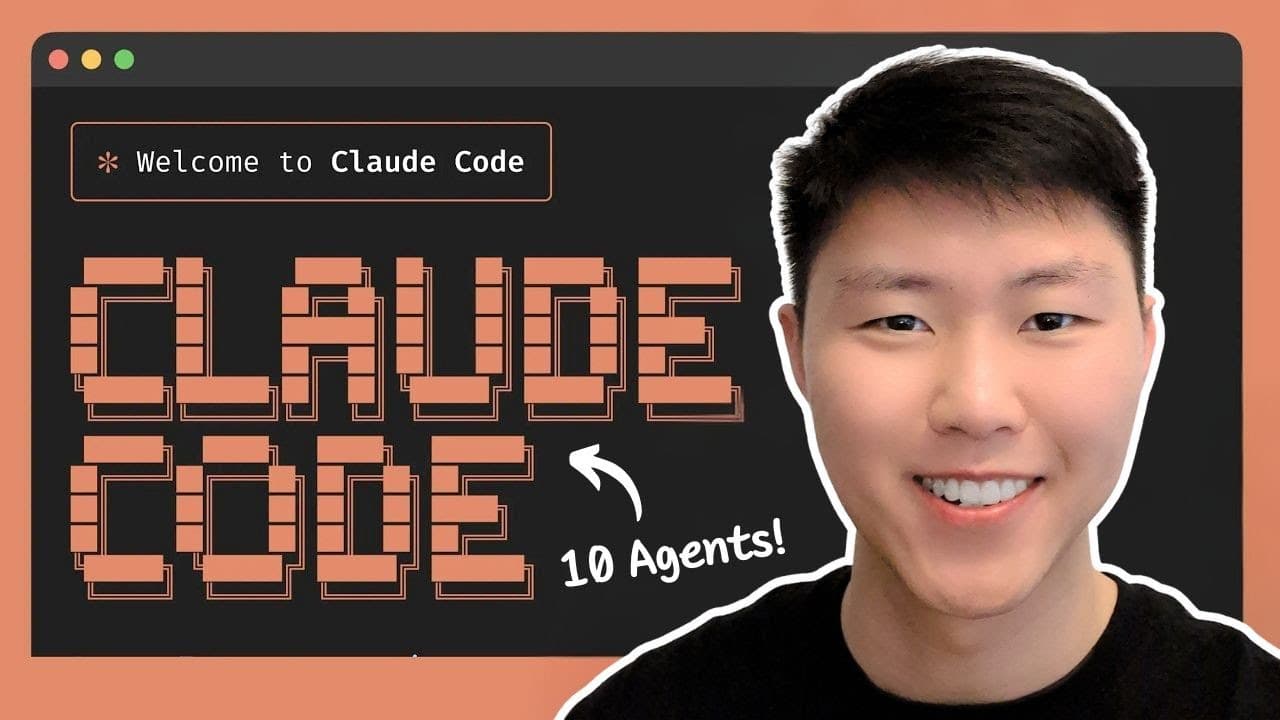
In this video, I'm going to show you my personal development workflow on how I be able to build features on an existing projects using five to 10 sub agents inside of claw code. So, it doesn't matter if you are in a big tech company or working at a startups, chances are you're probably going to touch with existing codebase. So, that's why in this v... Read More
Key Insights
- Meeting transcripts are the starting point for gathering project requirements because they capture discussions with product managers, stakeholders, and cross-team participants. The transcript can be summarized in Claude Code and transformed into documentation that describes what the team is trying to fix or build.
- The product strategy advisor is responsible for analyzing the existing codebase and understanding the intended product change. It receives current project context and meeting-derived requirements, then improves the plan, documentation, file naming, and developer readability before technical implementation begins.
- The system architect is responsible for converting the product plan into a scalable and maintainable technical plan. Its output includes actionable tasks, project phases, measurable completion criteria, checkpoints, task sizes, and indications of which tasks can be executed in parallel.
- The staff engineer is responsible for prioritizing and implementing the technical task list. It identifies which work should begin first, understands each task before changing the code, and applies full-stack knowledge across languages, databases, and architectures while completing assignments sequentially.
- The senior code reviewer is responsible for checking both documentation and code changes after an implementation task is completed. It evaluates whether the feature is complete, updates task status, provides a score or approval rating, and returns actionable recommendations that another agent can follow.
- The implementation loop is a repeated exchange between the staff engineer and senior code reviewer. The staff engineer completes a numbered task, the reviewer evaluates it, and the same prompt structure can be reused for the next task by changing the task identifier.
- Review feedback is divided between findings that support approval and minor improvements that may be addressed later. Examples from the demonstration include production deployment integration, API key rotation, security enhancements, and unit test coverage, allowing acceptable work to proceed without losing recommended follow-up items.
- Specialized sub-agents are refined for different responsibilities rather than using one agent for the entire development process. The demonstrated roles cover product strategy, system architecture, implementation, and code review, while the creator continually adjusts their prompts according to the needs of each project.
Install to Summarize YouTube Videos and Get Transcripts
Explore YouTube Video Summarizer or Get YouTube Transcript Extractor
Questions & Answers
Q: How can AI agents turn meeting notes into project requirements?
Enable transcription or a note-taking application during meetings with product managers, stakeholders, or cross-team participants. Pass the resulting plain-text meeting notes to Claude Code and ask it to summarize the discussion and gather project requirements. Then give those requirements, along with context about the existing project and proposed implementation, to a product strategy advisor for refinement and clearer developer documentation.
Q: What does a product strategy advisor agent do?
A product strategy advisor analyzes the existing codebase and the proposed product work before implementation begins. It uses project context and meeting-derived requirements to understand what the team is trying to build. It can summarize the project, review and improve documentation, rename files when requested, create a product plan, and make the material easier for developers to understand.
Q: How does a system architect agent create an implementation plan?
A system architect receives the refined product plan and converts it into a scalable, maintainable technical plan that developers can follow. The plan breaks the project into specific and measurable tasks across multiple phases. It also defines completion checkpoints, estimates task sizes, and identifies work that can run in parallel, producing an actionable sequence for completing the project.
Q: What is the staff engineer agent responsible for?
The staff engineer prioritizes and executes tasks from the technical implementation plan. It first determines which tasks need to start immediately, then studies an assigned task before implementing it. The agent is designed for full-stack development and works across different languages, databases, and architectures while completing numbered assignments and reporting the status of each finished task.
Q: How does the senior code reviewer agent evaluate completed work?
The senior code reviewer examines the documentation and code changes produced by the staff engineer. It checks whether the requested feature or task is fully complete, updates the task status, and provides a score or approval rating. Its findings include positive results and actionable recommendations that the implementation agent can follow, such as security, deployment, or test improvements.
Q: How do implementation and review agents work together?
The staff engineer and senior code reviewer operate in a repeating cycle. The staff engineer implements one numbered task, such as task 1.1, and the reviewer evaluates that work before the workflow proceeds. After approval or consideration of the feedback, the staff engineer moves to the next task. The same prompts can be reused by replacing the previous task identifier.
Q: What checks were included in the Azure OpenAI API task?
The demonstrated task checked Azure OpenAI API validation by making a curl call and confirming that the API responded successfully within the required performance target. The task also covered budget limits, security, error handling, and monitoring. After completion, the senior reviewer examined the work and returned findings and recommendations before the workflow continued to later tasks.
Q: Why use specialized sub-agents on an existing codebase?
Specialized sub-agents divide feature development into distinct responsibilities that resemble an engineering workflow. One agent clarifies product requirements, another creates the technical plan, a staff engineer implements tasks, and a senior reviewer checks the results. This structure also improves context management within Claude Code sessions and allows prompts to be refined for the particular project being developed.
Summary & Key Takeaways
-
The workflow begins with meetings involving product managers, stakeholders, or cross-team participants. Meeting transcripts are converted into plain text and passed to Claude Code for summarization and requirement gathering. A product strategy advisor then reviews the existing project context, clarifies the proposed implementation, improves documentation, and makes the resulting plan easier for developers to understand.
-
A system architect converts the product plan into a technical document and implementation task list. The tasks are divided into phases, given checkpoints and sizes, and marked when parallel execution is possible. A staff engineer then prioritizes the work, identifies what should begin first, and implements each assigned task after understanding its requirements.
-
Each implementation is passed to a senior code reviewer that examines code changes and documentation, updates task status, assigns a review score or approval rating, and produces actionable feedback. The staff engineer and reviewer repeat this cycle for subsequent tasks, while minor recommendations can be recorded for later if the current work is acceptable.
Read in Other Languages (beta)
Share This Summary 📚
Summarize YouTube Videos and Get Video Transcripts with 1-Click
Try YouTube Summary with ChatGPT & Claude or YouTube Transcript Generator
Explore More Summaries from Eric Tech 📚


Summarize YouTube Videos and Get Video Transcripts with 1-Click
Try YouTube Summary with ChatGPT & Claude or YouTube Transcript Generator