How to Implement AI Native SDLC with Claude Code
TL;DR
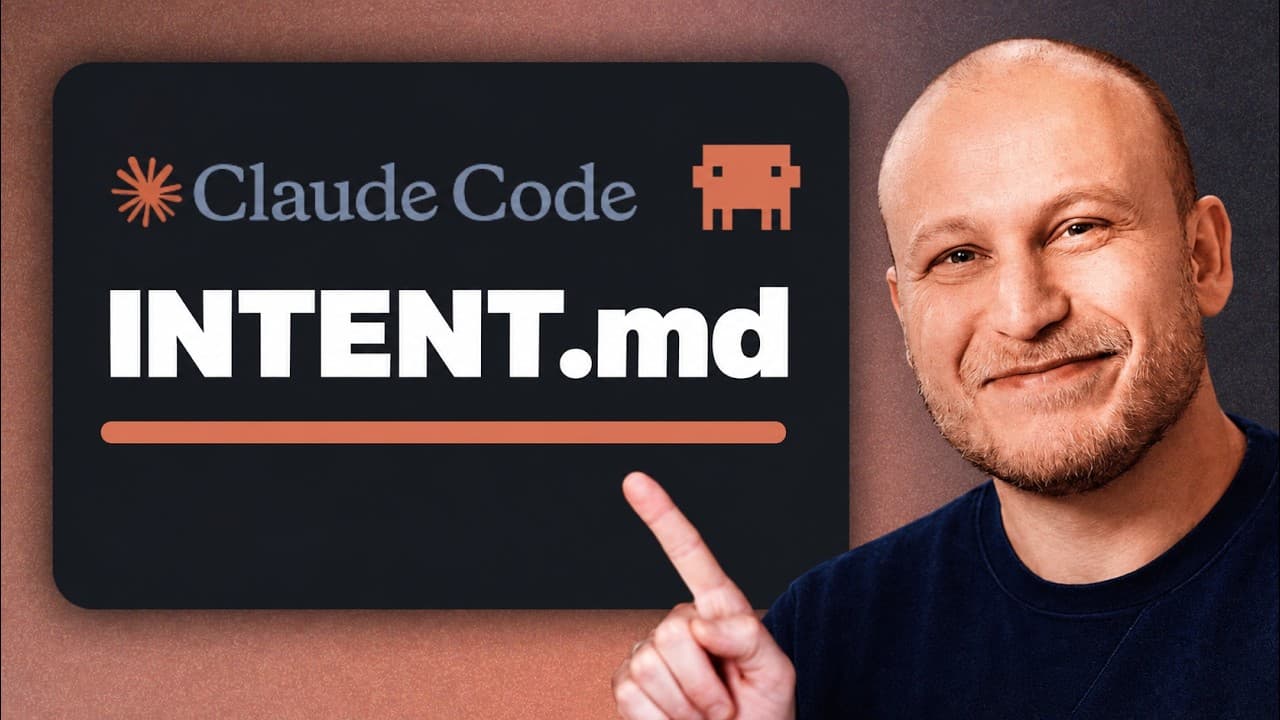
The video explains how to apply Anthropic's AI native SDLC using intent.md, spec.md, and plan.md to guide AI agents through planning, design, testing, and deployment. It also shows how to shrink build time with AI, emphasize test driven development, and integrate reviews, CI/CD checks, and a feedback loop for continuous improvement.
Transcript
Recently Boris turnney the head of claw code and the enthropy team has just released their AI native SDLC playbook. Now essentially what SDLC means is software development life cycle. Essentially the way how that works for the life cycle is it usually go through this kind of cycle here where first start with planning, designing, building and eventu... Read More
Key Insights
- AI native SDLC shortens the building phase by using AI to automate and accelerate tasks that were traditionally manual.
- Intent MD files capture why decisions are made and what outcomes are expected, serving as a bridge between planning and design.
- Spec MD files define concrete technical requirements and expected behavior, translating intent into measurable criteria.
- Plan MD converts intent and spec into concrete tasks for AI agents with clear ownership and milestones.
- Test driven development is recommended to ensure code correctness before building, using checks and verification loops.
- Code reviews, agent evals, and automated checks act as continuous quality gates during development.
- Deployment checks and production monitoring are essential to maintain reliability after release.
- Feedback loops reuse real issues from production to inform the next planning cycle, enabling iterative improvement.
Install to Summarize YouTube Videos and Get Transcripts
Explore YouTube Video Summarizer or Get YouTube Transcript Extractor
Questions & Answers
Q: What is the AI native SDLC and why use it in development.
The AI native SDLC is a software development lifecycle adapted to leverage AI agents to perform planning, design, building, testing, deployment, and maintenance with reduced human speed in the build phase. This approach uses intent MD to capture rationale, spec MD for concrete requirements, and plan MD to outline executable tasks, enabling faster delivery while maintaining quality through structured artifacts.
Q: How do intent MD and spec MD differ and why both matter?
Intent MD explains the why behind a feature or change, including problems, proposed outcomes, constraints, and open questions. Spec MD then translates that into the what, detailing technical requirements and expected behavior. Using both ensures a clear motivation is preserved while providing precise instructions for implementation, which helps AI agents execute correctly and consistently.
Q: What role does plan MD play in this workflow?
Plan MD takes the combined intent and spec and turns them into an actionable task list for AI agents. It defines the sequence of work, file changes, interfaces, and success criteria, and may include risk considerations and testing plans. This gives agents a concrete roadmap to follow and aligns teams on implementation steps.
Q: Why is test driven development emphasized in the AI SDLC?
Test driven development is emphasized to create tests before writing code, establishing a feedback loop where AI agents refine code until tests pass. This helps catch issues early, ensures code quality, and provides verifiable checkpoints such as linting results and test outcomes that validate that the AI-generated work meets the defined requirements.
Q: How are tests set up and used in this approach?
Tests are created early and used as a gate for progress. The AI agent is prompted to generate or update tests alongside code, and builds or lints are run to verify progress. This process ensures that any AI output can be automatically checked and corrected, reducing the chance of defects making it to later stages.
Q: What artifacts are used to guide AI agents through lifecycle stages?
The artifacts used are intent MD for the rationale, spec MD for the technical requirements, and plan MD for the executable task plan. These are stored in the project or linked to issue trackers, and they guide AI agents through planning, design, implementation, testing, and deployment with clear, testable criteria.
Q: How do AI agents interact with planning and requirements gathering?
AI agents interact by engaging stakeholders, clarifying requirements, and recording decisions through grooming sessions. They capture context and decisions into intent MD, which is then translated into a design spec and concrete plan. This ensures shared understanding and traceability from requirements to delivered code.
Q: What is the purpose of deployment checks and production monitoring?
Deployment checks ensure that the release meets defined criteria and passes all tests before going live, while production monitoring tracks behavior post deployment to catch issues early. This closed loop informs future planning by surfacing real issues that can be incorporated into subsequent intent, design, and plan iterations.
Summary & Key Takeaways
-
The video outlines a seven stage AI native SDLC cycle from planning to maintenance and back to planning for iterations, emphasizing how AI accelerates building while keeping human oversight. It explains the artifacts intent MD, spec MD and plan MD and how they translate requirements into actionable tasks for AI agents.
-
The presenter discusses the role of test driven development in an AI driven workflow, recommending tests and checks before implementation and continuous verification through linting, builds and agent evals to ensure quality before deployment.
-
The content covers deployment checks, production monitoring, and feeding new issues back into the next planning cycle, creating a closed loop that improves AI generated code and project outcomes over time.
Read in Other Languages (beta)
Share This Summary 📚
Summarize YouTube Videos and Get Video Transcripts with 1-Click
Try YouTube Summary with ChatGPT & Claude or YouTube Transcript Generator
Explore More Summaries from Eric Tech 📚
Summarize YouTube Videos and Get Video Transcripts with 1-Click
Try YouTube Summary with ChatGPT & Claude or YouTube Transcript Generator