How do JavaScript closures work in 10 minutes?
TL;DR
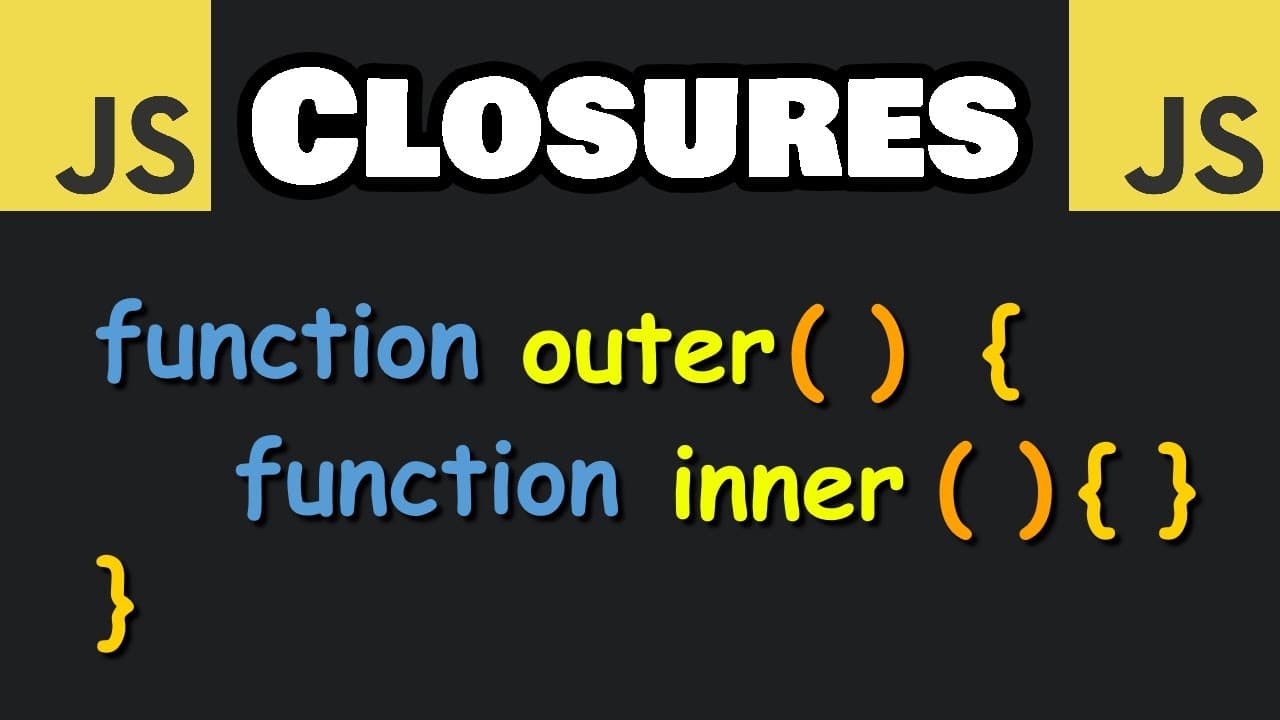
Closures let an inner function access variables from its outer function, enabling private state and controlled data exposure. The video shows this with examples: a simple inner function, a counter that maintains state, and a game scorer that hides score but exposes methods. Returning an object with methods lets you manage behavior while keeping data private.
Transcript
hey what's going on everybody so in today's video I got to explain closures in JavaScript a closure is a function defined inside of another function the inner function has access to the variables and scope of the outer function by using closures they allow for private variables and state maintenance JS libraries and Frameworks such as react View an... Read More
Key Insights
- A closure is a function defined inside another function.
- The inner function has access to the outer function's scope and variables.
- Variables inside the outer scope can be private and hidden from the outside world.
- A closure can maintain state across multiple calls by preserving outer variables.
- Returning an object with methods enables controlled interaction with private data.
- Access to private data can be provided through getter functions like getCount.
- Closures are commonly used to create modules that expose only necessary functionality.
- Frameworks such as React, Vue, and Angular frequently rely on closures for function-based components.
Install to Summarize YouTube Videos and Get Transcripts
Explore YouTube Video Summarizer or Get YouTube Transcript Extractor
Questions & Answers
Q: What is a closure in JavaScript and how does it relate to inner and outer functions?
A closure occurs when a function is defined inside another function and the inner function retains access to the outer function's variables and scope even after the outer function has finished executing. This mechanism allows the inner function to read or modify the outer variables, creating a private state and enabling controlled interaction with that state.
Q: How can closures help make variables private in JavaScript?
Closures keep variables within the outer function scope inaccessible from the outside code unless specific getter or setter functions are provided. By returning an object that exposes only selected methods, you can prevent external code from directly altering the private variables, thereby protecting the internal state and reducing unintended side effects.
Q: What role does returning an object with methods play in closure patterns?
Returning an object with methods from the outer function is a common closure pattern that exposes only the necessary operations while keeping the underlying data private. Those methods, like increment or getCount, act as controlled interfaces that manipulate the preserved outer variables, enabling stateful behavior without exposing raw data.
Q: How does a counter example demonstrate state maintenance with closures?
In the counter example, a count variable is defined in the outer function and then modified by an inner increment function. The closure retains the count value between calls, so each call to increment increases the same preserved state rather than resetting it. This illustrates how closures maintain state across invocations.
Q: What is the purpose of a getter function in a closure, as shown in the video?
A getter function provides a safe way to access private variables from outside the closure without granting direct write access. By including a getCount method in the returned object, external code can read the current value of the private count while the variable itself remains protected from unauthorized changes.
Q: How do closures relate to private data in the game example?
In the game example, score is stored in the outer scope and modified by functions like increaseScore and decreaseScore. The closure keeps score private, exposing only the methods to modify and retrieve it. This pattern prevents external code from directly altering the score, ensuring data integrity.
Q: Why are closures commonly used in frameworks like React, Vue, and Angular?
Frameworks use closures to manage component state and behavior without leaking internal variables. By wrapping component logic inside functions and returning interfaces for interaction, closures help encapsulate state, provide private data, and enable predictable component behavior across renders and user interactions.
Q: What happens when you try to access a private variable directly inside a closure example, and why?
Direct access to a private variable from outside the outer function is blocked because the variable resides in the outer function scope. The closure hides the variable from the global scope, and only the exposed methods within the returned object can interact with it. This encapsulation protects the variable from unintended external changes.
Summary & Key Takeaways
-
A closure is a function defined inside another function where the inner function can access the outer function’s variables and scope, enabling private data access.
-
A common pattern is returning an object with methods from the outer function, which keeps certain variables private while exposing useful operations.
-
A practical example uses a counter that maintains state across calls, demonstrating how closures preserve state without exposing variables directly.
Read in Other Languages (beta)
Share This Summary 📚
Summarize YouTube Videos and Get Video Transcripts with 1-Click
Try YouTube Summary with ChatGPT & Claude or YouTube Transcript Generator
Explore More Summaries from Bro Code 📚


Summarize YouTube Videos and Get Video Transcripts with 1-Click
Try YouTube Summary with ChatGPT & Claude or YouTube Transcript Generator