How to Stop Procrastinating Without Shame
TL;DR
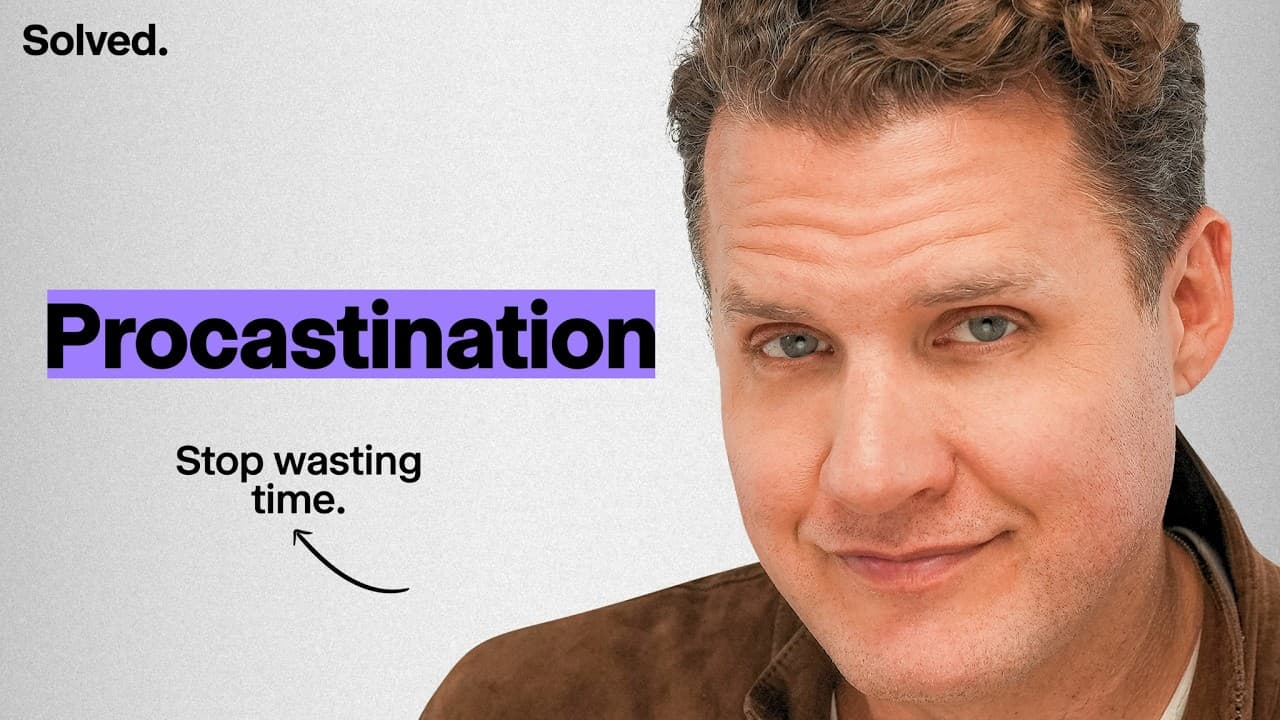
Procrastination is an unnecessary delay made despite knowing it may cause negative consequences, and reducing it requires understanding the emotions, beliefs, and habits behind avoidance. Treating procrastination as a skill problem rather than a moral failure makes room for self-compassion, while practical, research-backed strategies can help people take small actions on important tasks.
Transcript
welcome to solved the self-help podcast for smart people my name is Mark Manson three time number one new york times bestselling author and this is my co-host and longtime lead researcher Drew Birnie now drew and i have been in the personal growth and mental health space for a combined 30 years now and we've had enough we've had enough of the [... Read More
Key Insights
- Procrastination is the unnecessary delay of something despite knowing that the delay could produce negative consequences. This definition separates genuine avoidance from reasonable schedule changes caused by more important events, such as responding to an emergency instead of completing a planned task.
- Procrastination is extremely common, with 95% of adults reporting that they procrastinate at least sometimes. The transcript also states that 42% procrastinate regularly and 25% qualify as chronic procrastinators who delay many of the things they attempt to do.
- Prioritization is not procrastination because postponing one task for a genuinely more important responsibility is necessary rather than fabricated. A delay becomes procrastination when it is avoidable and occurs even though the person recognizes that failing to act may carry a cost.
- Delayed consequences can make procrastination easier to justify. Exercise and healthy eating are examples because the repercussions may not become apparent for 10, 20, or 30 years, allowing someone to dismiss the apparent cost of another inactive day or unhealthy meal.
- The most important tasks can attract the most procrastination because the proportion of avoidance is described as directly correlated with perceived importance. This creates a painful contradiction in which people postpone the goals and responsibilities that they believe matter most in their lives.
- Procrastination involves subjective judgments about whether a delay is unnecessary, whether a consequence is truly negative, and whether the person understands the risk. People may sustain avoidance by persuading themselves that postponement is necessary or that its consequences will be insignificant.
- Procrastination is presented as a skill issue rather than a moral failure. This framing shifts attention away from condemning a person’s character and toward understanding shame, identity, perfectionism, culture, and the practical abilities needed to begin and continue meaningful work.
- Self-compassion is described as more motivating than guilt when responding to procrastination. The broader approach therefore seeks to reduce shame while offering research-backed tactics, including taking small steps, rather than depending only on familiar productivity advice such as setting a timer.
Install to Summarize YouTube Videos and Get Transcripts
Explore YouTube Video Summarizer or Get YouTube Transcript Extractor
Questions & Answers
Q: What is procrastination?
Procrastination is the act of unnecessarily delaying something despite knowing that doing so could have negative consequences. The definition contains three elements: the delay is unnecessary, a negative outcome may follow, and the person has some awareness of that risk. Each element involves subjective judgment, which makes it possible to rationalize avoidance by minimizing the cost or portraying the delay as necessary.
Q: How is procrastination different from prioritization?
Prioritization postpones a task because another responsibility genuinely deserves attention first, while procrastination involves an unnecessary delay. If someone plans to write but must instead respond to a spouse’s car accident and go to the hospital, the change is not procrastination. The distinction depends on whether the interruption reflects a legitimate priority or a fabricated justification for avoiding the original task.
Q: How common is procrastination among adults?
Procrastination is described as a nearly universal experience. The transcript reports that 95% of adults procrastinate at least some of the time, 42% do so regularly, and 25% are chronic procrastinators. Chronic procrastination means repeatedly delaying many or nearly all attempted responsibilities, making the issue a broad and persistent problem rather than an occasional lapse in productivity.
Q: Why do people procrastinate on important tasks?
People may be more likely to procrastinate when a task feels especially important. The discussion states that the proportion of procrastination is directly correlated with perceived task importance. It also connects avoidance with shame, identity, perfectionism, and culture. Together, these factors help explain why personally meaningful goals can create enough internal difficulty that a person delays the very work they value most.
Q: Why are exercise and healthy eating easy to postpone?
Exercise and healthy eating can be easy to delay because their negative feedback loops may extend across 10, 20, or 30 years. When consequences are distant rather than immediate, a person can tell themselves that eating pizza or spending another day on the couch has no meaningful downside. That interpretation makes the present delay feel harmless, even when repeated choices could eventually matter.
Q: Is procrastination a moral failure or a skill issue?
Procrastination is presented as a skill issue, not a moral failure. That distinction redirects attention from judging someone as lazy or deficient toward examining the psychological and practical mechanisms behind avoidance. Shame, identity, perfectionism, and culture can all matter, while improved skills and research-backed strategies can help a person reduce delays and take action on meaningful responsibilities.
Q: Can procrastination be eliminated completely?
Procrastination may not be something people can completely eliminate. The discussion suggests that it could be a side effect or cost of being human, possessing agency, and having a complex brain. A more attainable goal is to lessen or mitigate it. The hosts argue that most people can make meaningful progress relatively quickly by applying practical strategies instead of expecting permanent perfection.
Q: How can self-compassion help with procrastination?
Self-compassion is described as more motivating than guilt, making it a useful response to procrastination. Treating avoidance as evidence of moral failure can intensify shame, while a more compassionate approach allows the person to examine the relevant skills, emotions, and beliefs. This supports taking small steps and applying practical strategies without requiring self-condemnation as the source of motivation.
Summary & Key Takeaways
-
Procrastination affects nearly everyone, but it is distinct from sensible prioritization. It occurs when someone unnecessarily delays an action despite recognizing possible negative consequences. Because necessity, consequences, and awareness are subjective, people can maintain avoidance by convincing themselves that a delay is justified or that the eventual cost will be minor.
-
The discussion traces ideas about procrastination from Plato and Aristotle through Freud and modern research. It argues that some conventional self-help advice rests on older research that misunderstood the problem. Current explanations consider shame, identity, perfectionism, culture, emotional avoidance, and the troubling tendency to postpone tasks that feel especially important.
-
Procrastination cannot necessarily be eliminated because it may accompany human agency and complex thinking, but it can be reduced. The recommended approach treats it as a skill issue rather than a moral defect, replaces guilt with self-compassion, challenges the belief that pressure improves performance, and uses practical strategies and small steps to encourage action.
Read in Other Languages (beta)
Share This Summary 📚
Summarize YouTube Videos and Get Video Transcripts with 1-Click
Try YouTube Summary with ChatGPT & Claude or YouTube Transcript Generator
Explore More Summaries from Mark Manson 📚



Summarize YouTube Videos and Get Video Transcripts with 1-Click
Try YouTube Summary with ChatGPT & Claude or YouTube Transcript Generator