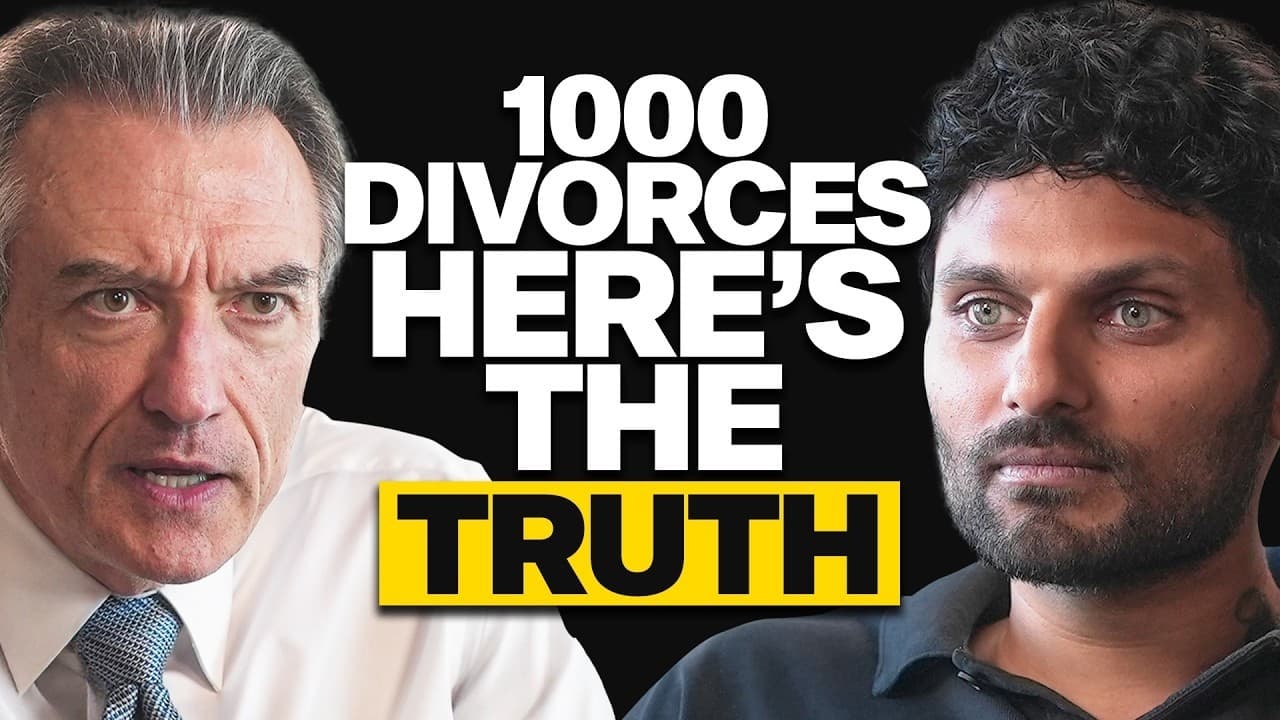
Why Do Marriages Fail? Real Reasons Behind Divorce
TL;DR
The real reason marriages fail is a failure to connect and communicate under pressure, not just conflicts. Small daily gestures and honest conversations matter more than grand romantic moments, and rebuilding trust after betrayal requires courage over comfort. Divorce often reflects a mismatch between expectations and reality, and many remarry seeking the connection they fear losing.
Transcript
Is it true that 50% of marriages ended in divorce actually a little over 50%. Yeah, it is um it's a frightening statistic when you hear it because I I've often said it it it actually creates the legal supposition that marriage is a negligent activity. You know that in the law we have this idea of negligence and recklessness. So negligence is a fail... Read More
Key Insights
- Marriage failure often stems from a lack of consistent connection and communication under pressure.
- Small daily gestures are more impactful on long term relationship health than grand romantic moments.
- The true test of love is staying close during uncomfortable conversations, not avoiding conflict.
- Rebuilding trust after betrayal requires deliberate, courageous choices over easy comfort.
- Many marriages end not solely from major betrayals but from cumulative neglect of emotional needs.
- The wedding industry often emphasizes ceremony over preparation, shaping unrealistic expectations.
- Love is powerful and fragile, making bravery essential to pursue and sustain it.
- Remarriage after divorce signals a continued human need for connection, despite prior outcomes.
- More videos from this channel:
- More from this channel: Jay Shetty Podcast
Install to Summarize YouTube Videos and Get Transcripts
Explore YouTube Video Summarizer or Get YouTube Transcript Extractor
Questions & Answers
Q: Why do marriages fall apart according to the interview
Marriages fall apart because couples lose daily connection and honest communication under pressure, not just due to big disputes. The speaker notes that people often neglect ongoing emotional maintenance and fail to address underlying needs, which leads to distance over time. This makes steady care and open dialogue crucial for durability.
Q: What does the interview say about the wedding industry
The interview argues the wedding industry tends to focus on planning the ceremony rather than preparing for a lasting marriage. This shifts attention away from the ongoing work of partnership, which the speaker views as essential. A more balanced view would treat weddings as a celebration while marriage requires continuous effort.
Q: Is divorce portrayed as a simple outcome or a complex process
Divorce is portrayed as a complex process shaped by accumulated neglect and delayed addressing of issues, not just a single event. It involves evaluating emotional needs, trust, and communication patterns. The discussion emphasizes that acknowledging problems early and choosing courageous conversations can alter the trajectory away from divorce.
Q: What role do small gestures play in lasting relationships
Small gestures play a significant role by maintaining connection, signaling care, and reinforcing partnership daily. The speaker emphasizes remembering preferences and showing ongoing consideration as practical, repeatable actions that build trust and warmth over time, helping couples stay emotionally aligned even during difficult periods.
Q: How can couples argue without breaking the bond
Couples can argue without breaking the bond by arguing with respect, focusing on the issue rather than personal attacks, and staying emotionally present. The approach emphasizes compassionate communication, listening actively, and reframing conflict as a joint problem to solve, which preserves closeness while addressing disagreements.
Q: What does rebuilding trust after betrayal entail according to the guest
Rebuilding trust after betrayal requires deliberate, courageous actions over time, including transparent communication, consistent reliability, and matching words with behaviors. It involves creating safety to share difficult truths and choosing to repair the relationship despite emotional pain, with both partners investing in gradual healing and renewed commitment.
Q: What mindset is considered brave in relationships
Bravery in relationships is choosing to love despite fear and uncertainty. The speaker argues that meaningful connections require vulnerability, the willingness to confront uncomfortable truths, and the discipline to stay close when emotions are challenging. This mindset turns commitment into proactive, ongoing work rather than a passive state.
Q: How should couples view marriage in light of the statistics discussed
Couples should view marriage as a brave, ongoing practice rather than a guaranteed success. The statistics highlight the importance of continuous care, honest dialogue, and intentional acts of connection. By prioritizing daily nurture and realistic expectations, partners can improve resilience and reduce the risk of ending the relationship.
Summary & Key Takeaways
-
A long term relationship often fails when partners stop prioritizing daily connection and honest communication, letting unresolved issues accumulate until trust erodes. The interview emphasizes small, consistent acts of care over flashy gestures as the path to lasting closeness. It also challenges common wedding culture by highlighting realism over spectacle.
-
The guest argues that the wedding industry focuses more on planning ceremonies than preparing for marriage, which can create skewed expectations. He stresses that commitment is brave because love inherently involves risk, and sustained effort makes the difference between staying together and breaking apart.
-
The discussion highlights that true intimacy requires confronting difficult topics with compassion, rebuilding trust after betrayal, and choosing courage over comfort. It suggests that meaningful relationships thrive when couples stay close during uncomfortable moments and continually reaffirm their commitment.
Read in Other Languages (beta)
Share This Summary 📚
Summarize YouTube Videos and Get Video Transcripts with 1-Click
Try YouTube Summary with ChatGPT & Claude or YouTube Transcript Generator
Explore More Summaries from Jay Shetty Podcast 📚


Summarize YouTube Videos and Get Video Transcripts with 1-Click
Try YouTube Summary with ChatGPT & Claude or YouTube Transcript Generator