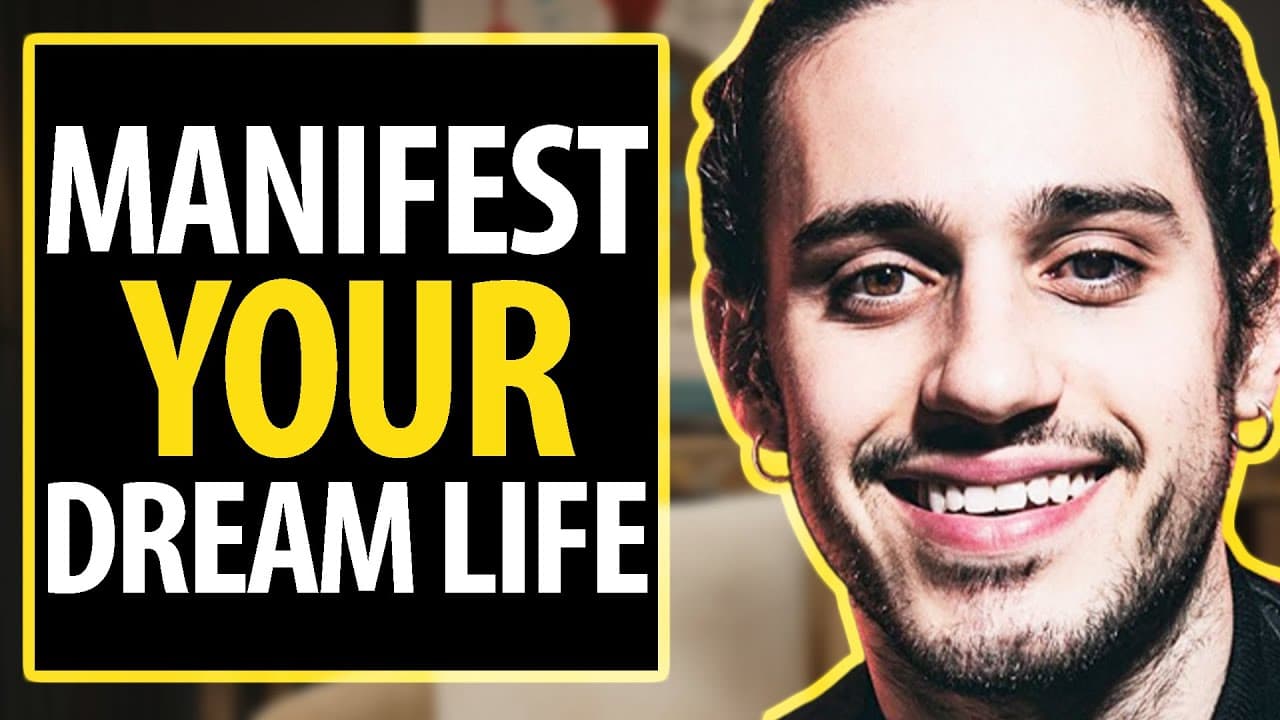
Russ ON: Delusional Self-Confidence & How To Start Manifesting Your Dream Life
TL;DR
Russ says building confidence and manifesting your goals starts with extraordinary self-belief and repeatedly feeling your desired reality as if it already exists. He credits his father’s encouragement and his own competitive drive for teaching him to turn challenges and doubt into action. He also explains why creativity requires presence, faith, and patience when inspiration disappears. Read on for his practical mindset lessons.
Transcript
what does it feel like when you see your mom's reaction to getting the beach house can you feel the car turning the corner it's about immersing yourself in that feeling as if it was going on right now and when you do that on a daily basis it's not long before reality catches up hey everyone welcome back to on purpose the number one health podcast i... Read More
Key Insights
- Extraordinary achievement is supported by an extraordinary level of belief. Russ says he did not merely hope his music career would succeed, he experienced a sense of knowing so strong that doubt had no meaningful place in his thinking.
- Self-confidence can be shaped by repeated parental encouragement. Russ credits his father with constantly telling him that he was special and capable, creating the internal permission to pursue unfamiliar challenges, including writing a book despite not reading very much.
- Competition can turn resistance into productive action. Russ describes using challenges, criticism, and even imagined slights as fuel, sometimes completing tasks he did not initially want to do simply to prove other people wrong and confirm his own ability.
- Delusional confidence works by treating a desired future as a present reality. Russ repeatedly spoke about valuable beats, wealth, and platinum success before those outcomes existed, believing that an internal change in reality must precede an external one.
- Manifestation involves immersing yourself in the feeling of a desired experience. The opening guidance asks people to imagine sensory and emotional details, such as a loved one's reaction or a car turning a corner, and revisit that experience daily.
- Creative productivity naturally includes dramatic highs and lows. Russ can feel elated after making a song he loves, yet quickly lose that satisfaction and become discouraged when the next creative session fails to produce another strong result.
- Creative flow is characterized by reduced conscious thought. Russ says his best work emerges when he stops analyzing what he should say, follows the inspiration he receives, and executes from feeling rather than trying to force an idea intellectually.
- Visibility can interfere with creativity by introducing outside opinions into the artist's mind. Russ finds flow more difficult when anticipating how a larger audience might react, so he tries to tune out external chatter and focus on the present moment.
Install to Summarize YouTube Videos and Get Transcripts
Explore YouTube Video Summarizer or Get YouTube Transcript Extractor
Questions & Answers
Q: How does Russ build confidence and manifest his goals?
Russ combines extraordinary self-belief with repeated emotional immersion in the reality he wants to create. He treats the desired outcome as real internally, takes action from that certainty, and uses challenges or doubt as fuel.
Q: How does manifestation work according to Russ?
Manifestation means immersing yourself in the feeling of a desired experience as though it is happening now. Russ says to imagine sensory and emotional details, revisit that experience daily, and allow external reality to catch up.
Q: Why can delusional self-confidence help you pursue a dream life?
Russ says extraordinary outcomes require an extraordinary level of belief. His confidence felt like knowing rather than hoping, leaving little room for doubt or for other people to convince him that his goals were impossible.
Q: What role did Russ’s father play in building his confidence?
Russ’s father repeatedly told him he was special and could do anything he wanted. That encouragement gave Russ the confidence to attempt unfamiliar projects, including writing a book even though he did not read very much.
Q: How does Russ use competition as motivation?
Russ turns challenges, criticism, and perceived doubt into reasons to act. He describes completing a large set of extra math questions to prove his father wrong and says he sometimes creates motivational conflicts in his mind when he needs fuel.
Q: Why does outside chatter weaken self-confidence?
Russ suggests that believing in himself was easier before he was exposed to haters and outside opinions. As visibility grows, anticipating other people’s reactions can introduce doubt and make it harder to stay focused on personal conviction.
Q: How can an artist enter a creative flow state?
Russ says his best creative work emerges when he stops overthinking and follows feeling. Instead of forcing an idea or debating what to say, he treats himself as a vessel that receives and delivers the music.
Q: How should creators handle periods without inspiration?
Russ responds to unproductive periods by trusting that inspiration will return rather than forcing it. He accepts that he will not always be ready to receive an idea and relies on faith, patience, and attention to the present moment.
Summary
In this video, Russ, an American rapper, singer, songwriter, and producer, discusses his journey to success and the challenges he faced along the way. He talks about the importance of self-belief, the power of being present, and the need to break free from creative limitations. Russ also touches on the difficulties of fame and the misconception that money and success bring complete happiness.
Questions & Answers
Q: How does it feel when you see your mom's reaction to getting the beach house?
The feeling is indescribable. It's about immersing yourself in that feeling and believing it's happening right now. When you live in that state of belief on a daily basis, reality catches up.
Q: Can you feel the car turning the corner?
It's not just about visualizing the end result, but also feeling the entire experience. It's about embodying the emotions and sensations as if they are happening in the present moment.
Q: What is it like to be a successful musician and author?
It's surreal and sometimes overwhelming. At times, I get caught up in the magnitude of it all and forget to appreciate how far I've come. But overall, I'm incredibly grateful for the opportunities and experiences I've had.
Q: How did your 17-year-old self feel knowing this would be your life?
My 17-year-old self would have thought I was lame for not achieving success earlier. They would have seen my journey to 28 as a failure. But I believe that extraordinary accomplishments require an extraordinary level of belief.
Q: Why do people doubt themselves?
Doubt can stem from various factors, such as age, exposure to external criticism, and lack of self-belief. When I was 17, it was easier to believe in myself because there were no haters or naysayers. Additionally, the support and confidence instilled by my parents played a significant role in shaping my belief in myself.
Q: How did you navigate the doubts and negative voices?
I credit my self-belief and the influence of my parents for helping me overcome doubts and negative voices. Believing in oneself is crucial in achieving something extraordinary. While doubts may arise, having that unwavering belief in your abilities helps to push through and stay focused on your goals.
Q: Why is delusion useful in pursuing your goals?
Delusion, or the belief in something that others may perceive as unlikely or impossible, can be a driving force in achieving extraordinary success. By distorting reality and envisioning one's goals as already accomplished, it creates the mindset needed to make it a reality. However, delusion can be dangerous if it serves ill intentions or negatively impacts others.
Q: How do you tap into your creativity even on days when you feel lazy?
Creativity can be a rollercoaster ride. Some days, I lack motivation or inspiration, but I've learned not to force it. I find it helpful to focus on being present, eliminating thought, and allowing the creative flow to guide me. It's about letting go of expectations and going with the flow.
Q: What leads to moments of alignment where you can deliver rather than force creativity?
I find that being present and eliminating excessive thinking allows me to tap into moments of alignment and flow. By staying in the present moment, fully absorbing the music, and trusting my instincts, I can deliver without overthinking or forcing creativity.
Q: How do you trust yourself when you discover something unconventional in the studio?
Trusting myself comes from a deep level of confidence and self-assurance. When I stumble upon unconventional sounds or ideas, I embrace them and trust in my creative instincts. It's about shaking up the traditional formula and allowing for exploration and experimentation.
Q: How do you balance confidence with a desire to learn and grow?
It's important to maintain confidence in oneself while also being open to learning from others. Confidence doesn't equate to knowing everything. I've always been a fan of other artists and enjoy collaborating with them because I recognize their talent and what they bring to the table. It's about finding a balance between believing in your abilities and appreciating the talents of others.
Takeaways
The journey towards success can be filled with challenges and doubts. It's essential to maintain self-belief, even when faced with criticism or setbacks. Trusting in your creative instincts and embracing new ideas can lead to breakthrough moments. While fame and money may bring certain benefits, they don't eliminate human emotions or challenges. It's crucial to have at least one person who believes in you and to cultivate a supportive network. Ultimately, success is a personal journey that requires a combination of self-assurance, continuous growth, and the ability to stay present.
Summary & Key Takeaways
-
Russ attributes his career to an unusually strong certainty that his ambitions would become real. His father consistently told him he was special and capable of anything, while his competitive personality pushed him to exceed expectations, complete difficult challenges, and use even small doubts from others as motivation to prove himself right.
-
Manifestation is presented as repeatedly entering the emotional experience of an achieved goal before external circumstances match it. Russ recalls describing his beats as highly valuable and speaking as though major career milestones had already happened. He believes changing reality begins with accepting the desired outcome internally as an existing reality.
-
Creative work brings dramatic emotional highs and lows because one successful studio session can produce elation, while several unproductive days can provoke despair. Russ manages this uncertainty by viewing himself as a vessel who discovers and delivers music, trusting that inspiration returns when he stops forcing ideas and becomes fully present.
Read in Other Languages (beta)
Share This Summary 📚
Summarize YouTube Videos and Get Video Transcripts with 1-Click
Try YouTube Summary with ChatGPT & Claude or YouTube Transcript Generator
Explore More Summaries from Celebrities 📚




Summarize YouTube Videos and Get Video Transcripts with 1-Click
Try YouTube Summary with ChatGPT & Claude or YouTube Transcript Generator