Katee Sackhoff: ON How To Speak To Yourself
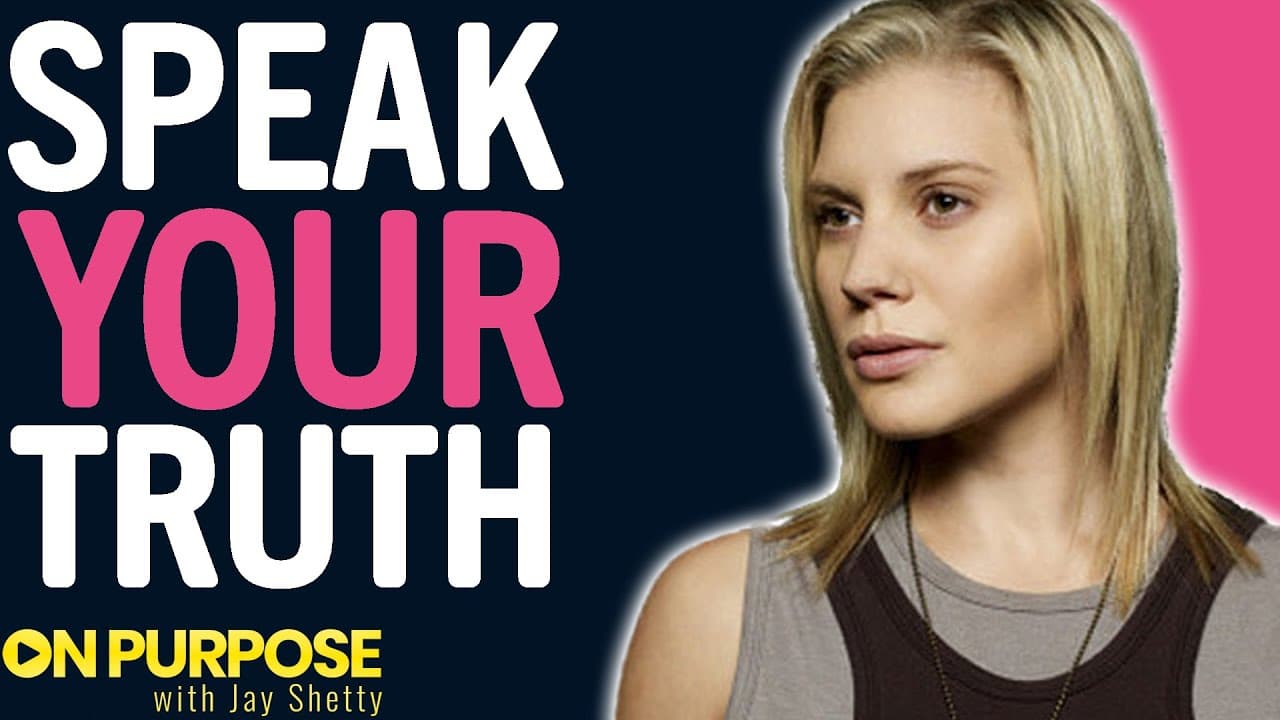
TL;DR
There is a real difference between what you are good at and what brings you joy, and chasing joy makes mastery easier because you love the work. Katee Sackhoff was a talented swimmer who hated it, and an injury freed her to try acting. She auditioned for her Battlestar Galactica role six or seven times, never taking rejection personally.
Transcript
i knew something was wrong with me um and i just couldn't put my finger on it and i kept going to the doctor and i kept you know saying no there's something wrong there's something wrong um they attributed everything to my lack of sleep and that i worked too hard and all of these things and and then they eventually found out that it was thyroid can... Read More
Key Insights
- The thing you are good at and the thing that gives you joy are often not the same. Sackhoff was a very good swimmer but hated it, showing that natural talent does not guarantee passion or fulfillment.
- When you love something, becoming good at it is easy because the love drives the effort. Sackhoff argues you often have to struggle to love what you are merely good at.
- Her father's best advice was to find what you love doing and then figure out how to make that your career, a principle he hammered home repeatedly.
- A swimming injury became a blessing in disguise, giving Sackhoff the courage to tell her parents she no longer wanted to swim and opening the path toward acting.
- Her acting career began by chance when her mother answered a newspaper ad for a Kirsten Dunst body double; told she was too tall for that, she auditioned for an acting part instead and booked it.
- Taking work seriously and having fun are not mutually exclusive. A co-star's lecture on Battlestar Galactica taught the 21-year-old Sackhoff that she could enjoy herself while still honoring her opportunity.
- Sackhoff auditioned for her Battlestar Galactica role six or seven times and refused to quit, treating each rejection as a signal to move to the next opportunity rather than a personal failure.
- She was drawn to the tough, fearless Battlestar character as a role model for who she wanted to become, not who she already was, using the role to grow into that person.
Install to Summarize YouTube Videos and Get Transcripts
Explore YouTube Video Summarizer or Get YouTube Transcript Extractor
Questions & Answers
Q: What was Katee Sackhoff's cancer diagnosis and how was it discovered?
Katee Sackhoff was diagnosed with thyroid cancer, which she affectionately calls her 'baby cancer' because there was only a very small, minute chance it could be life-threatening. She knew something was wrong and repeatedly went to the doctor, but they attributed everything to her lack of sleep and working too hard before eventually finding it was thyroid cancer. She says she didn't realize at the time how life-changing the experience would become.
Q: What is the difference between what you are good at and what you love?
Sackhoff explains that where you find your joy and what you are good at are often not the same thing. She was a very good swimmer but hated it, feeling no passion or joy in practice. She argues that the thing you are merely good at, you often have to struggle to love, whereas when you genuinely love something, becoming good at it comes easily because the love itself drives the effort.
Q: How did Katee Sackhoff get into acting?
After a swimming injury ended that path, Sackhoff's mother wanted to get her out of the house because she was so sad, and found a newspaper ad seeking a body double for Kirsten Dunst. When Sackhoff went down, they told her she was too tall and too big to be Dunst's body double, but asked if she wanted to audition for an acting part. She claimed she knew how to act, her mom helped her memorize the lines, she booked the job, and never looked back.
Q: What advice did Katee Sackhoff's father give her about a career?
Sackhoff's father gave her what she considers his best advice ever: find what you love doing and then figure out how to make that your career. She notes that while many people say similar things, like you'll never work a day in your life if you enjoy your work, her dad really hammered that principle home for her, and she believes it is what ultimately led her toward acting rather than a path she felt merely obligated to follow.
Q: Why should you not take 'no' personally, according to Katee Sackhoff?
Sackhoff says she never took rejection personally in the business; when someone told her no, she simply said okay and moved on to the next opportunity. She auditioned for her Battlestar Galactica role six or seven times and refused to quit. She credits a kind of blissful childhood ignorance where she didn't consider failure an option and had no plan B, which let her push through repeated rejection without internalizing it as not being good enough.
Q: What lesson did Katee Sackhoff learn on Battlestar Galactica about taking work seriously?
At 21, Sackhoff wasn't taking the role seriously and was just having fun until a co-star pulled her aside and gave her a serious lecture. He told her she had an opportunity that so many people wish they had and that she needed to take it seriously, saying she would be really good if she actually tried. She realized you can have fun while still taking responsibility and treating something seriously at the same time.
Q: How did Katee Sackhoff approach her Battlestar Galactica audition?
Sackhoff was deeply drawn to the tough, take-no-prisoners, honest woman who wasn't scared of anything, seeing the character as a role model for who she wanted to become rather than who she already was. Though earlier in her career she lacked the courage to refuse roles that cast her as a little blonde girl, she was desperate to play this part, auditioned six or seven times, and simply wouldn't take no for an answer until she got it.
Q: How can a negative event become a turning point in life?
Sackhoff reflects that sometimes a negative event awakens us to what we are meant to do. Her swimming injury, which felt like a loss, became a crazy blessing in disguise because it finally gave her the courage to tell her parents she didn't want to swim anymore. Coming from a family that didn't talk about emotions, she doubts they would have understood her lack of joy, so the injury created the opening she needed to pursue acting, where she could actually experience joy.
Summary
In this video, Katie Sackhoff, an actress and producer, shares her personal experiences and journey in life, including her battle with thyroid cancer. She discusses the importance of self-love, overcoming guilt and shame, and the responsibility she feels to use her platform to connect with her audience and inspire others. Katie encourages vulnerability and openness, and emphasizes the power of connection and supporting one another.
Q: How did you discover that you had thyroid cancer?
Katie explains that she knew something was wrong with her but couldn't pinpoint it. After multiple doctor visits, her symptoms were attributed to lack of sleep and hard work. Eventually, it was discovered that she had thyroid cancer. She refers to it as her "baby cancer" because although there was a small chance it could be life-threatening, she knew it was still life-changing.
Q: How did thyroid cancer affect your life, both physically and mentally?
Thyroid cancer brought a sense of fear and uncertainty for Katie. She felt out of control and it reminded her of the fragility of life. She went through a period of being scared, depressed, and terrified. To cope, she gave herself 10 minutes a day to feel sorry for herself, cry, and vent. She also adopted a practice of finding three things that could make her situation worse, providing perspective and gratitude for what she had.
Q: How did you overcome guilt and shame related to your experience with thyroid cancer?
Katie had survivor's guilt for having a milder form of cancer compared to others. She had to forgive herself and have compassion, recognizing that she couldn't control what others were going through. She learned to love herself, realizing that guilt and shame didn't define her as a person. It was about practicing self-love and showing compassion for oneself.
Q: Why do you feel a responsibility to be vulnerable and open on social media?
Katie recalls a moment when someone told her she gave up her right to privacy because she chose a public career. While initially defensive, she eventually understood the truth in that statement. She sees her platform as an opportunity to connect with others, making them feel seen and heard. Katie wants to be authentic and share her whole self, not just highlight reels. Through vulnerability, she hopes others can find their own voice and feel part of a community.
Q: What are some key themes or messages that you think are important to share on social media?
Katie receives messages from many women struggling with body image, self-love, and mental health. These are common challenges that she addresses openly. Katie believes in supporting and uplifting others through her platform, using her own experiences and mistakes as learning opportunities. She aims to create a safe space where people can share their worries and fears, fostering a sense of community and connection.
Q: How do you respond to the messages you receive from your audience?
Katie feels honored that people open up to her about their struggles. She makes an effort to respond and acknowledge their experiences, offering support and understanding. She shares her own vulnerabilities and encourages others to do the same. Katie believes in connection and the power of using her platform to make a positive impact on others' lives.
Q: How do you navigate the challenges of body image and self-love?
Katie has had her fair share of body image struggles, facing criticism in the entertainment industry. She advises practicing self-love and looking for things you appreciate about yourself, no matter how small. Katie also engages in mirror exercises where she confronts negative self-talk directly, realizing she would never say those things to someone else. Treating oneself with kindness and compassion is essential.
Q: Can you share an example of how vulnerability and openness have created a positive impact?
Katie expresses that vulnerability and openness have allowed her to connect with others on a deeper level. People confide in her about their struggles, and she feels humbled and grateful to be a source of support. By sharing her own challenges and experiences, Katie hopes to inspire others and create a sense of belonging within her community.
Q: How do you handle the pressure and responsibilities that come with having a platform?
Katie acknowledges the responsibility that comes with having a platform. She takes it seriously and strives to use her platform to spread positive messages and connect with her audience authentically. However, she also recognizes that she is human, makes mistakes, and embraces the learning process. Katie believes in being honest about her journey and constantly striving to be a better person and make a positive impact.
Q: How has your battle with thyroid cancer shaped your perspective on life?
Thyroid cancer has made Katie appreciate every day as a gift and has taught her not to fear aging or worry about other people's opinions of her body. She emphasizes the importance of cherishing life and living with honesty, both with oneself and others. Katie sees the unexpected challenges in life as opportunities for growth and transformation.
Q: How do you find strength to push through difficult moments and never accept failure?
Katie believes that failure is not an option because she doesn't define failure as an endpoint. She sees life as a continuous journey, filled with twists and turns. By approaching challenges with determination, learning from mistakes, and focusing on self-love and compassion, Katie finds the strength to keep pushing forward and not let setbacks define her.
Summary & Key Takeaways
-
Katee Sackhoff describes being diagnosed with thyroid cancer, which she calls her 'baby cancer' because the life-threatening chance was minute, yet doctors initially blamed her symptoms on lack of sleep and overwork before finding the true cause, and she underestimated how life-changing it would be.
-
A gifted but joyless swimmer, Sackhoff was freed by an injury to pursue something new. Her mother, wanting to get her out of the house, found a newspaper ad for a body double role, which led Sackhoff to audition for and book an acting part instead.
-
On Battlestar Galactica she learned to take her craft seriously after a co-star's lecture, auditioned six or seven times for the role she loved, and built resilience by never treating a 'no' as a personal failure but as a cue to move on.
Read in Other Languages (beta)
Share This Summary 📚
Summarize YouTube Videos and Get Video Transcripts with 1-Click
Try YouTube Summary with ChatGPT & Claude or YouTube Transcript Generator
Explore More Summaries from Celebrities 📚



Summarize YouTube Videos and Get Video Transcripts with 1-Click
Try YouTube Summary with ChatGPT & Claude or YouTube Transcript Generator