How Should Policymakers Think About Advanced AI?
TL;DR
Policymakers should treat advanced AI as more than conventional software because models can encode human culture, values, creativity, and intuition. Governments can capture immediate benefits by applying current systems to bureaucratic and business processes, while safety institutions evaluate catastrophic biological and cyber risks and prepare officials for less familiar dangers.
Transcript
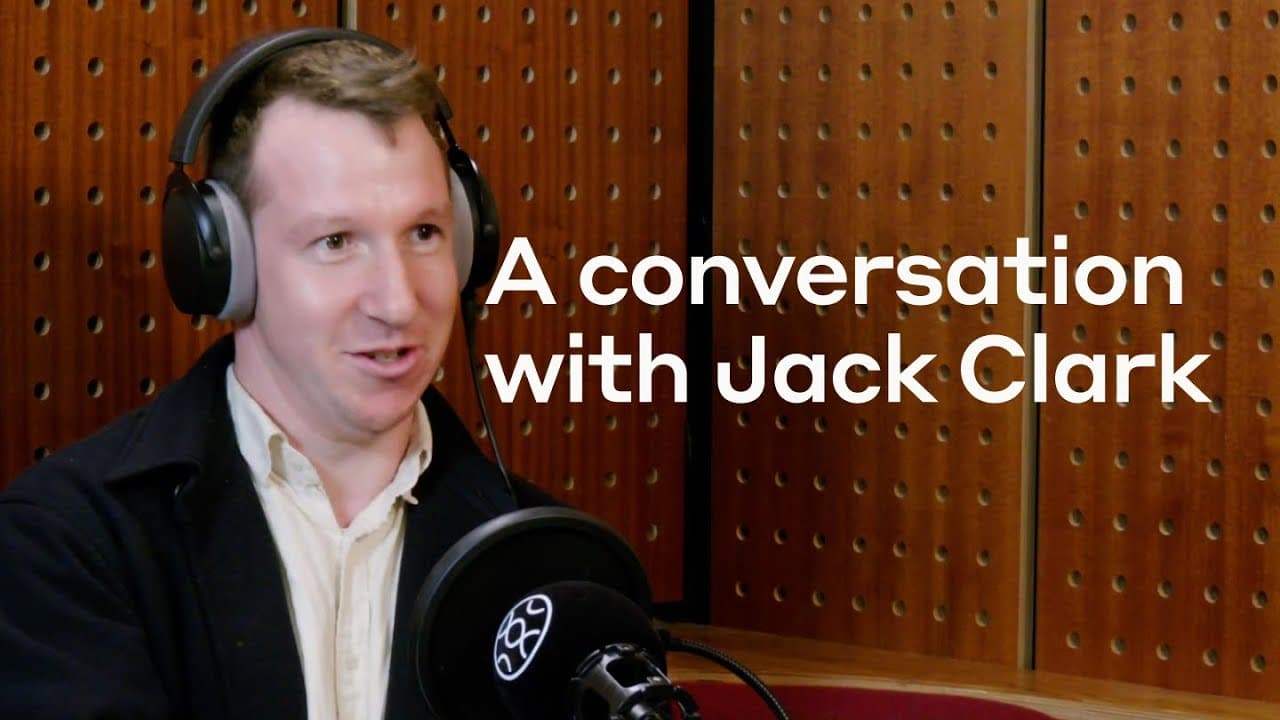
- Hello and welcome to another conversation from Anthropic. My name's Stuart Ritchie. It's my job to talk to our researchers and our other staff about what they're thinking about AI today. I'm here with Jack Clark, who's one of our co-founders and also our head of policy. And you might know him from his newsletter ImportAI, which is a really useful... Read More
Key Insights
- AI policy is becoming an economic priority in Britain because the governing Labour Party repeatedly identifies the technology as one tool for restoring growth. Its interest includes both utilizing AI across government and addressing dangers that could cause severe physical harm.
- The UK AI Safety Institute is a national capability inherited from the previous government. The new government recognizes its value and is considering how to build upon it, while Anthropic has already worked with the institute on testing models before deployment.
- Government AI safety discussions currently emphasize catastrophic biological and cyber risks. Clark expects policymakers to need further education before engaging fully with stranger or less familiar risks, especially because the government is new and receiving large amounts of competing information.
- AI can improve organizational paper plumbing by reading, classifying, and understanding administrative material. Businesses and governments contain interconnected processes, so models can help information flow from an initial customer, constituent, or patient interaction toward an appropriate response or decision.
- Current AI systems could deliver dramatic economic and social benefits even if model development stopped. Their capabilities have not yet been deeply integrated into the economy, leaving substantial room for developers and organizations to discover applications that their creators did not anticipate.
- AI adoption resembles the early use of electricity because the first applications do not represent its full organizational impact. Once reliable access is assumed, institutions can redesign workflows and build entirely new businesses around the capability instead of merely adding it to existing processes.
- Advanced AI systems are not comparable to passive tools because they exhibit what Clark calls artificial intuition. Unlike a hammer, a model can display preferences, patterns, values, creativity, and instincts derived from the human culture represented in its training.
- AI models act as creative mirrors because they encode aspects of the culture on which they were trained and reflect that culture back to users. Their outputs may be imperfect, but their apparent creativity and intuition make them unusually complex artifacts for policymakers to understand.
Install to Summarize YouTube Videos and Get Transcripts
Explore YouTube Video Summarizer or Get YouTube Transcript Extractor
Questions & Answers
Q: How should policymakers think about advanced AI systems?
Policymakers should not treat advanced AI as merely another conventional technology or passive tool. Clark argues that models contain a form of artificial intuition, along with values and cultural patterns inherited from their training. Because they can produce outputs that reasonable observers describe as creative or insightful, policy discussions must consider both practical applications and the unusual character of these systems.
Q: How can AI improve government administration?
AI can help governments process the large volume of paperwork and text generated by bureaucratic systems. Models can read, classify, analyze, and route information so human workers can give appropriate attention to important cases. Examples discussed include helping NHS paperwork move more effectively and assisting members of Parliament with filtering and understanding messages from constituents.
Q: Why could current AI models still create major economic value?
Current models have barely begun to be integrated into organizations, so further technical progress is not required for them to produce substantial additional value. Clark compares the situation to discovering electricity and initially using it only for factory lighting. Businesses can redesign processes around existing AI capabilities, while developers may discover many valuable applications that model creators never anticipated.
Q: What role does the UK AI Safety Institute play?
The UK AI Safety Institute provides a government capability for evaluating AI safety, including testing performed before models are deployed. It was created by the previous Conservative government and inherited by the Labour government. Clark describes it as a national asset, says Anthropic has conducted pre-deployment testing with it, and supports preserving and expanding its work.
Q: What AI risks are UK policymakers focusing on?
Clark says his conversations suggest that UK policymakers care about protecting the public from harms affecting life and limb. Their safety focus is therefore likely to include catastrophic biological and cyber risks, resembling priorities found in other governments. He also expects a period of education before officials engage more deeply with stranger risks associated with increasingly capable generative systems.
Q: Why does Jack Clark describe AI models as creative mirrors?
AI models are described as creative mirrors because they encode elements of the human culture represented in their training and can reflect those elements back through their responses. Clark believes they possess values, patterns, and a limited form of artificial intuition. Although their creativity is sometimes poor, the presence of any apparent creative instinct distinguishes them from ordinary tools.
Q: How can AI support business processes?
AI can operate within the administrative glue connecting the many steps of a business. Organizations often consist of processes that begin with a customer interaction and end with a sale, complaint response, or other action. Language models can work within those steps by reading documents, categorizing information, identifying relevant content, and helping it reach the people responsible for acting.
Q: Why did Jack Clark move from journalism into AI policy?
Clark approached technical journalism like method acting, learning the technologies he covered, including SQL, semiconductor manufacturing, and data centers. Around 2010, he concluded that companies such as Google would apply machine learning across large computing infrastructures. He moved to America to cover neural networks, joined OpenAI in 2016, and turned toward policy after recognizing AI's importance and policymakers' limited understanding.
Summary & Key Takeaways
-
Jack Clark moved from technical journalism into AI policy after reporting on databases, semiconductor manufacturing, data centers, and neural networks. He joined OpenAI in 2016, then became increasingly focused on policy because he believed AI would become important while policymakers still understood relatively little about it.
-
The UK government views AI as a potential source of economic growth and has retained the AI Safety Institute established by its predecessor. Clark considers the institute a national asset, noting that Anthropic has participated in its pre-deployment testing, and wants policymakers to preserve and strengthen its work.
-
Current AI systems could create substantial value even without further improvements because integration into organizations has barely begun. They can read, classify, and interpret large volumes of administrative material, improving the paper-based processes connecting customers, employees, public services, elected representatives, and government departments.
Read in Other Languages (beta)
Share This Summary 📚
Summarize YouTube Videos and Get Video Transcripts with 1-Click
Try YouTube Summary with ChatGPT & Claude or YouTube Transcript Generator
Explore More Summaries from Anthropic 📚



Summarize YouTube Videos and Get Video Transcripts with 1-Click
Try YouTube Summary with ChatGPT & Claude or YouTube Transcript Generator