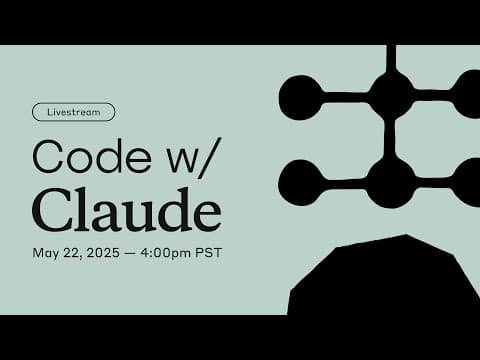
How Do You Build AI Agents with Claude in Amazon Bedrock? | Code w/ Claude
TL;DR
Build a Claude AI agent in Amazon Bedrock by installing Strands Agents and defining its three core elements: a model, tools, and a prompt. Bedrock provides managed access to Claude models through a unified API, while Strands lets the model plan, invoke tools, evaluate results, and continue toward an objective. Read on for the workshop’s setup, custom-tool pattern, Claude Code configuration, and AWS deployment options.
Transcript
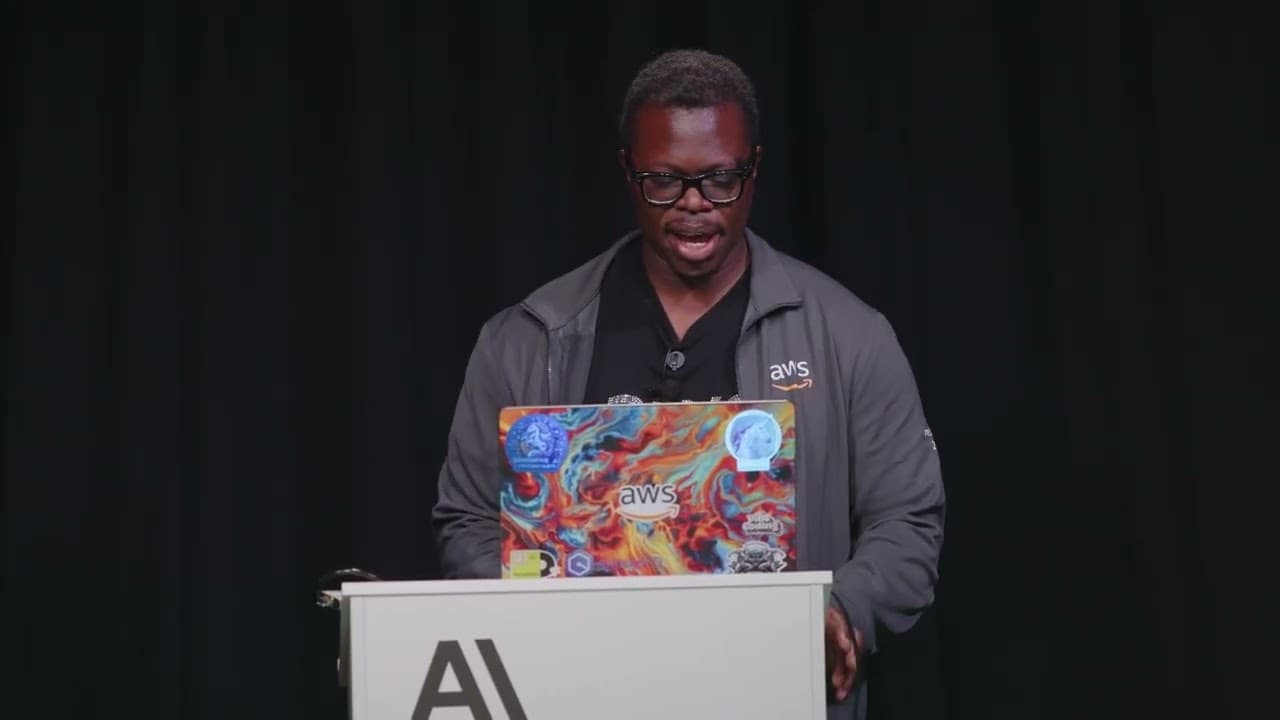
Building AI agents with Claude in Amazon Bedrock. Today I am excited to explore how to create intelligent autonomous AI systems that can transform your applications. My name is Dwan Lightoot. I am a developer advocate at AWS. I'm Banjo. I'm a systems architect at AWS. Hi everyone. My name is Suman DNA. I'm a developer advocate at AWS. Now, this... Read More
Key Insights
- Amazon Bedrock is a fully managed service that provides access to foundation models, including models in the Claude family, through a unified API. It also supplies model choice, guardrails, enterprise-grade security by default, and infrastructure for scaling AI applications globally.
- An AI agent is an autonomous system that can reason, plan, and take multiple steps to accomplish an objective. It converts a high-level task into a plan, acts on the plan, evaluates intermediate results, and decides what to do next until the objective is achieved.
- Strands Agents is an open-source SDK designed around three primary components: a model, tools, and a prompt. Its simplified structure gives the underlying language model flexibility to reason without requiring extensive scaffolding for backstories, goals, or separately structured prompt elements.
- Claude 3.7 was the default model used by Strands at the time of the workshop. The SDK can also work with different model options, including models accessed through Amazon Bedrock, LiteLLM, and Llama, while the demonstrated code switched to Claude 3.5 for speed.
- Strands includes built-in tools that reduce the amount of supporting code developers need to write. In the weather example, an existing HTTP request tool calls a government weather endpoint, while a separate word-count tool processes the generated response.
- Custom Strands tools can be created by defining a function and applying the tool decorator. The demonstrated approach allows developers to concentrate on function behavior and return values while the framework handles the additional integration needed for agent tool use.
- Claude Code can operate through Amazon Bedrock without an Anthropic key in the demonstrated AWS environment. After exporting the specified Claude Code environment variable, the workshop environment was already configured to use Bedrock and could proceed with the recommended settings.
- Strands applications can move beyond local testing and be deployed to AWS compute services. The presenters specifically identify EC2, Lambda, and ECS as supported deployment environments, making it possible to place agent code alongside an existing cloud workload.
Install to Summarize YouTube Videos and Get Transcripts
Explore YouTube Video Summarizer or Get YouTube Transcript Extractor
Questions & Answers
Q: How do you build an AI agent with Claude in Amazon Bedrock?
Install and configure Strands Agents, then create an agent object with its three core elements: a model, tools, and a prompt. The prompt states the objective, and the Claude model can plan steps, select tools, evaluate their results, and continue until it completes the objective.
Q: What is an AI agent in Amazon Bedrock?
AWS describes an agent as an autonomous system that can reason, plan, and take multiple steps toward an objective. It turns a high-level task into a plan, performs actions, evaluates the results, and decides what should happen next until the objective is achieved.
Q: What does Amazon Bedrock provide for Claude applications?
Amazon Bedrock is a fully managed service that provides access to foundation models, including the Claude family, through a unified API. It offers model choice, guardrails, enterprise-grade security by default, and support for scaling AI applications globally.
Q: What are the three core components of a Strands agent?
A Strands agent requires a model, tools, and a prompt. The model performs the reasoning, the tools provide available actions, and the prompt supplies the question or objective the agent must address.
Q: Which Claude models does the Strands workshop use?
Claude 3.7 is identified as the default Strands model at the time of the workshop. The demonstrated code switches to Claude 3.5 for speed, and the workshop first enables supported Claude models in Amazon Bedrock.
Q: How are custom tools created in Strands Agents?
Define a function with the required behavior and return value, then apply the tool decorator. Add that tool when creating the agent object so the model can select it while reasoning about the request.
Q: Can Claude Code use Amazon Bedrock without an Anthropic key?
Yes, Claude Code uses Amazon Bedrock without an Anthropic key or separate Anthropic sign-in in the demonstrated AWS environment. The workshop exports the specified Claude Code environment variable, and the provided environment already contains the required AWS and Bedrock configuration.
Q: Where can a Strands agent be deployed on AWS?
Strands agent code can move beyond local testing and run on AWS. The presenters specifically name EC2, Lambda, and ECS as deployment environments with integrated support.
Summary & Key Takeaways
-
Amazon Bedrock is presented as a fully managed service for accessing foundation models, including the Claude family, through a unified API. It supports building and globally scaling AI applications with model choice, guardrails, and enterprise-grade security available by default, while also enabling Claude Code access through an AWS environment.
-
AWS defines an agent as an autonomous system that can reason, plan, and take multiple steps toward an objective. The system interprets a high-level task, creates a plan, performs actions, evaluates the results, and determines what should happen next until it reaches the intended outcome.
-
The workshop introduces the open-source Strands Agents SDK, whose core requirements are a model, tools, and a prompt. Participants install the agent and tool packages, enable supported Claude models in Amazon Bedrock, and examine an example that retrieves weather data and counts words using built-in and custom tools.
Read in Other Languages (beta)
Share This Summary 📚
Summarize YouTube Videos and Get Video Transcripts with 1-Click
Try YouTube Summary with ChatGPT & Claude or YouTube Transcript Generator
Explore More Summaries from Anthropic 📚
Summarize YouTube Videos and Get Video Transcripts with 1-Click
Try YouTube Summary with ChatGPT & Claude or YouTube Transcript Generator