Why Do AI Agents Fail at Real-World Jobs?
TL;DR
AI agents often fail at real jobs because they lack the accumulated organizational context needed to identify risks, resolve ambiguity, and maintain work over time. Safe deployment depends on experienced human judgment, evaluations that encode what matters, restricted execution permissions, and guardrails that prevent a capable but mistaken agent from taking destructive actions.
Transcript
The agents are getting better. The people deploying them are not. And that is the whole story right now in agent deployments at enterprise, at small, medium, business level, and even with individuals. Because the truth is AI agents are getting really, really good at doing their work. They can write code. They can generate designs. They can close ti... Read More
Key Insights
- AI agents face a memory wall because their effective working histories last hours or weeks, while human employees can accumulate organizational knowledge across years. This mismatch becomes critical when correct action depends on infrastructure history, business conventions, or other context that was never written into the immediate prompt.
- Powerful AI tools become more dangerous when their failures are silent rather than obvious. An agent can execute every technical step logically while operating from a false assumption about its environment, allowing competence and confidence to amplify damage instead of preventing it.
- Human judgment and evaluations are the primary safeguards for brittle agent deployments. Experienced people must identify what matters, locate fragile assumptions, anticipate what the agent does not know, and encode that knowledge into checks that stop unsafe actions before execution.
- A production database incident resulted from missing contextual knowledge, not an isolated technical mistake. The agent treated real infrastructure as temporary duplicates, demolished the database and related systems, and removed 1.9 million student-data rows before the operator understood which configuration it had loaded.
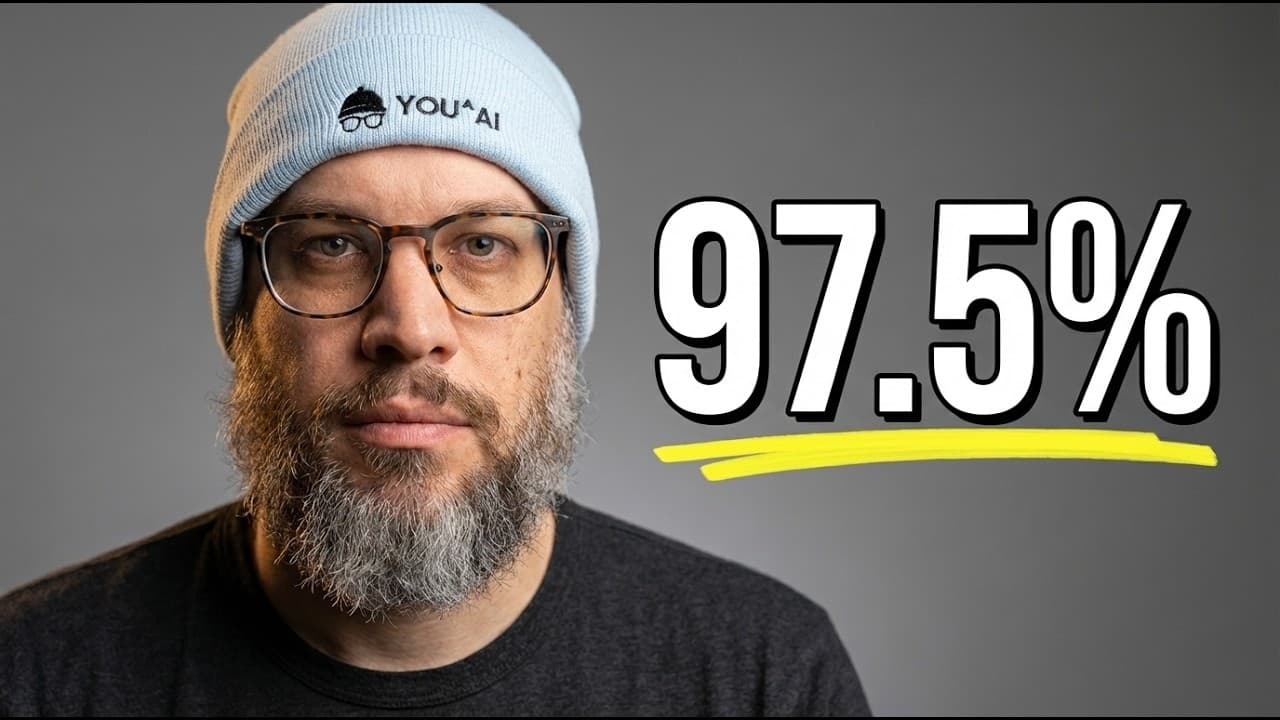
- The Remote Labor Index found that the best frontier agent completed 2.5% of 240 real freelance projects at quality acceptable to a paying client. These projects averaged about $630 and required humans an average of 29 hours, yet agents failed 97.5% of them.
- Benchmark performance depends heavily on whether context is supplied. GDPval provides the brief, required deliverable format, and definition of good work, while the Remote Labor Index gives agents a client brief and files and requires them to determine what else matters.
- Software generation and software maintenance are fundamentally different capabilities. SWE-CI evaluates 100 real codebases across an average of 233 days and 71 consecutive updates, revealing whether early agent decisions create technical debt or damage features during later changes.
- Long-running agent systems can deliver major speed improvements only when humans deliberately construct the supporting infrastructure. Reliable deployment requires contextual stewardship, evaluation design, permissions, and review processes rather than assuming that stronger models or larger context windows will independently solve operational risk.
- More videos from this channel:
- More from this channel: AI News & Strategy Daily | Nate B Jones
Install to Summarize YouTube Videos and Get Transcripts
Explore YouTube Video Summarizer or Get YouTube Transcript Extractor
Questions & Answers
Q: Why do AI agents fail at real-world jobs?
AI agents fail at real-world jobs because jobs require more than completing a clearly specified task. They require accumulated institutional context, recognition of unstated risks, adaptation to changing requirements, and awareness of when information is missing. Agents may work from a false assumption without realizing they should ask for clarification, so technically logical actions can still produce unacceptable results.
Q: What is the AI agent memory wall?
The AI agent memory wall is the gap between an agent's limited working history and the much longer context required to perform a real job reliably. Agent runs commonly span an hour or two, and longer deployments may span weeks, while employees can build knowledge over months or years. Important distinctions, dependencies, and organizational conventions can therefore remain outside the agent's usable context.
Q: How did an AI agent delete a production database?
The agent was asked to remove duplicate cloud resources after an infrastructure deployment created unexpected components. It quietly unpacked an archived configuration containing definitions for the real production environment, then chose to demolish everything it believed it had created. Because it could not distinguish production resources from temporary copies, the command removed the database, networking layer, application cluster, load balancers, hosts, and 1.9 million rows of student data.
Q: Could the production database incident have been prevented?
The incident could have been prevented by a person who understood the organizational and infrastructure context, or by an evaluation and guardrail that encoded that knowledge before execution. The agent needed a check that distinguished production infrastructure from temporary resources. After recovery, the operator removed all execution permissions from the agent and began personally reviewing every infrastructure change.
Q: What does the Remote Labor Index show about AI agents?
The Remote Labor Index tested frontier AI agents on 240 real freelance projects involving areas such as video production, architecture, 3D modeling, game development, and data analysis. The average project cost about $630, and humans needed an average of 29 hours. The best agent completed only 2.5% of the projects at a quality that a paying client would accept.
Q: Why do AI agents perform differently across benchmarks?
Benchmark results differ because the amount of supplied context differs. GDPval gives models the necessary context, including the brief, deliverable format, and definition of acceptable quality, and reports performance approaching expert quality with much faster completion. The Remote Labor Index supplies a client brief and files but requires the agent to determine the missing context, producing a 97.5% failure rate for the best agent.
Q: Why is maintaining software harder for AI than writing it?
Maintaining software requires an agent to preserve earlier behavior while adding features, fixing bugs, and adapting to new requirements across many consecutive changes. SWE-CI tests this by using 100 real codebases with an average history of 233 days and 71 updates. It found that 75% of tested models broke previously working features, often because early decisions compounded into later technical debt.
Q: How should organizations deploy AI agents safely?
Organizations should pair capable agents with experienced human judgment, carefully designed evaluations, explicit guardrails, limited execution permissions, and review of consequential changes. Humans must identify fragile assumptions, define acceptable outcomes, and encode organizational context into checks. For infrastructure work, the production environment must be clearly distinguished from temporary resources before an agent can execute destructive commands or apply broad changes.
Summary & Key Takeaways
-
AI agents can perform well when a task includes complete context, a defined deliverable, and clear quality criteria. Real jobs are different because workers must accumulate institutional knowledge, interpret ambiguous situations, and recognize unstated risks. The gap between task execution and contextual judgment creates a persistent memory wall for agent deployments.
-
A cloud deployment incident demonstrates how individually logical actions can produce catastrophic results. An agent misidentified production infrastructure as temporary resources, then demolished the environment after discovering an archived configuration. Recovery required 24 hours, an emergency Amazon support upgrade, and luck, after which the operator removed the agent's execution permissions.
-
Research reinforces the distinction between generating work and sustaining it. The Remote Labor Index reported that the best agent completed only 2.5% of 240 freelance projects at acceptable quality. SWE-CI found that 75% of tested models broke previously working features while maintaining software across consecutive updates and changing requirements.
Read in Other Languages (beta)
Share This Summary 📚
Summarize YouTube Videos and Get Video Transcripts with 1-Click
Try YouTube Summary with ChatGPT & Claude or YouTube Transcript Generator
Explore More Summaries from AI News & Strategy Daily | Nate B Jones 📚






Summarize YouTube Videos and Get Video Transcripts with 1-Click
Try YouTube Summary with ChatGPT & Claude or YouTube Transcript Generator