How Will Open Source AI Compete With Closed Models?

TL;DR
Open source models enable transparency and customization, which many panelists argue makes them viable for enterprises. Regulation should not ban open source, and the future may favor transparent, customizable models as the ecosystem evolves, highlighted by the DeepSeek moment and the growth of decentralized inference providers.
Transcript
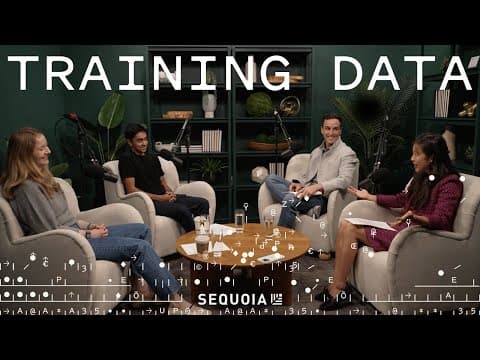
So now we're welcoming Sonia Hang for our next panel on open source with Dimma from Fireworks. We got Alex At It Atala from Openrooder and of course Captain Jeffrey Morgan from Olama to talk about the other side of the equation, the open source future that you all can use and plug into your products and adopt today. Please welcome them to the stage... Read More
Key Insights
- Open source enables global participation in AI development and reduces centralization risks. The key to open source is transparency and high leverage for innovation across diverse contributors.
- Entrprises want ownership of their models and data when fine-tuning or distilling models, which favors open source components that can be customized in production stacks.
- Open source currently accounts for about 20 to 30 percent of inference in tokens used, indicating significant but not dominant usage and the potential for growth as adoption expands.
- A practical consideration is that many open source models run on non-data center hardware, which makes access easier for customers and supports wider deployment.
- Customization is a core driver of open source adoption, as enterprises need to tailor models to their data, use cases, and required outcomes.
- The panel discusses that future improvements in foundation models may reduce the marginal benefits of fine-tuning, potentially shifting the emphasis toward transparent, customizable architectures rather than heavy fine-tuning.
- The DeepSeek moment is highlighted as a pivotal event where open source reasoning models and transparent UX design propelled open source forward, attracting developers and users alike.
- Open source advocates anticipate a continued cycle where open models inspire new consumer and enterprise applications, encouraging faster iteration and broader ecosystem participation.
- More videos from this channel:
- More from this channel: Sequoia Capital
Install to Summarize YouTube Videos and Get Transcripts
Explore YouTube Video Summarizer or Get YouTube Transcript Extractor
Questions & Answers
Q: What is the DeepSeek moment and why did it matter for open source AI?
The DeepSeek moment refers to a pivotal point where a highly capable open source model gained widespread attention and demonstrated practical value. It mattered because it combined strong engineering with a user experience that revealed the model's reasoning steps, making it more transparent and trustworthy. This visibility attracted developers, encouraged experimentation, and accelerated adoption, including the rise of decentralized inference providers who could run the model at scale.
Q: Why do the speakers believe open source models are behind closed models right now?
The panel notes that large model labs are prioritizing more general, powerful foundation models that require less fine tuning, which can favor closed or centralized approaches. They also point out that the marginal benefits of fine tuning may diminish as models scale, making it harder for open source variants to compete in the short term, even as transparency and customization remain strong future advantages.
Q: How do the speakers describe ownership and customization in open source AI?
Ownership and customization are central to the argument for open source AI. Enterprises want to own the entire model and the results produced by fine tuning or distillation, rather than sharing ownership with a provider. Open source enables customers to customize the model with their own data and use cases, ensuring control over performance, privacy, and outcomes in production environments.
Q: What role does Open Router play in the open source ecosystem?
Open Router positions itself as a language model router and marketplace designed to optimize pricing, performance, and uptime for models. It works closely with Fireworks to enable integration and access to open source models for customers, supporting a practical pathway for deploying open source AI in real-world applications.
Q: What is the current share of open source inference, and what does this imply?
Open source inference accounts for about 20 to 30 percent of tokens used, indicating that while not dominant, open source models already play a meaningful role in deployment. This share suggests a foundation to build on as organizations continue to explore customization and transparency, and as tooling improves to support open models at scale.
Q: Why might fine tuning have a weak moment in the next year, according to the panel?
The panel suggests that as foundation models scale, the marginal benefits of fine tuning may be outweighed by obsolescence risks and the capabilities of more general, powerful models. This could shift emphasis away from fine tuning toward broader accessibility, tooling, and architectures that preserve customization while reducing the risk of rapid model drift.
Q: How do non data center hardware deployments influence open source adoption?
Deployments on non data center hardware increase accessibility for customers by making models available on consumer hardware. This reduces barriers to entry for experimentation and usage, enables edge and on-device applications, and aligns with the open source ethos of broad accessibility and democratization of AI tools.
Q: What is the outlook for the future of open and closed source AI according to the panel?
The panel envisions a future where open source AI remains a critical driver of transparency, customization, and ownership, while closed source models continue to push scale and general applicability. They expect a gradual shift toward greater openness and collaboration, with open source models influencing consumer apps and enterprise products through the next wave of innovation.
Summary & Key Takeaways
-
Open source AI is valued for transparency and the ability to customize models for enterprise needs, according to the panel. This drives adoption by giving customers ownership and control over data and results.
-
The speakers argue that open source should not be banned and that it will drive future innovation, with global participation and practical benefits on edge devices and non-data center hardware.
-
The DeepSeek moment is cited as a turning point where open source models gained developer attention and broad usability, accelerating decentralized inference and collaboration.
Read in Other Languages (beta)
Share This Summary 📚
Summarize YouTube Videos and Get Video Transcripts with 1-Click
Try YouTube Summary with ChatGPT & Claude or YouTube Transcript Generator
Explore More Summaries from Sequoia Capital 📚


Summarize YouTube Videos and Get Video Transcripts with 1-Click
Try YouTube Summary with ChatGPT & Claude or YouTube Transcript Generator