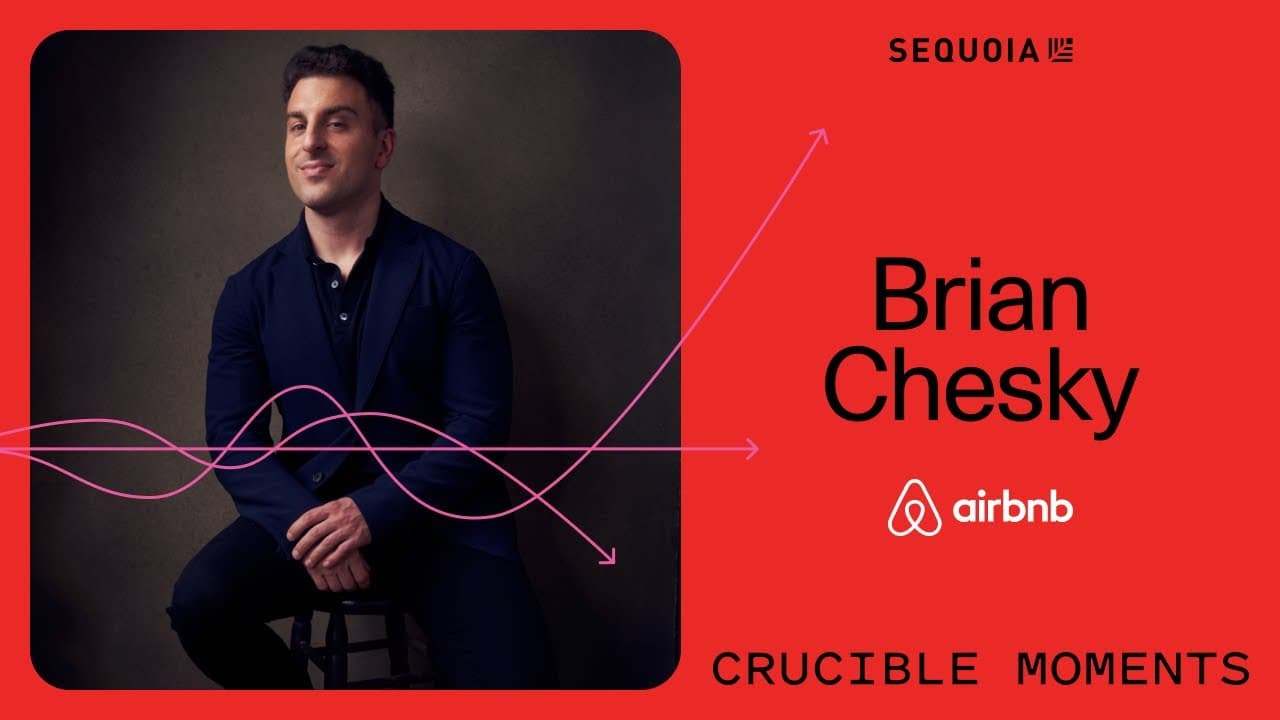
Airbnb ft Brian Chesky - Battling a Copycat Clone and Rebuilding User Trust to Revolutionize Travel
TL;DR
Airbnb faced a significant trust crisis in 2011 when a host's home was ransacked, leading to a viral backlash. The company responded by introducing a $50,000 host guarantee and a 24/7 trust and safety line, which helped restore confidence and drive growth. Later, the COVID-19 pandemic posed another existential threat, but Airbnb adapted by focusing on longer stays and non-urban areas, ultimately leading to a successful IPO.
Transcript
it's 2011 I summoned the meeting together and I say This Is War in a war between missionaries and mercenaries the missionaries always win and we are going to win because we care more about this and then we're going to outlast them but make no mistake this is Do or Die it was literally like we're on a mission and we weren't gonna lose welcome to Cru... Read More
Key Insights
- Airbnb was founded in 2008 by Brian Chesky, Nathan Blecharczyk, and Joe Gebbia, initially as 'Air Bed and Breakfast.'
- In 2011, Airbnb faced a major crisis when a host's home was ransacked, leading to a viral backlash dubbed 'ransackgate.'
- To restore trust, Airbnb introduced a $50,000 host guarantee and a 24/7 trust and safety line.
- Airbnb's response to the crisis not only restored confidence but also became a significant growth driver.
- In 2011, Airbnb faced competition from Wimdu, a clone created by the Samwer brothers, leading to a strategic decision to focus on international expansion.
- During the COVID-19 pandemic, Airbnb lost 80% of its business in eight weeks but adapted by focusing on domestic travel and longer stays.
- Airbnb raised $2 billion in debt during the pandemic to ensure financial stability and support both hosts and guests.
- In December 2020, Airbnb went public, achieving a valuation of over $100 billion, marking a successful recovery from the pandemic crisis.
Install to Summarize YouTube Videos and Get Transcripts
Explore YouTube Video Summarizer or Get YouTube Transcript Extractor
Questions & Answers
Q: How did Airbnb rebuild trust after the 2011 ransacking incident?
Airbnb responded to the 2011 ransacking incident by introducing a $50,000 host guarantee to cover damages and established a 24/7 trust and safety line. This proactive approach not only addressed the immediate crisis but also helped restore user confidence, which in turn became a significant driver of growth for the company.
Q: What was Airbnb's strategy to combat the Wimdu clone?
Airbnb decided not to acquire Wimdu, the clone created by the Samwer brothers, but instead focused on expanding internationally. They hired country managers, localized their services, and conducted community meetups to build a strong presence in Europe. This strategic focus on their core mission and culture helped Airbnb prevail over Wimdu.
Q: How did Airbnb adapt during the COVID-19 pandemic?
During the COVID-19 pandemic, Airbnb quickly adapted by shifting its focus from urban and international travel to domestic travel and longer stays. The company paused marketing, cut costs, and raised $2 billion in debt to ensure financial stability. This strategic pivot allowed Airbnb to navigate the crisis and eventually led to a successful IPO.
Q: What led to Airbnb's successful IPO in December 2020?
Airbnb's successful IPO in December 2020 was the result of strategic adaptations during the COVID-19 pandemic, including focusing on domestic travel and longer stays, raising $2 billion in debt to stabilize finances, and rewriting their S1 to reflect the new business model. These actions restored confidence in the company, leading to a strong market debut.
Q: Why did Airbnb choose not to acquire Wimdu?
Airbnb chose not to acquire Wimdu because they believed it would compromise their mission-driven culture. The company valued its long-term vision of creating meaningful connections through travel and saw Wimdu's mercenary approach as incompatible with their goals. Instead, Airbnb focused on strengthening their international presence, which ultimately proved successful.
Q: What role did the $50,000 host guarantee play in Airbnb's growth?
The $50,000 host guarantee played a crucial role in restoring trust among Airbnb users after the 2011 ransacking incident. By offering financial protection against damages, Airbnb demonstrated its commitment to host safety, which reassured users and attracted more hosts to the platform. This move helped drive growth and solidify Airbnb's reputation.
Q: How did Airbnb's focus shift during the pandemic?
During the pandemic, Airbnb shifted its focus from urban and international travel to domestic travel and longer stays. The company identified a trend of people seeking nearby getaways and adapted its offerings to cater to this demand. This strategic pivot allowed Airbnb to maintain relevance and recover from the pandemic's impact.
Q: What were the key financial strategies Airbnb used during the pandemic?
Airbnb's key financial strategies during the pandemic included pausing all marketing expenditures, cutting executive pay, reducing the workforce by 25%, and raising $2 billion in debt to ensure liquidity. These actions helped stabilize the company financially, allowing Airbnb to support its community and prepare for a successful IPO in December 2020.
Summary
In this video, Brian Chesky, the founder and CEO of Airbnb, shares the crucial moments that shaped the company's journey. From building and rebuilding user trust to facing off against copycat clones and navigating the global shutdown caused by the COVID-19 pandemic, Chesky reveals the challenges and decisions that defined Airbnb's success.
Questions & Answers
Q: How did Airbnb unlock user trust?
Airbnb approached user trust as a design problem. They took inspiration from other successful platforms like Facebook, PayPal, Yelp, and messaging platforms to create a system that allowed users to get to know each other virtually and establish trust. By combining elements like user profiles, online payment systems, reviews, and messaging, Airbnb was able to build a foundation of trust within their community.
Q: How did Airbnb rebuild user trust after a major incident?
In 2011, a host reported that their home was ransacked by a guest, leading to a crisis of confidence and widespread concern about the safety and security of Airbnb. To rebuild trust, Brian Chesky took two crucial steps. First, he made the principled decision to apologize and take responsibility for the incident. He acknowledged the weakness in the model and publicly apologized, which helped restore confidence. Second, Airbnb introduced the Airbnb Guarantee, a retroactive reimbursement program for any host who experienced property damage or theft. This commitment to making things right and providing financial protection for hosts helped rebuild trust within the community.
Q: How did Airbnb deal with copycat clones?
When a clone called Wimdu emerged to challenge Airbnb's dominance in Europe, Brian Chesky made the strategic decision not to buy the company. He believed that merging with a copycat clone would compromise the mission and culture of Airbnb. Instead, Airbnb decided to meet the challenge head-on and compete with Wimdu in a ground war. They mobilized their team, hired country managers, localized the Airbnb experience, and launched aggressive marketing efforts. Over time, Airbnb's resilience, adaptability, and commitment to their unique vision enabled them to overcome Wimdu and solidify their position as the leading global travel platform.
Q: What impact did the COVID-19 pandemic have on Airbnb?
The pandemic dealt a massive blow to Airbnb's business, with bookings evaporating overnight and the company facing significant financial risk. In response, Airbnb made swift decisions to cut costs, refund a billion dollars of canceled reservations, and raise $2 billion in debt to ensure the financial stability of the organization. They pivoted their focus to domestic travel, longer-term stays, and non-urban areas, which led to a rebound in their business. Despite the immense challenges, the pandemic ultimately made Airbnb a leaner and more focused company, leading to its successful IPO and continued growth.
Q: How did Airbnb prepare for its IPO during the crisis?
Despite the tumultuous events of the pandemic, Airbnb decided to go public. This decision required rewriting the initial public filing (S1) from scratch to reflect the company's reshaped business and new strategies. Brian Chesky and the executive team were deeply involved in every detail of the preparations, including rewriting the S1. The IPO took place on Zoom in December 2020, and to everyone's surprise, the stock price soared, doubling the company's value to a $100 billion market capitalization. This unexpected success was a testament to Airbnb's resilience, adaptability, and commitment to its mission.
Q: What is the future vision for Airbnb?
Brian Chesky's vision for the future of Airbnb goes beyond travel. He believes that people need travel and connection more than ever, as many aspects of life have shifted to digital platforms. Airbnb aims to bring people together, promote cultural exchange, and create meaningful connections across the world. Chesky envisions Airbnb as a platform that designs not only products but also ways for people to connect with each other and make the world a smaller and more interconnected place.
Summary & Key Takeaways
-
Airbnb's journey began with a bold idea in 2008, leading to significant growth and challenges, including a major trust crisis in 2011. The company's innovative response to the crisis, including a host guarantee, restored confidence and fueled growth. (50 words)
-
In 2011, Airbnb faced fierce competition from Wimdu, a clone company. Instead of acquiring Wimdu, Airbnb focused on international expansion, which proved successful. The company's commitment to its mission and culture helped it prevail over competitors. (50 words)
-
The COVID-19 pandemic posed an existential threat to Airbnb, but the company adapted by shifting focus to domestic travel and longer stays. This strategic pivot, along with decisive financial actions, enabled a successful IPO in December 2020, marking a remarkable recovery. (50 words)
Read in Other Languages (beta)
Share This Summary 📚
Summarize YouTube Videos and Get Video Transcripts with 1-Click
Try YouTube Summary with ChatGPT & Claude or YouTube Transcript Generator
Explore More Summaries from Crucible Moments: A Podcast from Sequoia Capital 📚





Summarize YouTube Videos and Get Video Transcripts with 1-Click
Try YouTube Summary with ChatGPT & Claude or YouTube Transcript Generator