How Did the Columbian Exchange Reshape Worlds?
TL;DR
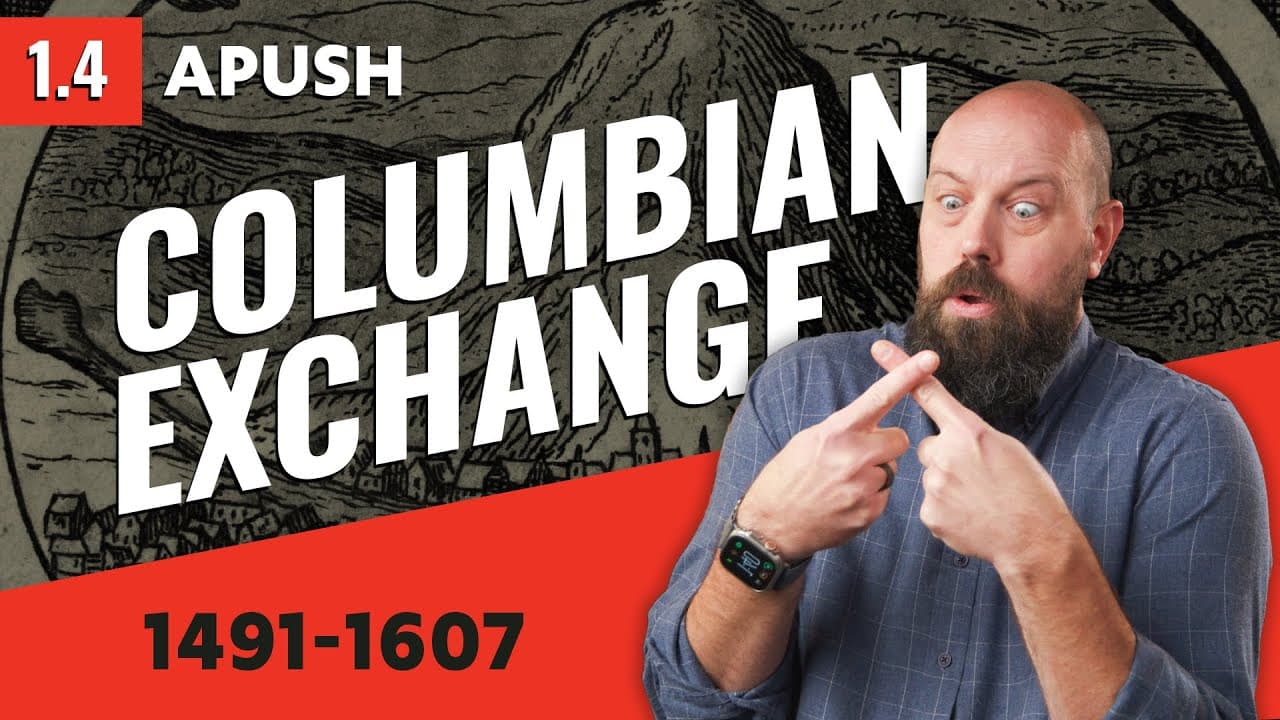
The Columbian Exchange transferred diseases, crops, animals, minerals, and people between the Old and New Worlds, transforming societies on both sides of the Atlantic. European diseases devastated Indigenous populations, while new foods supported European population growth, horses changed life and power on the Great Plains, and American silver contributed to rising prices and Europe’s shift toward capitalism.
Transcript
And now it's time to talk about everybody's favorite transatlantic transfer, the Columbian Exchange. Yes. Oh, I know. I know. It's it's the best. So, if you're ready to get them brain cows milked, let's get to it. Okay. So, if you watch the previous two videos, then you'll remember that Europeans were going crazy in the 16th century to establish co... Read More
Key Insights
- Maritime technology was a major cause of expanding European trade because caravels, lateen sails, magnetic compasses, and astrolabes improved speed, maneuverability, direction finding, and latitude calculation. Europeans adopted several of these navigational tools and techniques from Muslim and Chinese navigators.
- Joint-stock companies were limited-liability businesses that pooled money from multiple investors to finance exploration. They reduced governments’ financial burden and spread the risk of failed ventures, while still relying on states for protection and monopolies over trade in designated regions.
- The Columbian Exchange was the transfer of diseases, plants, animals, minerals, and people between the Old and New Worlds. It resulted from Atlantic exploration and contact and produced fundamental demographic, environmental, social, and economic changes on both sides of the ocean.
- European diseases were devastating to Indigenous Americans because their long isolation meant they lacked established immunity to the introduced illnesses. Smallpox reached the Caribbean in 1518, killed approximately 90 percent of the Indigenous Taino on Hispaniola, and caused enormous losses throughout Mexico, Central America, and South America.
- Food transfers created more varied diets and supported healthier populations in Europe. Old World crops entered the Americas, while maize, potatoes, and manioc traveled to Europe. The resulting population expansion after about 1700 later supplied migrants for European colonial holdings.
- Horses fundamentally altered life among Indigenous peoples of the Great Plains. Groups including the Apaches, Comanches, and Kiowas used horses to hunt large buffalo herds more effectively and gained advantages in conflicts, shifting regional balances of power toward communities that adopted the animal.
- Introduced livestock caused environmental and agricultural damage in the Americas because pigs, sheep, and cattle multiplied without natural predators. Sheep consumed large amounts of grass and contributed to erosion, while pigs and cattle trampled or ate crops cultivated by Indigenous farmers.
- American silver reshaped the European economy by enriching Spain and increasing the money flowing into Europe. Silver extraction from Potosí relied on enslaved Indigenous labor, contributed to steadily rising prices during the Price Revolution, and hastened a shift from land-focused feudalism toward manufacturing and trade-focused capitalism.
Install to Summarize YouTube Videos and Get Transcripts
Explore YouTube Video Summarizer or Get YouTube Transcript Extractor
Questions & Answers
Q: What was the Columbian Exchange?
The Columbian Exchange was the transfer of diseases, plants, animals, minerals, and people between the Old World and the New World. It developed from European exploration and sustained contact across the Atlantic Ocean. Its effects included devastating epidemics among Indigenous Americans, broader diets and population growth in Europe, ecological changes in the Americas, and major transformations in trade and economic organization.
Q: How did maritime technology increase Atlantic trade?
Maritime technology made sea travel faster, easier, and more reliable. The Portuguese caravel was fast and highly maneuverable, while its triangular lateen sail could capture wind from either side rather than only from behind. The magnetic compass helped navigators determine direction, and the astrolabe helped them calculate latitude. Europeans borrowed these technologies from Muslim and Chinese navigators.
Q: How did joint-stock companies support European exploration?
Joint-stock companies pooled money from many investors, allowing people with available funds to support exploration in hopes of earning a return. This arrangement distributed the high costs and risks of expeditions instead of leaving one government to finance them alone. States still protected company activities and granted regional trade monopolies, helping expand expeditions and create additional global trade routes.
Q: Why were European diseases so destructive in the Americas?
European diseases were especially destructive because Indigenous peoples had been isolated from populations across Afro-Eurasia and lacked established immunity to the introduced illnesses. Smallpox reached the Caribbean in 1518 and killed approximately 90 percent of the Indigenous Taino on Hispaniola. It then accompanied Spanish conquest, killing about half the population in Mexico and Central America and causing similar devastation in South America.
Q: How did crop transfers affect the Old and New Worlds?
Crop transfers diversified diets across the Atlantic. Europeans introduced wheat, olives, and grapes to the Americas, followed by foods originating in Africa and Asia, including rice, bananas, and sugar. Maize, potatoes, and manioc traveled from the Americas to Europe, while enslaved Africans brought foods such as okra. More varied diets supported healthier European populations and population growth after about 1700.
Q: How did horses change Indigenous life on the Great Plains?
Horses gave Great Plains groups, including the Apaches, Comanches, and Kiowas, a more effective way to hunt large buffalo herds, which were an important food source. Horses also provided advantages during conflicts with other Indigenous groups. Their adoption therefore changed everyday life and shifted regional power toward groups that incorporated horses into their hunting and military practices.
Q: How did European livestock affect the American environment?
European settlers introduced pigs, sheep, and cattle to the Americas, where these animals multiplied rapidly because they lacked natural predators. Their expansion harmed Indigenous agriculture and altered local environments. Sheep consumed large quantities of grass and contributed to erosion affecting farmers, while pigs and cattle regularly trampled or ate crops cultivated by Indigenous communities.
Q: How did American silver change the European economy?
Spanish conquistadors seized gold and silver from conquered powers such as the Aztec and Inca empires, making Spain wealthy. They later extracted extensive silver deposits at Potosí through enslaved Indigenous labor. The resulting flow of silver into Europe contributed to the Price Revolution, when prices rose steadily for about a century and a half, and hastened the shift from feudalism toward capitalism.
Summary & Key Takeaways
-
Improved ships, lateen sails, magnetic compasses, and astrolabes made European maritime travel easier, while joint-stock companies pooled private investments and distributed financial risk. With state protection and regional trade monopolies, these companies helped multiply expeditions and trade routes, intensifying contact between the Old and New Worlds across the Atlantic Ocean.
-
The Columbian Exchange moved diseases and foods across the Atlantic with profound demographic consequences. Smallpox and measles devastated isolated Indigenous populations, producing what Indigenous Americans called the Great Dying. Meanwhile, transfers including wheat, sugar, maize, potatoes, and manioc diversified diets, supported healthier European populations, and contributed to population growth after about 1700.
-
Animals and minerals also transformed societies and economies. Horses changed hunting, warfare, and power relationships among Great Plains peoples, while pigs, sheep, and cattle damaged Indigenous crops and farmland. Spanish extraction of gold and silver created enormous wealth, fueled the Price Revolution, and hastened Europe’s movement from feudalism toward capitalism.
Read in Other Languages (beta)
Share This Summary 📚
Summarize YouTube Videos and Get Video Transcripts with 1-Click
Try YouTube Summary with ChatGPT & Claude or YouTube Transcript Generator
Explore More Summaries from Heimler's History 📚





Summarize YouTube Videos and Get Video Transcripts with 1-Click
Try YouTube Summary with ChatGPT & Claude or YouTube Transcript Generator