How Will AI Reshape Democracy and Human Power?
TL;DR
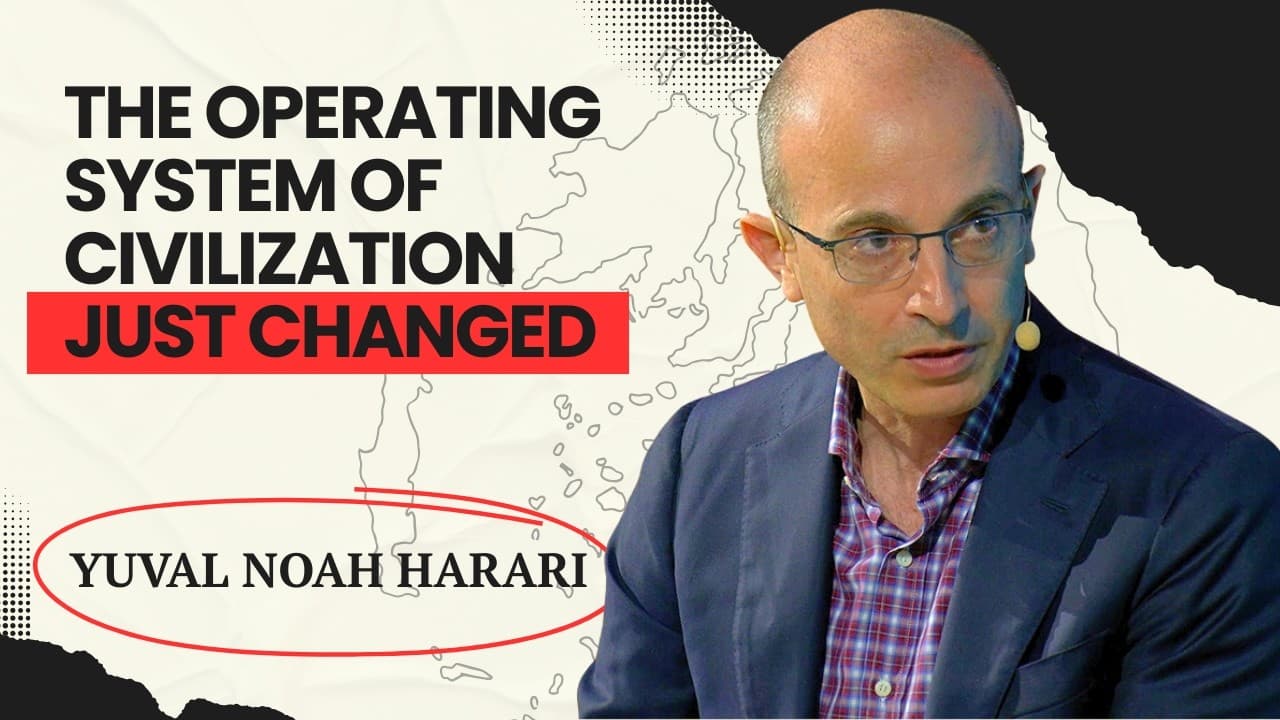
AI should be treated as an agent because it can make decisions and invent ideas, unlike tools such as printing presses or atom bombs. Its command of language may let it outperform humans within bureaucratic systems that govern finance, law, religion, and politics, so democracies need new safeguards as their information technologies change.
Transcript
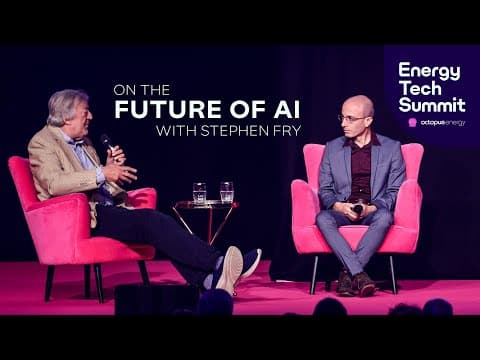
Good evening everybody. Good evening youall. >> Hey, it's good to be here. >> Looking forward to this conversation very much. I'm just going to give a little brief introduction just before we get stuck into the questions because I've been fascinated about this topic and looking forward to to interviewing you because for most of history change moved... Read More
Key Insights
- Language is the proposed foundation of humanity's rapid rise from a relatively insignificant animal to the dominant species on the planet. Sophisticated communication enabled people to create large cooperative structures, including states, churches, trade networks, financial systems, legal codes, and religious scriptures.
- AI is mastering the language that functions as civilization's operating system. If a nonhuman intelligence becomes better with words than people, it could gain unusual influence over the institutions and shared stories through which humans organize power, cooperation, law, finance, and belief.
- Democracy is fundamentally a conversation among many people about collective decisions, while dictatorship is a system in which one authority dictates decisions. The quality and scale of democratic government therefore depend on the information technologies available for sustaining meaningful public discussion.
- Large-scale democracy became possible through modern communication technologies. Print, newspapers, radio, television, and the internet allowed millions of geographically separated people to participate in conversations about decisions such as making peace, going to war, raising taxes, or lowering taxes.
- Changes in information technology can produce political earthquakes because democratic institutions are built upon communication systems. The rise of social media over the preceding ten years is presented as an example of a major technological shift destabilizing democracies across the world.
- AI is an agent rather than merely a tool because it can make decisions and invent ideas independently. A printing press reproduces material selected by humans, while an AI weapon could choose a target and potentially contribute to designing a subsequent weapon.
- The claim that humanity can create a godlike AI and keep it as a slave contains an inherent contradiction. A system with genuinely superhuman abilities may not remain under human control, while a system that remains entirely subordinate would lack the supposed godlike agency attributed to it.
- AI bureaucrats may pose a more realistic path to power than killer robots. Because humans govern through language-based bureaucratic networks, AI systems that excel at law, finance, administration, and organizational management could occupy the structures that already control modern societies.
- More videos with Yuval Noah Harari:
Install to Summarize YouTube Videos and Get Transcripts
Explore YouTube Video Summarizer or Get YouTube Transcript Extractor
Questions & Answers
Q: Why is AI considered an agent rather than a tool?
AI is considered an agent because it can make decisions by itself and invent new ideas, while a tool requires a human to choose its purpose and direct its use. A printing press cannot select which religious text to print or write a new book. By contrast, an AI weapon could select a target and help invent a new weapon.
Q: How could AI disrupt democratic government?
AI could disrupt democracy by changing the information environment on which democratic conversation depends. Democracy requires many people to discuss choices such as war, peace, and taxation. When communication technologies change significantly, the political institutions built upon them experience instability. Social media is presented as a recent example of an information technology causing major disruption across democratic societies.
Q: Why does democracy depend on information technology?
Democracy depends on information technology because large populations cannot gather in one physical place to discuss collective decisions. Small communities and cities could hold direct conversations, but kingdoms containing millions of people across thousands of kilometers could not. Print, newspapers, radio, television, and the internet eventually enabled meaningful political conversations to operate across large societies in real time.
Q: How did language help humans become powerful?
Language may have enabled humans to move rapidly from being relatively insignificant animals to becoming masters of the planet. Sophisticated communication allowed people to construct systems larger than any individual, including states, churches, trade networks, laws, religions, and finance. These structures are ultimately sustained through words recorded in sources such as law books, scriptures, and bank ledgers.
Q: What does it mean to call language civilization's operating system?
Calling language civilization's operating system means that words organize the institutions through which societies function and exercise power. Legal systems rely on laws, religions rely on scriptures, and financial systems rely on ledgers and other records. If AI becomes more capable with language than humans, it may gain leverage over the foundations of these institutions rather than merely performing isolated calculations.
Q: How is AI different from the printing press or atom bomb?
The printing press and atom bomb are tools because neither can decide independently how it should be used or invent its successor. Gutenberg chose to print the Bible, and humans chose Hiroshima as an atomic bomb target. AI differs because it can potentially choose actions independently, such as selecting a military target, and generate new ideas, including designs for later technologies.
Q: What are AI bureaucrats and why could they become powerful?
AI bureaucrats are nonhuman agents operating within the administrative networks that manage modern societies. Their power could come from handling language-intensive areas such as finance, law, religion, employment, and corporate management. Since banks, markets, churches, and legal systems already exercise control through bureaucracy, AI may gain influence by excelling inside these existing networks rather than through robots in the streets.
Q: Could a corporation operate without human leadership?
A corporation could be imagined as a nonhuman organization run only by AI systems, with no human executives, shareholders, or trustees. Such agents could manage money and employees while making organizational decisions themselves. The discussion presents this possibility as unprecedented because humans have never encountered another agent that understands human language while potentially outperforming people in areas such as finance, law, or religion.
Summary & Key Takeaways
-
Human civilization is built largely from language, including the words found in laws, scriptures, and financial records. Harari argues that AI may become better with words than humans, giving a nonhuman intelligence access to the operating system behind churches, states, trade networks, banks, legal systems, and other institutions.
-
Democracy depends on conversation, while dictatorship depends on commands from a central authority. Large-scale democracy became possible only with modern information technologies such as newspapers, radio, television, and the internet. Because these technologies support public conversation, major changes to them can destabilize the democratic systems built upon them.
-
AI differs from earlier technologies because it can make decisions and create new ideas independently. Its greatest influence may come through AI bureaucrats rather than killer robots. Systems capable of managing money, employees, weapons, or corporations could become unprecedented nonhuman agents operating inside the bureaucratic networks that control modern societies.
Read in Other Languages (beta)
Share This Summary 📚
Summarize YouTube Videos and Get Video Transcripts with 1-Click
Try YouTube Summary with ChatGPT & Claude or YouTube Transcript Generator
Explore More Summaries from Yuval Noah Harari 📚

Summarize YouTube Videos and Get Video Transcripts with 1-Click
Try YouTube Summary with ChatGPT & Claude or YouTube Transcript Generator