What Is Context Engineering for AI Agents?
TL;DR
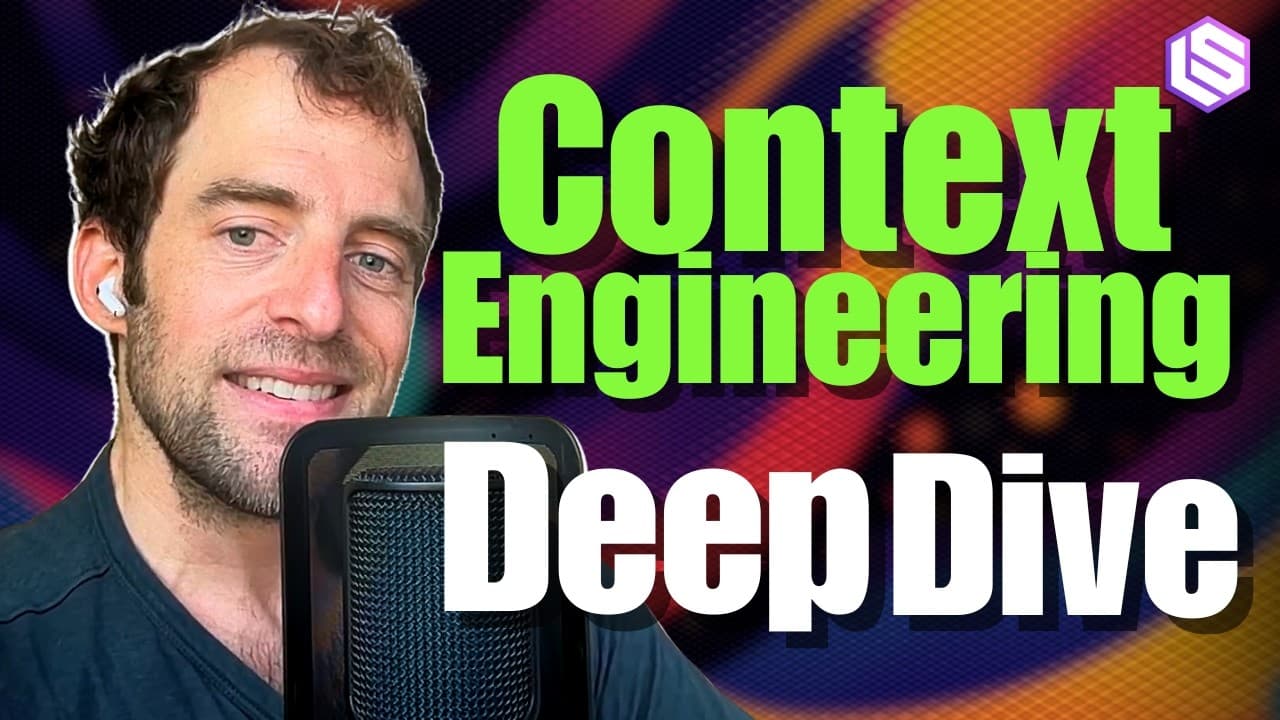
Context engineering involves managing and optimizing the context provided to language models, especially in AI agents. It is essential for improving the efficiency and effectiveness of agents, as it addresses challenges like context length, context rot, and tool call management. Effective context engineering can significantly reduce token costs and enhance agent performance.
Transcript
Hey everyone, welcome to the latest space podcast. This is Allesio, founder of Kernel Labs, and I'm joined by Swixs, founder of Small AI. Hello. Hello. Uh, we are so happy to be in the remote studio with Lance Martin from Lang Chain Langraph and everything else he does. Welcome. It's great to be here. I'm a longtime listener of the pod and uh is fi... Read More
Key Insights
- Context engineering is crucial for feeding language models the right context, especially in AI agents.
- Prompt engineering is a subset of context engineering, focusing on crafting the right messages for models.
- Managing context from tool calls is a key challenge in building effective AI agents.
- Offloading context to external storage can reduce token costs significantly.
- Multi-agent systems can help isolate context but may introduce communication challenges.
- Retrieval methods vary, with some systems using agentic search instead of indexing.
- Summarization and pruning of context must be done carefully to avoid information loss.
- Memory systems in AI agents should balance automated and user-driven context management.
Install to Summarize YouTube Videos and Get Transcripts
Explore YouTube Video Summarizer or Get YouTube Transcript Extractor
Questions & Answers
Q: What is context engineering in AI agents?
Context engineering involves managing and optimizing the context provided to language models, particularly in AI agents. It addresses challenges like context length, context rot, and tool call management. Effective context engineering can significantly reduce token costs and enhance agent performance by ensuring the model receives the most relevant information.
Q: How does prompt engineering relate to context engineering?
Prompt engineering is a subset of context engineering that focuses on crafting the right messages for language models. It involves optimizing the input prompts to ensure the model receives clear, concise, and relevant information, which is crucial for effective communication and performance of AI agents.
Q: Why is managing context from tool calls challenging?
Managing context from tool calls is challenging because it involves handling a large amount of data flowing into the agent from various sources. This can lead to issues like context length exceeding the model's capacity and context rot, where the quality of information degrades over time. Effective management is essential for maintaining agent performance.
Q: What is the role of offloading in context engineering?
Offloading in context engineering involves storing context externally, such as on disk or in a state object, rather than passing all context back to the model. This reduces token costs and ensures that only relevant, summarized information is sent to the model, optimizing performance and efficiency in AI agents.
Q: How do multi-agent systems help in context engineering?
Multi-agent systems help isolate context by distributing tasks among different agents, which can parallelize operations and manage context more effectively. However, they may introduce communication challenges as agents need to coordinate and share context accurately to avoid conflicting decisions and maintain overall system coherence.
Q: What are the different retrieval methods in context engineering?
Retrieval methods in context engineering vary, with some systems using traditional indexing and vector store-based search, while others use agentic search, which involves simple tool calls to explore files. The choice of method depends on the application's needs, balancing complexity, and performance requirements.
Q: Why is summarization important in context engineering?
Summarization is important in context engineering because it reduces the amount of context sent back to the model, which helps manage token costs and performance. However, it must be done carefully to avoid information loss, ensuring that the model still receives all necessary information for accurate and effective processing.
Q: How do memory systems interact with context engineering?
Memory systems in AI agents interact with context engineering by storing and retrieving past interactions and preferences. They balance automated and user-driven context management, allowing agents to learn from past experiences and human feedback, which enhances long-term performance and personalization of the agent's responses.
Summary & Key Takeaways
-
Context engineering is about optimizing the context provided to language models, particularly in AI agents. It addresses challenges such as context length, context rot, and tool call management, which are crucial for effective agent performance. By managing context efficiently, token costs can be reduced, and agent effectiveness can be enhanced.
-
Prompt engineering is a subset of context engineering, focusing on crafting the right messages for models. Effective context engineering involves offloading context to external storage, careful summarization, and managing context from tool calls. Multi-agent systems can help isolate context but may introduce communication challenges.
-
Retrieval methods in context engineering vary, with some systems using agentic search instead of traditional indexing. Memory systems in AI agents should balance automated and user-driven context management to ensure effectiveness. Summarization and pruning must be done carefully to avoid information loss and maintain performance.
Read in Other Languages (beta)
Share This Summary 📚
Summarize YouTube Videos and Get Video Transcripts with 1-Click
Try YouTube Summary with ChatGPT & Claude or YouTube Transcript Generator
Explore More Summaries from Latent Space 📚



Summarize YouTube Videos and Get Video Transcripts with 1-Click
Try YouTube Summary with ChatGPT & Claude or YouTube Transcript Generator