How to Stop Shy Habits and Speak with Confidence
TL;DR
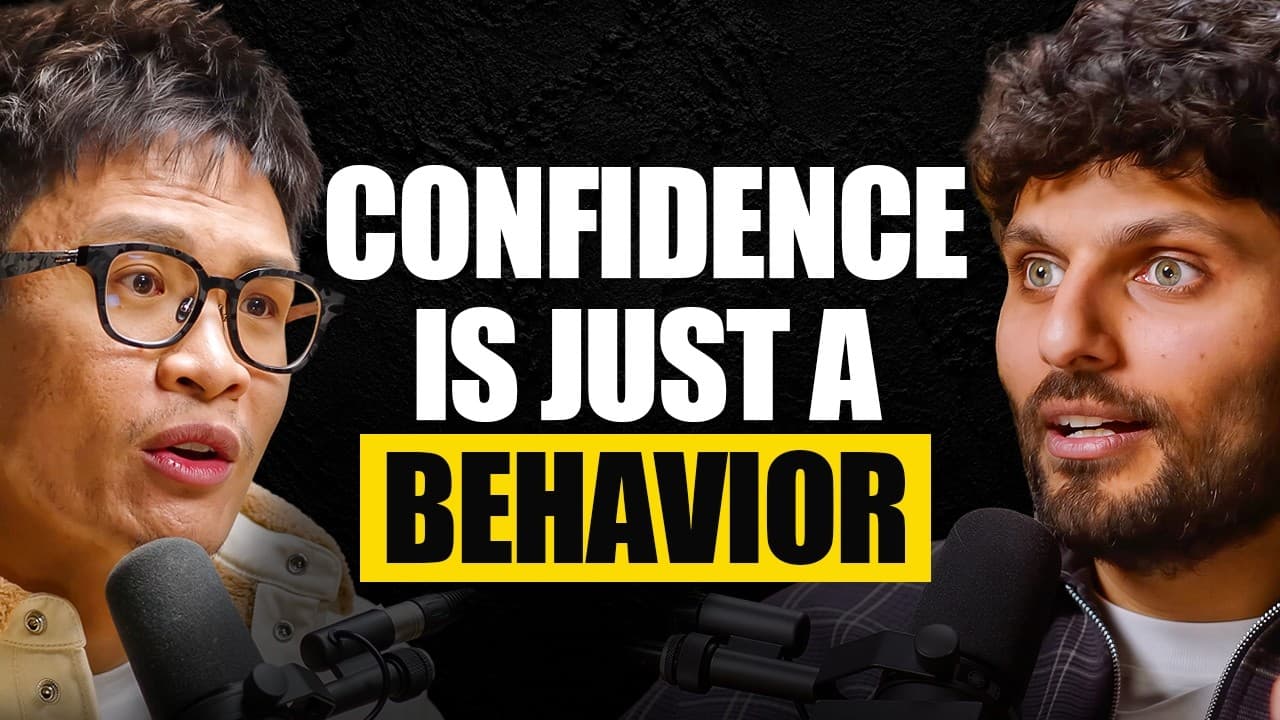
Shyness is a collection of practiced communication behaviors, not a fixed identity, so confidence can be developed through different habits. Record yourself speaking for five minutes, review your body language, listen separately to your voice, and examine a transcript. Stronger volume, larger gestures, and standing can also make you harder to interrupt.
Transcript
You're saying that everyone can go from being a shy, insecure, unconfident speaker to being a prolific speaker like yourself? >> Yes, because it's all just a series of behaviors. Everything you and I doing right now, everything you see a great communicator do on stage, everything you see a great creator do on video, it's just a series of behaviors.... Read More
Key Insights
- Shyness is a series of practiced behaviors that can become mistaken for a permanent identity. When shy habits have been repeated for many years, they feel natural, but confident communication consists of alternative behaviors that can also be deliberately practiced.
- A person's everyday voice is habitual rather than necessarily natural. Communication patterns are learned from influential people early in life, and repeated vocal choices eventually move from conscious imitation into subconscious habit, making them feel like an inseparable part of the individual.
- Self-awareness begins with recording and reviewing your own communication. Avoiding your recorded image and voice prevents you from seeing the exact behaviors that shape how others perceive your clarity, authority, confidence, and presence.
- A muted video review reveals physical communication habits without the distraction of words. Watching your hands, facial expressions, legs, movement, and visual tics can expose patterns that remain invisible while you are focused on delivering a message.
- An audio-only review isolates the qualities of the voice. Listening without watching helps you assess speaking rate, volume, melody, audible passion, filler words, and non-word sounds, while separating vocal habits from judgments about physical appearance.
- A transcript exposes structural problems in spoken communication. Reading your words can reveal repeated points, circular explanations, and unnecessary language that may be difficult to recognize while speaking or listening in real time.
- Vocal and physical presence influence whether other people interrupt. Low volume, a slow default pace, and small body language can make a speaker easier to talk over, while stronger volume, standing, and larger gestures communicate greater authority.
- Introversion concerns how social interaction affects energy, not whether someone can communicate skillfully. An introvert can use the voice as effectively as an extrovert, but may need to be more selective and strategic about when to invest energy in speaking.
- More videos from this channel:
- More from this channel: Jay Shetty Podcast
Install to Summarize YouTube Videos and Get Transcripts
Explore YouTube Video Summarizer or Get YouTube Transcript Extractor
Questions & Answers
Q: How can shy people become more confident speakers?
Shy people can become more confident by treating communication as a collection of behaviors rather than a fixed identity. Vocal volume, speaking pace, gestures, posture, and facial expression can all be observed and practiced. Repeating more confident behaviors makes them increasingly familiar, just as years of repeating shy behaviors made those habits feel natural and personal.
Q: What is the record-and-review method for communication?
The record-and-review method starts with recording yourself speaking for five minutes and leaving the recording alone for a day so you can approach it less critically. Review the video on mute, listen to the audio without watching, and then obtain a transcript. Each stage exposes different visual, vocal, and structural communication habits.
Q: Why should you watch a recording of yourself on mute first?
Watching yourself on mute isolates your physical communication from your words and vocal sound. It allows you to examine what your hands, face, legs, posture, and movements are doing. You can also identify repeated visual tics. Taking notes during this review creates a practical list of physical behaviors that may need attention.
Q: What should you assess when listening to your recorded voice?
Listen for the qualities that shape how your voice is perceived, including your rate of speech, volume, melody, and whether genuine passion can be heard. Also note filler words and non-word sounds such as repeated hesitation noises. Separating the audio from the video makes these vocal patterns easier to notice and evaluate clearly.
Q: Why should you transcribe a recording of your speech?
A transcript presents spoken communication from a different perspective because it turns temporary speech into visible text. It can reveal whether you speak in circles, repeat the same point several times, or use unnecessary language. These structural weaknesses may be harder to recognize while speaking or when reviewing only the video and audio.
Q: Why do people interrupt some speakers in meetings?
People may interrupt when a speaker has low vocal presence and low physical presence. Quiet volume, slow delivery, and small body language can make the person easy to talk over. Increasing volume, standing when appropriate, and using larger movements can create more authority and make it more difficult for others to seize the speaking turn.
Q: How can you reduce interruptions during a meeting?
You can reduce interruptions by making your vocal and physical presence stronger. If appropriate, explain that you have been sitting all day and ask to stand for your part of the presentation. While standing, use a stronger volume and larger body language. Even standing alone can increase authority and change how others respond to you.
Q: Can introverts become strong communicators?
Introverts can become strong communicators because introversion is described here as a difference in how people gain or lose energy around others, not a limit on communication skill. Like musicians playing the same instrument, introverts and extroverts can produce equally effective communication. Introverts may simply need to choose more strategically when to use their energy.
Summary & Key Takeaways
-
Shy or unconfident communication can be understood as a set of repeated behaviors rather than an unchangeable personality. A person's current voice is habitual, shaped by years of consciously and then subconsciously copying communication patterns. Practicing different vocal and physical behaviors can gradually create a more confident communication style.
-
A practical self-awareness exercise begins by recording yourself speaking for five minutes and waiting a day before reviewing it. First, watch without sound to examine gestures, expressions, movement, and visual tics. Then listen without watching to assess volume, pace, melody, passion, and filler sounds. Finally, study a transcript.
-
People may be interrupted when their vocal and physical presence makes interruption easy. Low volume, slow delivery, and small body language can reduce perceived authority. Standing, speaking more strongly, and using larger movements create friction against interruptions. Introverts can use the same communication skills, but may need to choose their moments strategically.
Read in Other Languages (beta)
Share This Summary 📚
Summarize YouTube Videos and Get Video Transcripts with 1-Click
Try YouTube Summary with ChatGPT & Claude or YouTube Transcript Generator
Explore More Summaries from Jay Shetty Podcast 📚






Summarize YouTube Videos and Get Video Transcripts with 1-Click
Try YouTube Summary with ChatGPT & Claude or YouTube Transcript Generator