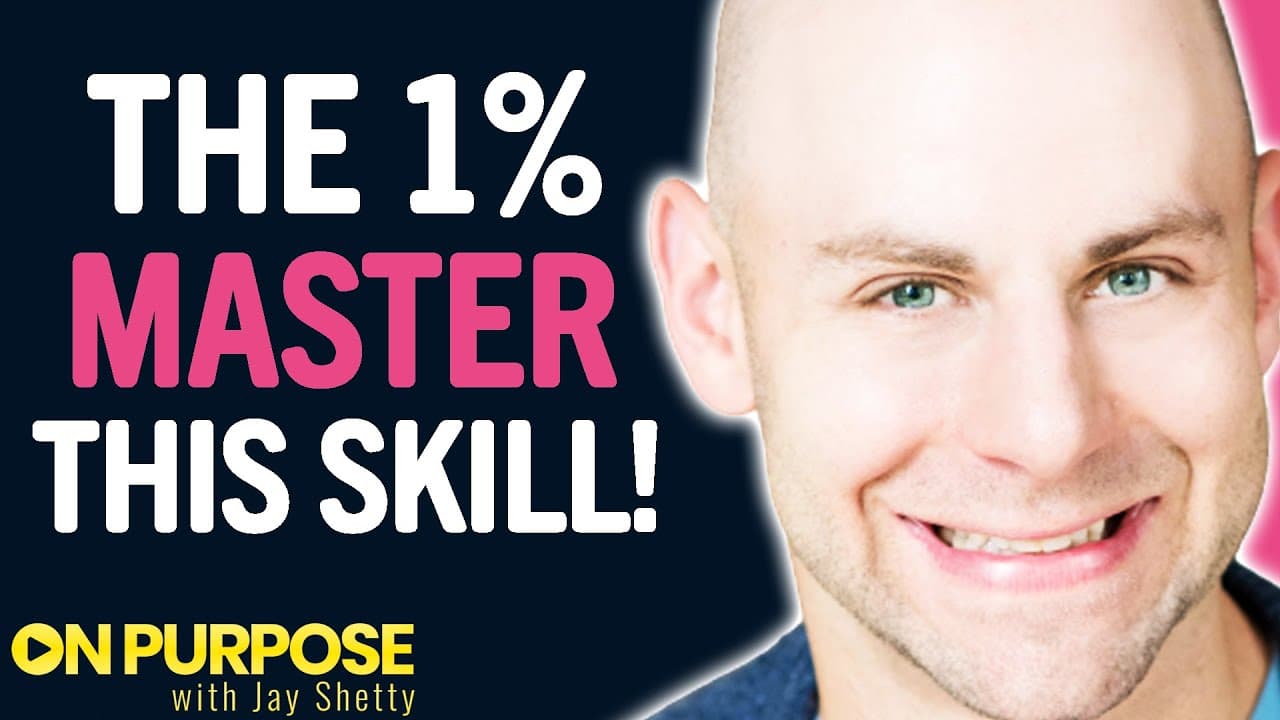
"ONLY The 1% MASTER THIS ONE Skill For SUCCESS!" | Adam Grant & Jay Shetty
Transcript
there is a difference between doubting yourself and doubting your skills right you're never saying i think i'm an idiot or i think i'm completely incapable of being a good entrepreneur or a great investor or a successful content creator you're just saying i don't know if i'm there yet i think i have work to do i have knowledge to pick up i have exp... Read More
Install to Summarize YouTube Videos and Get Transcripts
Explore YouTube Video Summarizer or Get YouTube Transcript Extractor
Summary
In this podcast episode, organizational psychologist Adam Grant discusses his book "Think Again" and the importance of unlearning and rethinking our opinions and assumptions. He explores the reasons why people are often resistant to thinking again, such as fear of change and attachment to beliefs, and provides tips for how to overcome these barriers. He also introduces the concept of different mindsets in thinking, comparing the preacher, politician, and prosecutor mindsets to the more effective scientist mindset. Grant emphasizes the importance of humility and continuous learning in the process of thinking again.
Questions & Answers
Q: Why did Adam Grant decide to write "Think Again"?
Adam Grant was frustrated with people clinging to outdated knowledge and stubborn opinions. As an organizational psychologist, he realized the need for a deep dive into the process of thinking again, updating opinions and assumptions, and building cultures of learning. The pandemic provided even more reason to explore this topic as it forced people to rethink many aspects of their lives.
Q: Why are people so attached to their ideas and opinions?
There are several reasons for this attachment. Firstly, admitting that opinions have changed can be seen as an ego threat and may make people question their intelligence. It can also lead to imposter syndrome. Secondly, changing opinions frequently can create a sense of unpredictability and a loss of control. Lastly, rethinking opinions can risk challenging one's social group and belonging, leading to exclusion or loneliness.
Q: How do we overcome the fear of asking questions and thinking again?
A way to overcome the fear is to realize that the regret of not trying or not thinking again is often greater than the fear of change. Taking risks and being willing to fail in order to learn and grow is more important than maintaining the comfort of conviction and avoiding the discomfort of doubt. Regrets usually come from inaction, not taking chances.
Q: How can we balance stability and the need to think again?
Adam Grant suggests that instead of making opinions our identity, we should build our identities around our values. Values can evolve over time, but they provide a sense of stability and core principles. Being flexible and open to new ways of living by those values allows for continuous growth and adaptation.
Q: Why are attitudes like preacher, politician, and prosecutor mindsets less effective than the scientist mindset?
Preacher attitudes involve proselytizing one's beliefs, politician attitudes focus on pleasing others, and prosecutor attitudes seek to prove someone wrong. These attitudes hinder the process of thinking again because they prioritize ego, rigidness, and external validation. In contrast, the scientist mindset values truth and embraces uncertainty. Scientists form hypotheses, experiment, gather data, and revise their beliefs based on evidence.
Q: Have there been any studies showing the benefits of the scientist mindset in entrepreneurship?
Yes, an experiment involving Italian founders revealed that those taught to think like scientists in entrepreneurship were more successful. They were more willing to pivot, adjust their strategies, and experiment, leading to higher revenue generation. Thinking like scientists allows for a more flexible and adaptive approach in business.
Q: Where should we start when it comes to thinking again and questioning our beliefs?
The starting point for thinking again can vary for each person. However, one recommended approach is to periodically evaluate our beliefs, values, and goals. Regularly reflecting on our learning plateaus, strengths, and intentions can help identify areas that may require re-evaluation. Having checkpoints or "checkups" to question our plans and decisions can ensure continuous growth and adaptation.
Q: How can we overcome the fear of asking difficult questions and thinking again?
Adam Grant suggests that the potential regrets of not trying or not questioning should outweigh the fear of change. He points out that regrets often come from inaction rather than the discomfort of rethinking. Being willing to take risks and face the discomfort of challenging our own beliefs leads to personal growth and prevents long-term regrets.
Q: How can we create a healthier mindset around job interviews and hiring practices?
It's important to stop confusing confidence with competence. Confidence alone is not a good indicator of actual ability. Instead, focusing on a person's skills, qualifications, and experience is essential. In addition, promoting humility and continuous learning can be beneficial in hiring decisions. Acknowledging that even the most confident individuals have limitations and weaknesses helps to avoid overestimating their abilities.
Q: Can overconfidence affect job specifications and descriptions?
Yes, studies have shown that overconfidence can influence job specifications and descriptions. Women, in particular, tend to underestimate their abilities and qualifications when compared to men. Job descriptions should be worded in a way that highlights required skills and experience rather than discouraging potential candidates from applying.
Takeaways
The key takeaways from this episode are:
- There is a difference between doubting yourself and doubting your skills. Doubting yourself is a negative self-perception, while doubting your skills means acknowledging that there is room for improvement and growth.
- Unlearning and rethinking are essential for personal and professional development. Questioning our beliefs and assumptions allows us to adapt to a changing world and gain new knowledge and expertise.
- Overcoming the fear of thinking again involves realizing that regrets from inaction are often greater than the fear of change. Taking risks and being open to new possibilities leads to personal growth and prevents long-term regrets.
- Building a scientist mindset involves valuing truth, embracing uncertainty, and continuously seeking new insights. This mindset allows for flexible thinking, experimentation, and adaptation.
- Balancing stability and the need to think again involves building our identities around our values rather than rigid opinions. Values can evolve, providing stability while allowing for growth and adaptation.
- Confidence should not be confused with competence. It is important to focus on skills, qualifications, and experience when making hiring decisions and avoid overestimating someone's abilities based on confidence alone.
Read in Other Languages (beta)
Share This Summary 📚
Summarize YouTube Videos and Get Video Transcripts with 1-Click
Try YouTube Summary with ChatGPT & Claude or YouTube Transcript Generator
Explore More Summaries from Success Habits 📚



Summarize YouTube Videos and Get Video Transcripts with 1-Click
Try YouTube Summary with ChatGPT & Claude or YouTube Transcript Generator