How to build a homepage that converts service clients
TL;DR
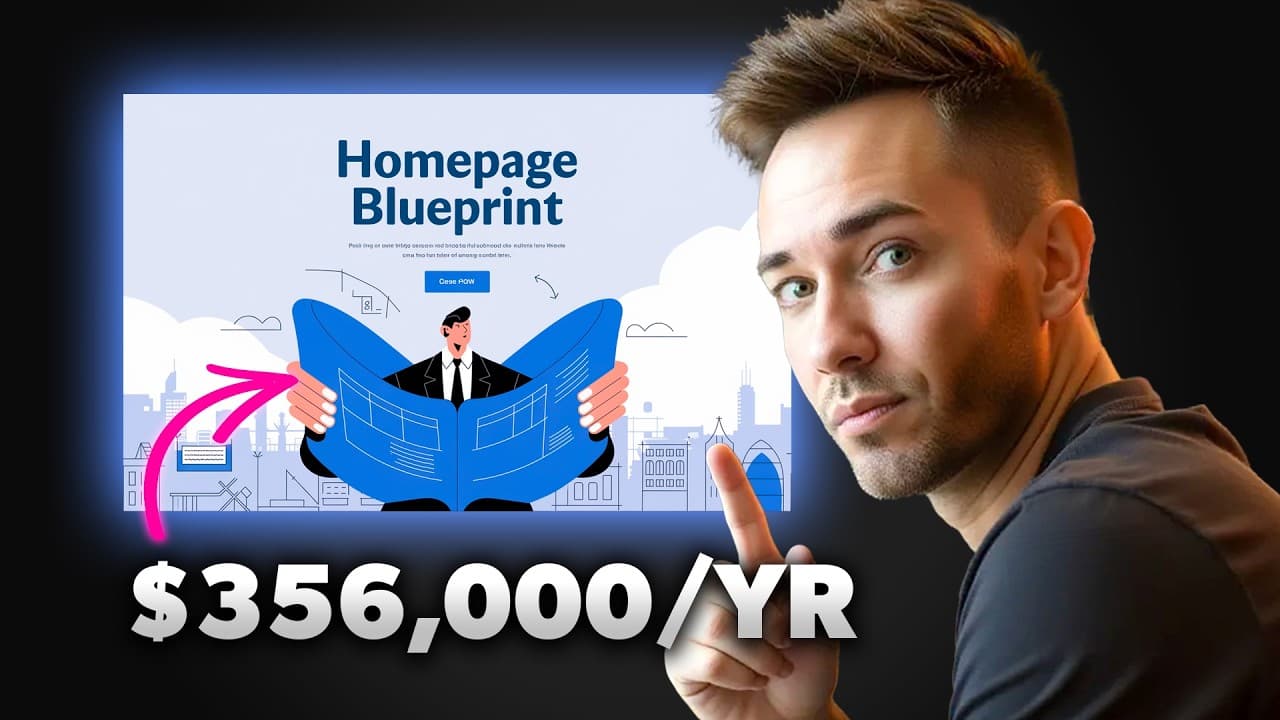
The key is a top hero that states the result and clarifies what you do, followed by social proof and clear outcomes. The page should present a simple three step process and three strong benefits, each with visuals. This structure, used consistently, guides visitors toward scheduling a consultation and taking action.
Transcript
what separates a $30,000 a month service business homepage from one that barely gets even one contact form submission after rebuilding homepages for everyone from therapists to locksmiths I kept seeing the same pattern it wasn't about fancy design or better branding it was about putting 10 specific elements in a very specific order think of it like... Read More
Key Insights
- The hero section must communicate the specific result the client will get. It also needs to clarify what you do and how to get it.
- Social proof at the top of the page strengthens trust and can include client counts or quotes.
- Three key outcomes or benefits should be shown with visuals to reinforce meaning.
- Benefits should be framed as actions or results, not just features.
- A real human photo behind the business builds credibility and relatability.
- A simple three step process clarifies how to work together and reduces confusion.
- Problem and mentor narrative helps clients see themselves as the hero of the story.
- Services should focus on the 80 percent most revenue generating offerings, with links to detailed pages.
- More videos from this channel:
- More from this channel: Wes McDowell
Install to Summarize YouTube Videos and Get Transcripts
Explore YouTube Video Summarizer or Get YouTube Transcript Extractor
Questions & Answers
Q: What is the first element you should optimize on a homepage to boost conversions?
The first element to optimize is the hero section, which must clearly state the result the client will get, explain what you do to achieve that result, and include a concrete call to action so visitors know exactly what to do next. This trio of clarity helps prevent immediate abandonment and guides scroll progress.
Q: Why is social proof placed at the top of the homepage important?
Social proof at the top provides immediate credibility by showing real outcomes or client satisfaction before visitors read further. It reduces perceived risk, builds trust quickly, and supports the hero message by validating that the claimed results are achievable through your services.
Q: What distinguishes a benefit from a feature in this framework?
A feature describes a capability, while a benefit explains the actual outcome for the client and the deeper meaning of that outcome. Focusing on benefits helps visitors connect emotionally with the value of your service and makes the proposition more compelling.
Q: How should photos be used in the hero section?
Photos in the hero should depict a relatable client scenario rather than the service provider, reinforcing the narrative and outcome described in the headline and subheading. This visual storytelling helps visitors picture themselves achieving the promised result.
Q: What is the recommended number of steps in the process section and why?
Three steps are recommended because they provide a simple, memorable framework that covers how to start, what happens next, and how the process ends. More steps would overwhelm visitors, while fewer might omit essential details needed to build trust.
Q: How should services be presented if there are many offerings?
Present the 80 percent of services that constitute the majority of revenue and link each to a dedicated service page for further details. This keeps the homepage focused and allows depth to be explored as the visitor shows interest.
Q: What is the role of the mentor in the homepage narrative?
The mentor role positions the business as a guide that understands the client’s problem and offers a proven path to success. This framing helps the client feel seen and supported, increasing confidence in engaging further.
Q: Why is a real person’s photo recommended in the homepage design?
A real person’s photo creates a tangible human connection and signals authenticity. It helps visitors trust that there is a real team behind the service, which can reduce hesitation and encourage action.
Summary & Key Takeaways
-
The video outlines a homepage blueprint that prioritizes a clear hero section with a defined outcome and context for the visitor. It emphasizes social proof and visible outcomes, plus a photo of a real person to reinforce trust. A simple three step process helps visitors understand next actions.
-
The presenter explains the difference between features and benefits, stressing that benefits describe what the user gains and why it matters, with visuals accompanying each point for quick comprehension.
-
A three stage process is recommended to reduce friction: capture attention in Step One, deliver value in Step Two, and prompt action in Step Three, keeping the layout easy to scan and action oriented.
Read in Other Languages (beta)
Share This Summary 📚
Summarize YouTube Videos and Get Video Transcripts with 1-Click
Try YouTube Summary with ChatGPT & Claude or YouTube Transcript Generator
Explore More Summaries from Wes McDowell 📚
Summarize YouTube Videos and Get Video Transcripts with 1-Click
Try YouTube Summary with ChatGPT & Claude or YouTube Transcript Generator