How does OAuth 2.0 work with examples and flows
TL;DR
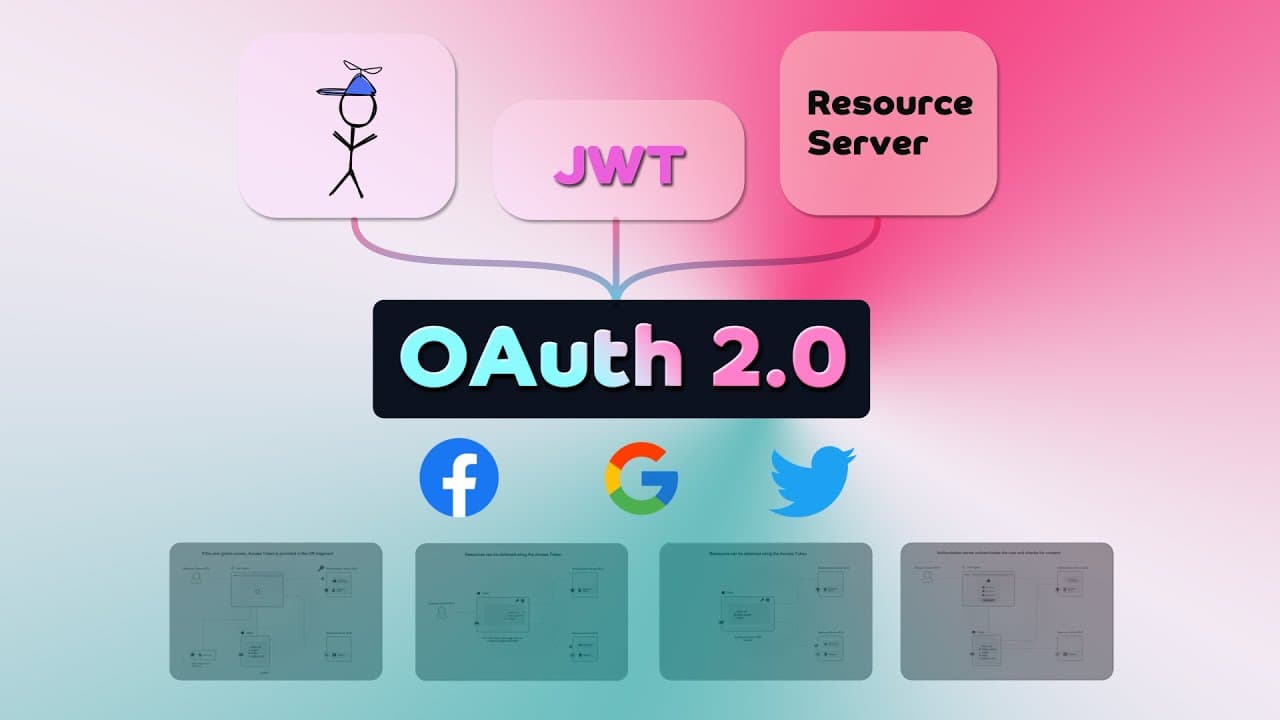
OAuth 2.0 enables apps to access user resources via tokens instead of passwords. The video explains access tokens, authorization servers, identity providers, and four main flows, plus JWT integration and differentiation from authentication. It emphasizes token safety, token expiration, and when to use each flow in practice.
Transcript
lot was designed to allow third-party applications to access protected resources on behalf of a user it was a great improvement over traditional authentication methods such as username and password because it was more secure and flexible however worth 1.0 was complex and difficult to implement and it was not widely supported as traditional authenti... Read More
Key Insights
- OAuth 2.0 is an authorization framework that lets apps access user resources without their passwords.
- An access token is a short lived credential granted by an authorization server after user consent.
- The resource server validates access tokens to decide if the requesting app can access resources.
- Identity providers authenticate users and issue tokens, while authorization servers issue tokens and define access scope.
- The authorization code flow is the most common, involving user login, code exchange, and token receipt.
- Client credentials flow allows apps to access their own resources without user involvement.
- JWTs can be used as access tokens, offering self contained and verifiable tokens, but must be treated securely.
- There are multiple flows to fit different app needs, and the right flow depends on whether user context is required.
Install to Summarize YouTube Videos and Get Transcripts
Explore YouTube Video Summarizer or Get YouTube Transcript Extractor
Questions & Answers
Q: What is OAuth 2.0 and why is it used?
OAuth 2.0 is an authorization framework that allows third party applications to access protected resources on behalf of a user without requiring the user to share their password. It introduces an authorization server that issues access tokens, which the client uses to access resource servers. This separation improves security and enables granular access control.
Q: What are access tokens and how do they work?
An access token is a short lived credential issued by the authorization server after the user consents. The client includes the access token in requests to the resource server, which validates the token to grant or deny access to the requested resources. Tokens reduce password exposure and enable scoped permissions.
Q: What roles do identity providers and authorization servers play?
An identity provider authenticates the user, confirming their identity. The authorization server issues access tokens after successful authentication and consent. In some setups these roles are combined, but they can be separate to support different trust boundaries and modular architectures.
Q: What is the authorization code flow and when is it used?
The authorization code flow is used when an app needs to access protected resources on behalf of a user. The user authenticates with the identity provider, an authorization code is returned to the client, and the client exchanges the code for an access token and optionally a refresh token for continued access.
Q: What is the client credentials flow and when should it be used?
The client credentials flow is used when the application needs to access its own protected resources rather than acting on behalf of a user. The client authenticates with the authorization server using its own credentials and receives an access token to access its resource server.
Q: How do JWTs relate to OAuth 2.0?
JWTs can be used as access tokens in OAuth 2.0, providing a self contained and easily verifiable token format. They carry claims about the user or permissions and can simplify token validation by the resource server, but require secure handling and proper verification.
Q: What are common pitfalls when using OAuth 2.0?
Common pitfalls include mismanaging token storage, failing to use HTTPS, exposing tokens in browser URLs, not rotating or revoking tokens, and equating authentication with authorization. It is important to implement proper scopes, token lifetimes, and refresh flows according to the chosen OAuth flow.
Q: Can OAuth 2.0 and JWTs enable single sign on?
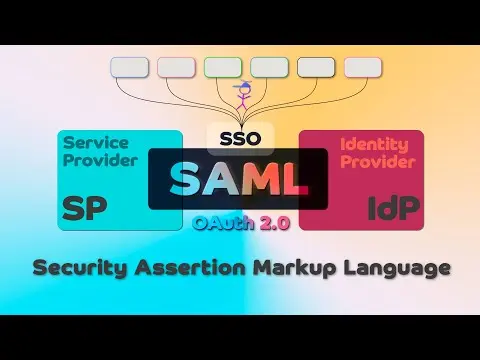
Yes, OAuth 2.0 with JWTs can enable SSO by using a trusted identity provider to authenticate the user and issue tokens that are accepted by multiple service providers. This reduces repeated logins and enables seamless access across affiliated applications while maintaining security controls.
Summary & Key Takeaways
-
OAuth 2.0 allows two websites to communicate without sharing a password, using access tokens issued by an authorization server.
-
The video covers identity providers, access tokens, and the four main flows including authorization code flow and client credentials flow.
-
JWTs can represent claims and be used as access tokens, with careful handling to ensure security and proper verification by resource servers.
Read in Other Languages (beta)
Share This Summary 📚
Summarize YouTube Videos and Get Video Transcripts with 1-Click
Try YouTube Summary with ChatGPT & Claude or YouTube Transcript Generator
Explore More Summaries from ByteMonk 📚

Summarize YouTube Videos and Get Video Transcripts with 1-Click
Try YouTube Summary with ChatGPT & Claude or YouTube Transcript Generator