What Are Nathan's Insights on OpenAI's Safety Measures?
TL;DR
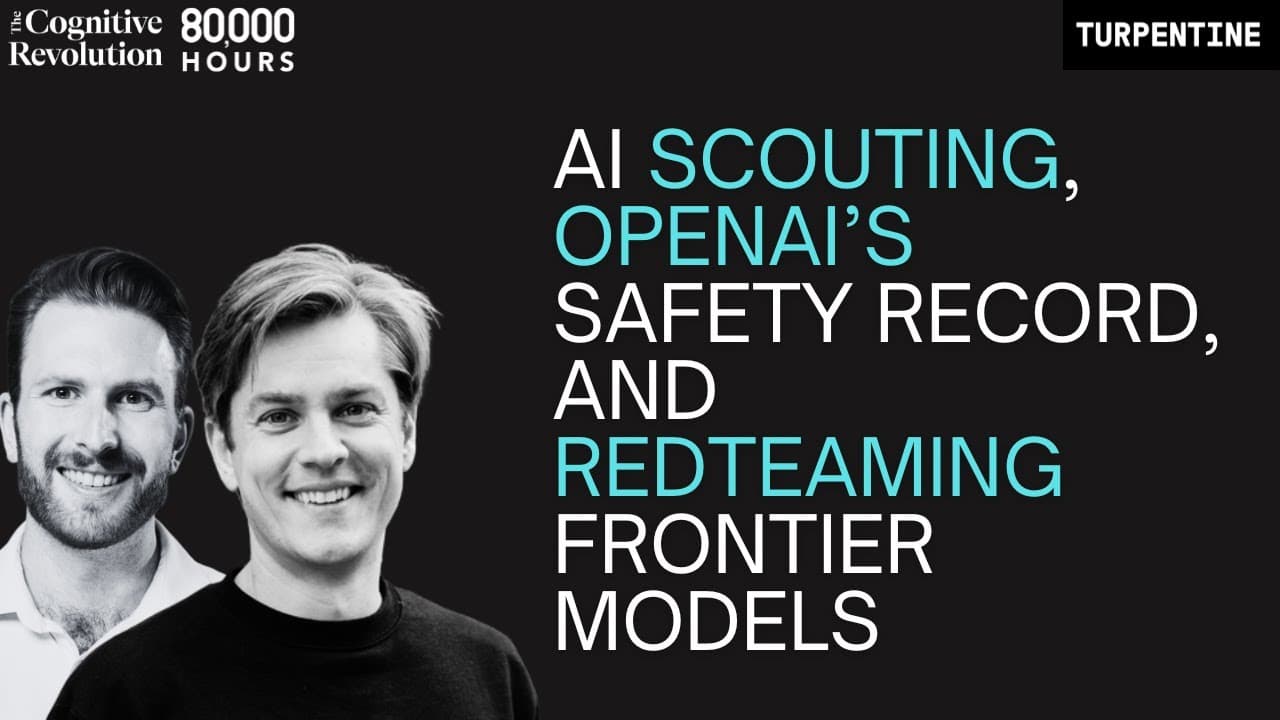
Nathan argues that effective AI safety measures are crucial as the technology advances rapidly. While OpenAI has made strides, such as launching ChatGPT with GPT-3.5 to improve safety, vulnerabilities still exist, highlighting the need for more AI scouts to monitor development. He emphasizes the importance of proactive regulation and continuous improvement in safety frameworks to align capabilities with responsible deployment.
Transcript
I I find it very easy for me and easy to empathize with the the developers who are just like man this is this is so incredible and it's so awesome like how could we not want to this the coolest thing anyone's ever done it genuinely right I mean I so I I'm very with that but it could change quickly in a world where it is genuinely better at us than ... Read More
Key Insights
- Nathan emphasizes the importance of AI scouts to track rapid AI advancements and ensure safety measures keep pace with capabilities.
- OpenAI's red teaming efforts initially seemed inadequate, raising concerns about their commitment to safety and control measures.
- The launch of ChatGPT with GPT-3.5 instead of GPT-4 was a strategic move to test safety measures before releasing more powerful models.
- OpenAI has made significant strides in safety, including creating a super alignment team and advocating for Frontier Model regulations.
- Despite OpenAI's efforts, some vulnerabilities remain, such as the model's susceptibility to spear phishing prompts.
- Nathan's experience highlights the disconnect between AI capabilities and the control measures necessary to ensure safe deployment.
- OpenAI's leadership is recognized for taking AI safety seriously, contrasting with other companies that might downplay potential risks.
- The AI landscape could be worse if not for the current leaders' commitment to safety, regulation, and transparency.
Install to Summarize YouTube Videos and Get Transcripts
Explore YouTube Video Summarizer or Get YouTube Transcript Extractor
Questions & Answers
Q: What was Nathan's role in the GPT-4 red team?
Nathan was part of OpenAI's red team for GPT-4, tasked with testing the model's capabilities and identifying potential safety issues. His role involved exploring the model's behavior, testing its limits, and providing feedback to OpenAI to improve safety measures before public release.
Q: Why did Nathan become concerned about OpenAI's safety measures?
Nathan became concerned because the initial red team efforts seemed inadequate, with low engagement and a lack of advanced techniques. The model, in its early form, could perform potentially harmful tasks without sufficient control measures, raising doubts about OpenAI's commitment to safety.
Q: How did OpenAI address safety concerns after Nathan's initial feedback?
OpenAI addressed safety concerns by launching ChatGPT with a less powerful model (GPT-3.5) to test safety measures, committing significant resources to a super alignment team, and advocating for regulations focused on Frontier Models. These efforts demonstrated their serious approach to AI safety.
Q: What are the key challenges in ensuring AI safety according to Nathan?
The key challenges include keeping safety measures in pace with rapidly advancing AI capabilities, addressing persistent vulnerabilities like susceptibility to spear phishing, and ensuring that AI developers are transparent and committed to responsible development and regulation.
Q: Why does Nathan believe AI scouts are important?
Nathan believes AI scouts are crucial because they can track rapid AI advancements, identify potential risks, and ensure that safety measures and regulations keep pace with the technology's capabilities. Scouts provide a broader perspective and help prevent blind spots in AI development.
Q: What is Nathan's view on OpenAI's leadership and their approach to AI safety?
Nathan views OpenAI's leadership positively, recognizing their commitment to AI safety and regulation. He contrasts this with other companies that might downplay risks, appreciating OpenAI's transparency and advocacy for reasonable regulations focused on high-end model development.
Q: What are the potential risks of not having adequate control measures for AI?
Without adequate control measures, AI models could perform harmful tasks, such as providing instructions for illegal activities or making dangerous decisions autonomously. This poses risks to individuals and society, highlighting the need for robust safety protocols and continuous monitoring.
Q: How does Nathan suggest improving AI red teaming efforts?
Nathan suggests improving AI red teaming by increasing engagement, using advanced techniques, providing more guidance and transparency to participants, and ensuring that findings lead to actionable improvements. He also advocates for broader involvement from experts to enhance the effectiveness of these efforts.
Summary & Key Takeaways
-
Nathan shares his experience as a red team member for GPT-4, highlighting initial concerns about OpenAI's safety measures and the model's capabilities. He emphasizes the need for more AI scouts to track advancements and ensure responsible development.
-
OpenAI's strategic decisions, such as launching ChatGPT with GPT-3.5, demonstrate their commitment to testing and improving safety measures. Nathan acknowledges their efforts to address safety concerns and advocates for reasonable regulation focused on Frontier Models.
-
Despite OpenAI's progress, Nathan points out that some vulnerabilities persist, like the model's ability to execute spear phishing prompts. He stresses the importance of continuous improvement in safety measures and the role of AI scouts in monitoring developments.
Read in Other Languages (beta)
Share This Summary 📚
Summarize YouTube Videos and Get Video Transcripts with 1-Click
Try YouTube Summary with ChatGPT & Claude or YouTube Transcript Generator
Explore More Summaries from Cognitive Revolution "How AI Changes Everything" 📚

Summarize YouTube Videos and Get Video Transcripts with 1-Click
Try YouTube Summary with ChatGPT & Claude or YouTube Transcript Generator