How Did Pulse Candy Conquer India's Candy Market?
TL;DR
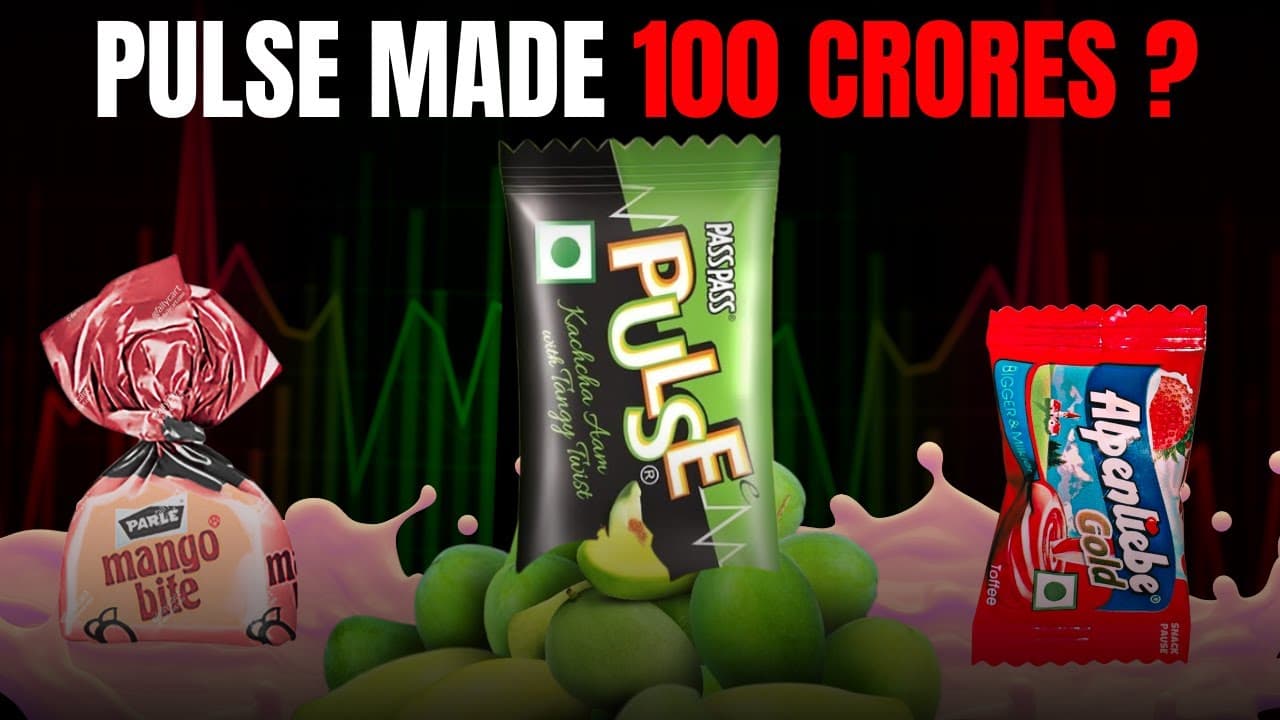
Pulse Candy succeeded by targeting kacha mango, a flavor rooted in food traditions across India, and developing the product through two years of dedicated research. DS Group combined broad flavor appeal with insights about how enjoyment declines during candy consumption, helping Pulse differentiate itself in a crowded, price-sensitive market where most new brands fail within their first year.
Transcript
hi everybody this tiny candy has taken India by storm and it's called the pulse candy ever since it's launch in 2015 the one riy candy has taken India by storm commanding a 16% market share this one rupee candy has changed the Dynamics of the 6,000 CR rup hard ball confectionary Market the product was an instant hit clocking in 100 cres in sales wi... Read More
Key Insights
- India's hard-boiled candy market has a low barrier to entry because production primarily requires sugar, water, flavoring, and packaging. These products also have long shelf lives and require no refrigeration, making them easier and cheaper to manufacture and distribute than products such as chocolates.
- Market survival is exceptionally difficult because inexpensive production encourages rapid imitation. After Pulse became successful, approximately 50 to 60 regional players attempted to copy it within a few months, while national brands also introduced their own versions, increasing pressure on differentiation and margins.
- Brand loyalty is weak in India's candy market because buyers often prioritize flavor over a specific brand. Consumers may accept an available substitute when it offers the desired flavor, which makes it difficult for manufacturers to establish durable brand preference using conventional positioning alone.
- Regional taste preferences vary substantially across India. North India favors coffee and mixed flavors, eastern India favors orange, lemon, and mango, western India favors strawberry, and southern India favors caramel and mint, complicating any attempt to succeed nationally with one flavor.
- Price rigidity is a major constraint because hard-boiled candies commonly sell for ₹0.50 to ₹1.00. A company cannot easily pass higher sugar costs to customers because increasing a ₹1 candy to ₹2 would double its price and could push buyers toward cheaper copies.
- DS Group's product strategy began with patience and structured research. The company established a dedicated research and development team in 2013 and spent two years identifying a product that could distinguish itself naturally within India's crowded hard-boiled candy category.
- Kacha mango offered broad relevance because raw mango appears in regional foods throughout India. DS Group's research also indicated that raw mango and mango together accounted for nearly 50% of the hard-boiled candy market, ahead of caramel at 20% and orange at 16%.
- Sensory-specific satiety describes how enjoyment decreases when the same flavor continues without variation. Pulse's research found that a candy's flavor is strongest initially but gradually becomes repetitive and dull, revealing an opportunity to develop a more distinctive and sustained consumption experience.
Install to Summarize YouTube Videos and Get Transcripts
Explore YouTube Video Summarizer or Get YouTube Transcript Extractor
Questions & Answers
Q: Why is India's hard-boiled candy market difficult to enter successfully?
India's hard-boiled candy market is difficult to succeed in because low production barriers attract many competitors, including rapid copycats. Consumers often favor flavors rather than brands, regional preferences vary widely, and retail prices remain fixed around ₹0.50 to ₹1.00. These conditions leave little room to absorb higher ingredient costs. The transcript states that 90% of new candy brands fail within their first year.
Q: How did Pulse Candy choose kacha mango as its core flavor?
DS Group researched regional tastes and found that raw mango and mango together represented nearly 50% of India's hard-boiled candy market. The company also observed that consumers across age groups enjoyed sweet and tangy combinations. Raw mango was familiar throughout India because it appeared in foods from northern, southern, eastern, and western regions, making kacha mango a promising choice for broad acceptance.
Q: How did research and development contribute to Pulse Candy's success?
DS Group formed a dedicated research and development team in 2013 and spent two years looking for a product that would stand out in a crowded category. The team examined regional flavor preferences, market shares, age-group preferences, and the consumption cycle of existing candies. This deliberate process led it toward kacha mango and insights about declining flavor excitement during consumption.
Q: What is sensory-specific satiety in candy consumption?
Sensory-specific satiety is the declining enjoyment that occurs when a person repeatedly experiences the same flavor. Pulse's researchers observed that the first bite of a candy creates the strongest impact, but the taste becomes repetitive and weaker as consumption continues. The consumer eventually experiences a duller sensation, creating an opportunity for a product designed around a more distinctive flavor journey.
Q: Why do low barriers to entry create problems for candy brands?
Low barriers allow manufacturers to enter the hard-boiled candy market with inexpensive materials such as sugar, water, flavoring, and packaging. The products have long shelf lives and need no refrigeration. These advantages also make successful products easy to imitate. Within months of Pulse's success, approximately 50 to 60 regional companies attempted copies, alongside competing versions from national brands.
Q: Why is pricing rigid in India's hard-boiled candy market?
Hard-boiled candies generally sell for ₹0.50 to ₹1.00, leaving few practical options for small price increases. If costs rise, a ₹1 candy cannot conveniently become ₹1.40 and may need to be priced at ₹2. That would double the consumer's price for the same product, encouraging customers to switch to competitors that continue selling at ₹1.
Q: How do regional flavor preferences affect candy launches in India?
Regional preferences make a single nationwide flavor strategy risky. According to the transcript, North India favors coffee and mixed flavors, eastern India favors orange, lemon, and mango, western India favors strawberry, and southern India favors caramel and mint. A candy company seeking a national presence must therefore recognize these differences or select a flavor with unusually broad cultural familiarity, as Pulse did with raw mango.
Q: How quickly did Pulse Candy grow after its launch?
Pulse launched in 2015 and became an immediate commercial success. The description states that it reached ₹100 crore in revenue within eight months and ₹300 crore within two years. It also says that Pulse sold candies worth ₹1,000 crore in FY24. The transcript further credits the ₹1 candy with commanding a 16% market share and disrupting India's established confectionery category.
Summary & Key Takeaways
-
India's hard-boiled candy market is easy to enter but difficult to survive. Ingredients are inexpensive, products have long shelf lives, and refrigeration is unnecessary, encouraging numerous competitors and copycats. At the same time, weak brand loyalty, regional flavor differences, rigid retail prices, and narrow margins make sustained profitability unusually difficult.
-
DS Group created a dedicated research and development team in 2013 and spent two years searching for a distinctive product. Its research found that raw mango and mango together represented nearly 50% of the hard-boiled candy market, while consumers across age groups enjoyed combinations of sweet and tangy flavors.
-
Pulse used kacha mango as its core flavor because raw mango was familiar across India through numerous regional foods. The team also studied candy consumption and sensory-specific satiety, observing that an initially powerful flavor becomes repetitive and weaker over time. These findings shaped its attempt to create a more memorable consumption experience.
Read in Other Languages (beta)
Share This Summary 📚
Summarize YouTube Videos and Get Video Transcripts with 1-Click
Try YouTube Summary with ChatGPT & Claude or YouTube Transcript Generator
Explore More Summaries from Think School 📚





Summarize YouTube Videos and Get Video Transcripts with 1-Click
Try YouTube Summary with ChatGPT & Claude or YouTube Transcript Generator