How to Create AI UGC Ads for Ecommerce
TL;DR
Start with proven ad copy or your best-performing creative, use Claude to turn it into a natural 20–30 second script, then generate an AI presenter in Arcads.ai. Preview the voice before rendering, remove language that sounds too sales-focused, adjust pacing and emotion, and create multiple script and actor variations to discover what resonates with consumers.
Transcript
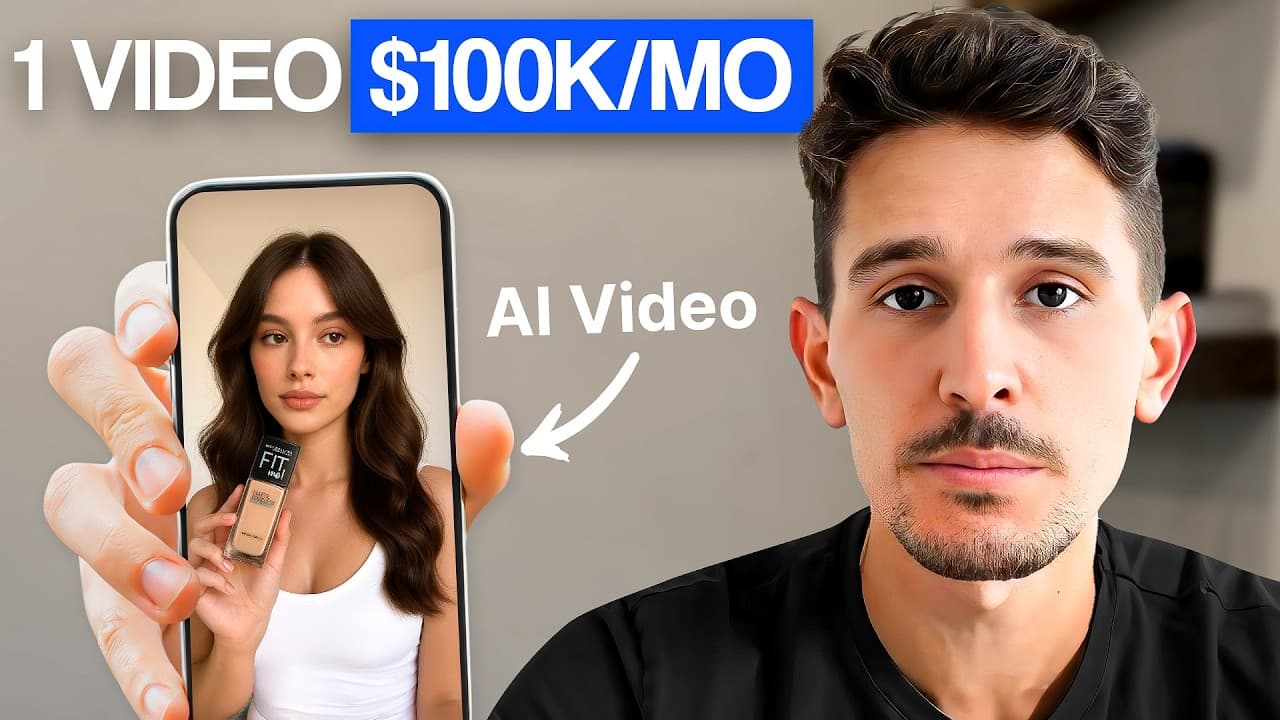
In this video, I'm going to reveal how you can create highly profitable ads using 100% AI UGC creators just like this. I get all my hats from 47 brand and you know, I've been buying hats for who knows long and probably have a thousand hats somewhere in my closet. The person that you just saw wasn't even a real person and what you heard wasn't even ... Read More
Key Insights
- Creative research is the starting point for producing AI UGC ads. The suggested process examines active advertisements from a relevant brand, collects useful copy, and stores it as source material that an AI writing tool can reshape into a spoken script.
- Existing performance data is the strongest starting material when a brand already runs ads. Iterating on the best-performing creatives preserves angles and scripts that have demonstrated potential, while still allowing teams to test different creators, wording, pacing, and presentation styles.
- Claude is used to convert reference copy into a natural 20–30 second advertisement script. The prompt identifies the brand, offer, source copy, desired duration, and limitations of AI presenters, giving the writing tool enough context to produce dialogue suited to synthetic delivery.
- Casual framing can make an AI UGC script feel more authentic. The demonstrated alternative presents the advertisement as a consumer answering a question about a favorite hat brand, then introduces the 30% discount as part of that personal response.
- Actor selection is part of the creative strategy in Arcads.ai. Creators can be filtered by gender, age, recency, situation, and accessories, allowing the visual setting and appearance to align more closely with the product category and intended advertising concept.
- Audio previewing is essential before generating the finished video. Listening to the selected voice revealed a phrase that felt too sales-focused, so the script was shortened, punctuation was changed, and the call to action was simplified before rendering.
- Voice settings influence the perceived naturalness of an AI presenter. The example increases speed to 1.2, lowers stability from 50% to 40%, reduces similarity, and sets style exaggeration to 10 to introduce some emotion while keeping the delivery controlled.
- Iteration is the core testing method for AI-generated advertising. The workflow creates multiple scripts, evaluates different actors, refines wording for each voice, and proposes testing dozens of variations steadily to identify which combinations resonate best with consumers.
Install to Summarize YouTube Videos and Get Transcripts
Explore YouTube Video Summarizer or Get YouTube Transcript Extractor
Questions & Answers
Q: How do you create an AI UGC ad from existing ad copy?
Begin by collecting copy from active advertisements in the same brand or product category. If you already advertise, prioritize your best-performing ads because their angle and script provide a tested foundation. Give that material to Claude with the brand, offer, desired 20–30 second length, and need for natural delivery. Then place the revised script in Arcads.ai, select an actor, preview the audio, refine awkward wording, and generate the video.
Q: What should an AI UGC script prompt include?
The prompt should identify the company, product category, current offer, example advertising copy, desired duration, and intended presentation style. In the demonstration, Claude is told that the script will be read by an Arcads.ai creator, that synthetic presenters can sound less natural than real people, and that the result should feel smooth. It also specifies a 20–30 second script promoting 47 Brand's 30% sale.
Q: How can an AI UGC script sound more natural?
Natural delivery starts with short, conversational language that fits the selected creator's voice. Replace formal openings with casual hooks, remove phrases that sound excessively promotional, and preview the audio before rendering. Punctuation can also change pacing, so removing some periods may produce a quicker flow. The demonstrated script improves after deleting an awkward sales phrase and simplifying the closing call to action.
Q: Why should you start with your best-performing ads?
Best-performing ads already provide a known angle, structure, and script that can serve as the basis for new variations. Instead of beginning without evidence, a brand can preserve those core creative elements while changing the AI actor, opening hook, wording, speed, or delivery style. The recommended approach is to create iterations of proven ads and test them steadily to see which version resonates most with consumers.
Q: How do you choose an AI actor in Arcads.ai?
Choose an actor whose appearance, context, and delivery support the product and concept. Arcads.ai allows filtering by gender, age, when the creator was added, situation, and accessories. The example searches for creators wearing hats because the advertisement promotes a hat company. It also favors authentic-feeling footage, even when the actor does not look the most polished, and previews voices before making a final selection.
Q: What Arcads.ai voice settings can improve delivery?
The demonstrated controls include speed, stability, similarity, and style exaggeration. After previewing the script, the speed is increased to 1.2, stability is reduced from 50% to 40%, similarity is lowered, and style exaggeration is set to 10 for a small amount of emotion. These settings are not treated as universal defaults. They are adjusted after listening to how a particular script sounds with a selected creator.
Q: How long should an AI UGC advertisement script be?
The demonstrated prompt requests a 20–30 second script. That length is used to communicate the offer, establish urgency, mention relevant products, and finish with a direct call to action without overloading the synthetic presenter. The final pacing also depends on the chosen voice and speed setting, so the script should be previewed and shortened when any sentence feels slow, unnatural, or overly focused on selling.
Q: How should brands test AI-generated UGC ads?
Brands should build multiple variations rather than relying on one generated video. The workflow supports changing the script angle, level of casualness, creator, voice settings, punctuation, hook, and call to action. Each version should be previewed and refined before generation. The broader goal described is to test dozens of iterations steadily, execute them through the advertising account, and observe which creative choices resonate best with consumers.
Summary & Key Takeaways
-
The workflow begins with creative research. Existing advertisers can use their best-performing ads as the foundation, while others can examine active ads from relevant brands. The demonstrated example collects copy from 47 Brand's Facebook ads, including its 30% sitewide promotion, and saves that material as source context for script development.
-
Claude is prompted to transform the collected advertising copy into a smooth 20–30 second script suitable for an AI creator. The first version presents the sale directly, while a second version adopts an ultra-casual consumer interview format. Shorter openings, conversational wording, and clear promotional details help the generated delivery feel more natural.
-
Arcads.ai turns the script into a video featuring an AI creator. Users can filter actors by characteristics, setting, recency, or accessories such as hats. Audio previews expose awkward or overly promotional phrases before rendering. Speed, stability, similarity, and style exaggeration can then be adjusted to improve pacing, consistency, and emotional delivery.
Read in Other Languages (beta)
Share This Summary 📚
Summarize YouTube Videos and Get Video Transcripts with 1-Click
Try YouTube Summary with ChatGPT & Claude or YouTube Transcript Generator
Explore More Summaries from Sam Piliero 📚
Summarize YouTube Videos and Get Video Transcripts with 1-Click
Try YouTube Summary with ChatGPT & Claude or YouTube Transcript Generator