How Do Machiavelli’s Seven Levels of Intelligence Work, and Where Do You Rank?
TL;DR
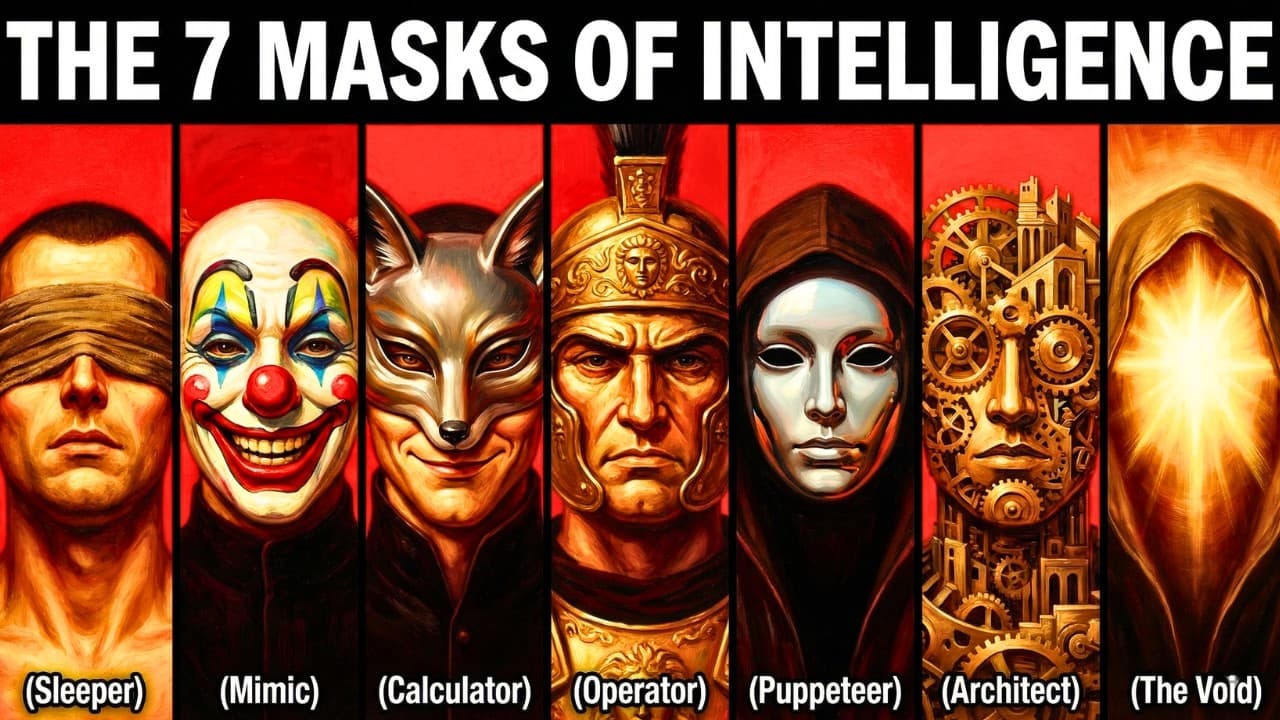
Machiavelli’s seven-level framework describes intelligence as a progression from following external scripts to exercising agency, influencing games, building systems, and moving beyond rules created by others. Its levels are Sleeper, Mimic, Calculator, Operator, Puppeteer, Architect, and Void or Sovereign. The model emphasizes leverage, adaptability, responsibility, and execution rather than IQ or credentials; read on to identify the traits, strengths, and risks associated with each stage.
Transcript
Your entire life you have been measured by a metric that does not exist. They told you intelligence was a number, an IQ score, [music] a grade on a paper, a degree hanging on a wall. They told you it was about how many facts [music] you could memorize or how quickly you could solve a math problem. They lied because it was convenient. True intellige... Read More
Key Insights
- Intelligence is defined in the framework as leverage, survival, agency, and the ability to impose intention upon reality. Academic credentials, memorized knowledge, and IQ scores may indicate conventional ability, but they do not necessarily show whether someone can direct a life, solve unfamiliar problems, or shape surrounding systems.
- The Sleeper is a reactive person whose behavior follows biological and social prompts. This person may possess a high IQ or professional expertise, yet still obey authority, advertising, news, trends, and inherited beliefs without examining why those influences determine opinions, purchases, routines, and decisions.
- The Sleeper is characterized by an external locus of control and fear of autonomy. Circumstances, institutions, relationships, luck, or the economy receive responsibility for outcomes, while consensus provides psychological safety. The framework argues that this dependence prevents genuine agency even when the person appears educated or professionally successful.
- The Mimic treats intelligence as a performance that can earn status, respect, and approval. Degrees, titles, fashionable causes, complex vocabulary, borrowed arguments, and quotations become signals of intellect, but this person struggles when asked to create, solve a novel problem, or defend an idea through independent reasoning.
- The Mimic is trapped by external validation and incomplete knowledge. Feeling superior to less reflective people can conceal continued dependence on another group's approved opinions. Aggression under questioning, fear of exposure, and memorizing debate arguments instead of seeking truth are presented as signs of remaining at this level.
- The Calculator is the first level described as possessing true agency. This person observes incentives, fears, desires, rules, and power relationships, then uses that information strategically. The approach can produce career advancement and effective maneuvering, but treating every relationship as a transaction creates loneliness, distrust, paranoia, and emotional emptiness.
- The Operator combines strategic awareness with will, competence, responsibility, and execution. Instead of merely exploiting available opportunities, the Operator creates new ones, makes difficult decisions, accepts conflict, establishes order, communicates a vision, and moves other people toward it through visible leadership and disciplined action.
- The seven-level hierarchy progresses from Sleeper, Mimic, Calculator, and Operator to Puppeteer, Architect, and Void, also called the Sovereign. The description portrays the highest stages as no longer merely playing by inherited rules, but influencing games, constructing systems, and operating beyond structures created by others.
Install to Summarize YouTube Videos and Get Transcripts
Explore YouTube Video Summarizer or Get YouTube Transcript Extractor
Questions & Answers
Q: What are Machiavelli’s seven levels of intelligence?
The seven levels are Sleeper, Mimic, Calculator, Operator, Puppeteer, Architect, and Void, also called the Sovereign. They represent increasing movement from reactive conformity toward agency, strategic action, influence, system building, and freedom from games designed by others.
Q: How does this framework define true intelligence?
True intelligence is defined as leverage, survival, agency, adaptability, and the ability to impose intention upon reality. IQ scores, grades, degrees, memorized facts, and rapid problem solving are rejected as complete measures because they do not necessarily show whether someone can make independent decisions or shape surrounding systems.
Q: What makes someone a Level One Sleeper?
A Sleeper reacts to biological and social prompts rather than acting with conscious agency. The person may have a high IQ or professional expertise but still obey authority, news, advertising, trends, and inherited beliefs without examining why they influence decisions.
Q: Why does the Sleeper depend on consensus?
The Sleeper has an external locus of control and fears the burden of autonomy. Consensus supplies psychological safety, so this person checks what the majority thinks before forming an opinion and fears standing alone more than being wrong.
Q: How can someone recognize Level Two Mimic behavior?
The Mimic treats intelligence as a performance used to gain respect, status, and validation. Signs include using complex words without understanding them, collecting credentials as status symbols, adopting fashionable causes, reading reviews instead of books, and borrowing arguments rather than reasoning independently.
Q: Why is the Calculator considered the first level of true agency?
The Calculator stops concentrating on approval and begins studying incentives, fears, desires, rules, and power relationships. This enables strategic maneuvering, but treating every relationship as a transaction can produce loneliness, distrust, paranoia, and emotional emptiness.
Q: What is the difference between the Calculator and the Operator?
The Calculator uses cunning, timing, and knowledge of incentives to navigate an existing system. The Operator combines strategic awareness with will, competence, responsibility, conflict tolerance, and execution to create opportunities, establish order, and move people toward a defined vision.
Q: What do the Puppeteer, Architect, and Sovereign represent?
These final three levels move beyond visible command toward influence, system building, and independence from structures created by others. The Puppeteer influences games, the Architect constructs systems, and the Void or Sovereign operates beyond inherited games, although greater agency can also bring isolation, exposure, or dependence on personal force.
Summary & Key Takeaways
-
The framework rejects IQ scores, grades, degrees, memorized facts, and rapid problem solving as complete measures of intelligence. It instead defines intelligence through leverage, survival, agency, adaptability, and the ability to shape reality. Advancement begins when a person recognizes inherited beliefs, social reflexes, and structures that have been directing behavior without conscious examination.
-
The first four levels describe a progression from reaction to command. The Sleeper follows external scripts, while the Mimic performs intelligence for validation. The Calculator abandons appearances, studies incentives, and maneuvers strategically. The Operator adds will, responsibility, competence, conflict tolerance, and execution, creating opportunities and directing people toward a defined vision.
-
The description completes the hierarchy with the Puppeteer, Architect, and Void, also called the Sovereign. These stages are portrayed as moving beyond visible command toward influence, system building, and freedom from games designed by others. The overall model warns that each advancement offers greater agency but can introduce isolation, paranoia, exposure, or dependence on personal force.
Read in Other Languages (beta)
Share This Summary 📚
Summarize YouTube Videos and Get Video Transcripts with 1-Click
Try YouTube Summary with ChatGPT & Claude or YouTube Transcript Generator
Explore More Summaries from Mindplicit 📚




Summarize YouTube Videos and Get Video Transcripts with 1-Click
Try YouTube Summary with ChatGPT & Claude or YouTube Transcript Generator