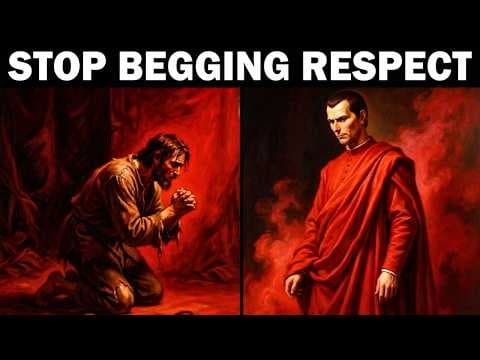
What Are the 9 Things You Should Never Do in Public? Machiavelli’s Warning

TL;DR
Protect your public reputation by keeping unfinished plans, personal struggles, emotional triggers, and financial details private while maintaining composure. The framework presents 9 public behaviors to avoid, including announcing goals before acting, complaining openly, losing your temper, apologizing without cause, and displaying financial hardship or success. Read on for practical ways to replace these habits with deliberate action, trusted counsel, measured responses, and sincere accountability.
Transcript
You are being watched not by cameras, not by the government, but by the people around you. Every time you step out your door, you enter [music] an arena, a silent, invisible battlefield where status [music] is negotiated, power is assessed, and victims are selected. And the terrifying truth, you have [music] been painting a target on your own back.... Read More
Key Insights
- Selective privacy is presented as a defense against exposing plans, emotions, insecurities, and vulnerabilities to people who may misuse them. The framework does not require complete emotional suppression, but it recommends controlling what is disclosed publicly and reserving sensitive conversations for trusted advisers.
- Unannounced goals preserve attention for execution rather than validation. According to the transcript, publicly declaring a business, fitness plan, or relationship decision can create premature satisfaction while also giving competitors, critics, or envious acquaintances information they could use to interfere.
- Public complaining signals a perceived loss of control and burdens listeners with negativity. The recommended response is either to change the situation, endure it with composure, or discuss the difficulty privately with a therapist or trusted mentor instead of broadcasting it to coworkers or the wider public.
- Emotional regulation prevents other people from controlling behavior through provocation. Losing one's temper reveals specific triggers and can make a person appear irrational, while pausing, remaining silent, and refusing an expected confrontation preserve composure and deny an antagonist the reaction they wanted.
- Anger and aggression are treated as different concepts within the video's framework. Anger is described as an emotion that can take control, while aggression is described as a deliberate tool. Public screaming, road rage, and snapping at others are therefore framed as impulsiveness rather than strength.
- Unnecessary apologies can communicate uncertainty and invite misplaced blame. The transcript recommends replacing routine apologies with direct language, such as thanking someone for waiting or stating a differing view, while reserving sincere apologies for broken promises, genuine mistakes, or harm caused to another person.
- A meaningful apology should acknowledge actual wrongdoing and be followed by corrective action. The advice is not to reject accountability, but to stop apologizing automatically for asking questions, expressing opinions, disagreeing respectfully, or simply taking up space in an ordinary social interaction.
- Financial ambiguity is presented as protection from both pity and envy. The transcript advises keeping hardship and wealth private, appearing clean and organized during difficulty, and avoiding conspicuous displays during success so that other people cannot accurately assess, exploit, resent, or seek access to one's resources.
Install to Summarize YouTube Videos and Get Transcripts
Explore YouTube Video Summarizer or Get YouTube Transcript Extractor
Questions & Answers
Q: How can you protect your reputation in public?
Use selective privacy and consistent emotional control: keep unfinished plans, personal struggles, financial details, and emotional triggers away from casual audiences. Discuss sensitive matters only with trusted advisers, remain composed during conflict, apologize for genuine wrongdoing, and let completed work demonstrate your capabilities.
Q: Why should you avoid announcing plans before acting?
The transcript says announcing a goal can provide validation before the work is completed and weaken the energy devoted to execution. It can also give competitors, critics, or envious friends an opportunity to interfere, so the recommended approach is to work quietly and let results reveal the plan.
Q: Why is complaining in public considered harmful?
Public complaining is presented as a signal that circumstances control you, and it can make listeners associate you with negativity. The recommended alternatives are to change the situation, endure it with composure, or discuss the problem privately with a therapist or trusted mentor.
Q: How should you respond when someone provokes you in public?
Pause, remain silent, and avoid acting until the surge of anger passes. An uncontrolled reaction exposes your triggers and gives the provocateur influence over your behavior, while a measured response preserves composure.
Q: What is the difference between anger and aggression?
Within the video's framework, anger is an emotion that can take control, whereas aggression is a tool used deliberately. Screaming at a waiter, snapping at a partner, or engaging in road rage therefore demonstrates impulsiveness rather than controlled strength.
Q: When should you apologize to someone?
Apologize sincerely when you have caused harm, broken a promise, or made a genuine mistake, then correct the problem. Avoid automatically apologizing for asking questions, expressing an opinion, disagreeing respectfully, or occupying space.
Q: How can you stop over-apologizing in everyday situations?
Replace reflexive apologies with direct language that acknowledges the situation without accepting blame unnecessarily. For example, thank someone for waiting or state that you see an issue differently, while still offering a sincere apology and corrective action when you have actually done something wrong.
Q: Why should you keep your financial situation private?
The transcript's framework says visible hardship can attract pity, while conspicuous wealth can provoke envy, resentment, requests, or attempts to access your resources. It recommends remaining clean and organized during difficulty and avoiding displays of purchases, receipts, logos, or possessions during success.
Summary & Key Takeaways
-
The central argument is that excessive openness can weaken a public persona by exposing intentions, insecurities, emotions, and vulnerabilities. The recommended alternative is selective privacy: maintain a calm exterior, disclose sensitive information only to trusted people, and allow completed actions rather than announcements to shape how others perceive your character and capabilities.
-
The first behavioral rules concern plans, complaints, and anger. Keep future moves private so others cannot obstruct them and so validation does not replace execution. Address problems directly or discuss them with carefully chosen advisers. Under provocation, pause and remain silent instead of revealing triggers through an uncontrolled public reaction.
-
The remaining presented rules address apologies and money. Avoid apologizing merely for speaking, disagreeing, asking questions, or occupying space, but apologize sincerely after genuine harm. Keep both financial hardship and success private because visible struggle can attract pity, while conspicuous wealth can provoke envy, resentment, requests, or other unwanted attention.
Read in Other Languages (beta)
Share This Summary 📚
Summarize YouTube Videos and Get Video Transcripts with 1-Click
Try YouTube Summary with ChatGPT & Claude or YouTube Transcript Generator
Explore More Summaries from Mindplicit 📚





Summarize YouTube Videos and Get Video Transcripts with 1-Click
Try YouTube Summary with ChatGPT & Claude or YouTube Transcript Generator