Why Do Civilizations Die the Same Way Across History
TL;DR
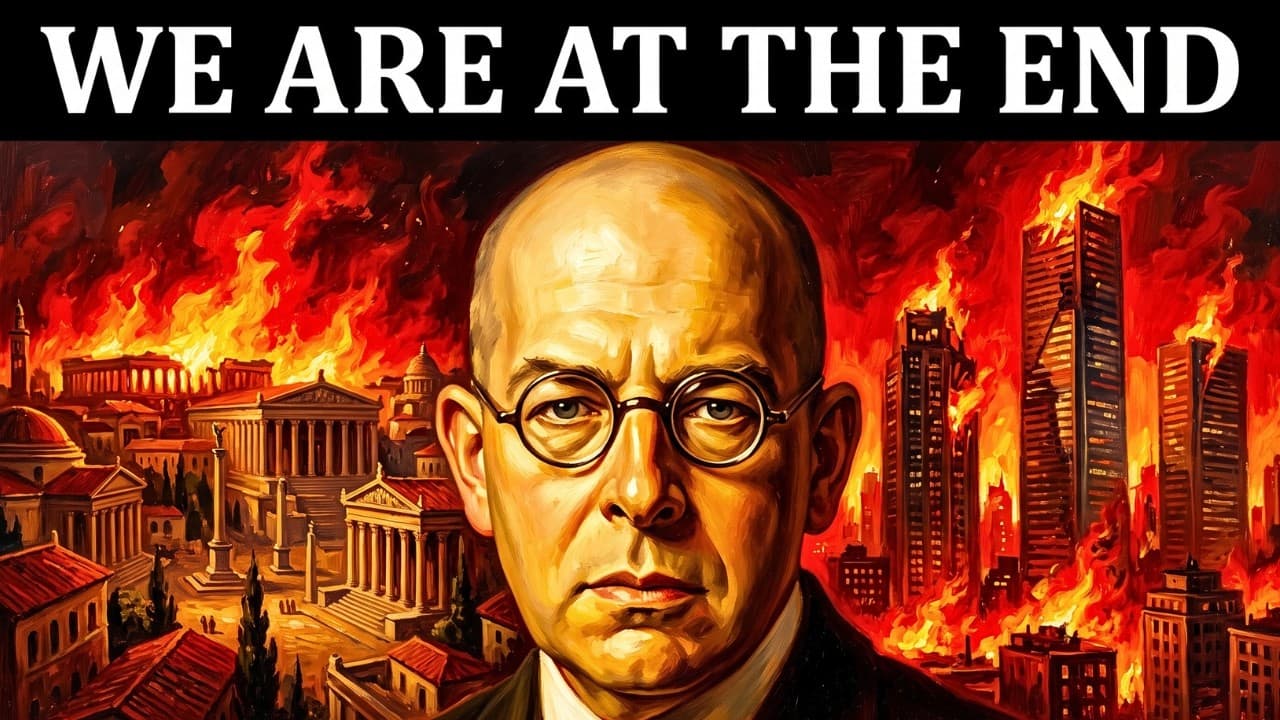
Civilizations collapse not from a single failure but because solving new problems adds complexity that becomes costly. Elite overproduction and wealth pumping push elites to compete for power while ordinary people grow frustrated, leading to a rational withdrawal from expensive structures. The pattern repeats across empires, nations, and cultures.
Transcript
250 years. Assyria lasted 247, Persia 208, the Roman Republic 233, the Ottomans 250, Spain 250, >> [music] >> Britain 250, 10 generations from the first hungry men on horseback to the last pension paid in debased coin. [music] Different continents, different gods, civilizations that never read each others histories, >> [music] >> and in some cases ... Read More
Key Insights
- The six ages model describes a repeatable life cycle from conquest to decadence.
- The
- Complexity grows as societies solve problems, but returns diminish over time leading to heavier structures that become unaffordable.
- Elite overproduction creates a surplus of educated or wealthy individuals who compete for power and provoke instability.
- Wealth pumps widen inequality and stagnate wages, increasing bottom mass discontent.
- Counter-elites emerge when elites threaten to lose influence, escalating internal conflict.
- Economizing occurs when societies decide to cut back on expensive structures rather than lose control.
- Decline is perceived as progress by those inside the system, masking the fall.
- Tainter argues that decline is a rational response to unsustainable complexity rather than a sudden catastrophe.
Install to Summarize YouTube Videos and Get Transcripts
Explore YouTube Video Summarizer or Get YouTube Transcript Extractor
Questions & Answers
Q: A real search query question about the video (e.g. 'How to...', 'What is...', 'Why does...', 'When should...'). Question 1
What is the central claim about why civilizations collapse, according to the video and its sources like Glubb and Tainter? The video argues that civilizations die not from a single failure but from the accumulating cost of solving new problems with increasing complexity. This leads to declining marginal returns and economizing after a period of growth.
Q: What is the six ages model mentioned in the video
The six ages are: an age of pioneers, an age of conquests, an age of commerce, an age of affluence, an age of intellect, and an age of decadence. The final age is described as a winter when the culture becomes a civilization, losing its growth and vitality according to Spengler. The model is used to explain cyclical decline.
Q: Who is Oswald Spengler and what did he claim
Oswald Spengler is described as a German schoolteacher who wrote The Decline of the West and argued that the West had entered its winter. He claimed a culture becomes a civilization when it stops growing, and that the West was in winter since around 1800, a concept used to frame how civilizations decline.
Q: What mechanism did Joseph Tainter identify for collapse
Joseph Tainter identified declining marginal returns on complexity. As societies add offices, taxes, and layers to solve problems, the cost increases faster than the benefits, eventually making the system economically unsustainable and leading to economizing and collapse.
Q: What is elite overproduction according to the video
Elite overproduction is when a society produces more wealthy or educated people than there are positions for them to inherit. This creates tension as more elites compete for limited offices, fueling political instability and contributing to the collapse of the system.
Q: How does the video describe the wealth pump
The wealth pump is described as upwardly mobilizing wealth that stagnates wages for the general population while profits accumulate at the top. This concentrates resources and fuels resentment, contributing to social fragility and increasing the likelihood of counter-elites challenging the system.
Q: What role do counter-elites play in decline
Counter-elites arise when unseated elites shift from competing within the system to leading those who want to burn the chairs. This dynamic heightens internal conflict and destabilizes governance, accelerating the collapse process as factions vie for control.
Q: What is the significance of Salvian in the narrative
Salvian is cited as a priest who wrote about Romans preferring life under barbarians because it was less costly than sustaining their own expensive system. This illustrates the idea that people may choose freedom under occupation if the cost of maintaining their own structure becomes intolerable.
Summary & Key Takeaways
-
Civilizations follow a six age pattern of pioneers, conquests, commerce, affluence, intellect, and decadence that ends in a winter of decline.
-
The mechanism of collapse involves expanding complexity that yields diminishing returns and a rising tax burden, triggering economizing and hollowed institutions.
-
Elite overproduction and wealth concentration fuel elite competition and social unrest, driving systems toward collapse rather than outward failure.
Read in Other Languages (beta)
Share This Summary 📚
Summarize YouTube Videos and Get Video Transcripts with 1-Click
Try YouTube Summary with ChatGPT & Claude or YouTube Transcript Generator
Explore More Summaries from Mindplicit 📚



Summarize YouTube Videos and Get Video Transcripts with 1-Click
Try YouTube Summary with ChatGPT & Claude or YouTube Transcript Generator