How to spot dangerous people in your circle
TL;DR
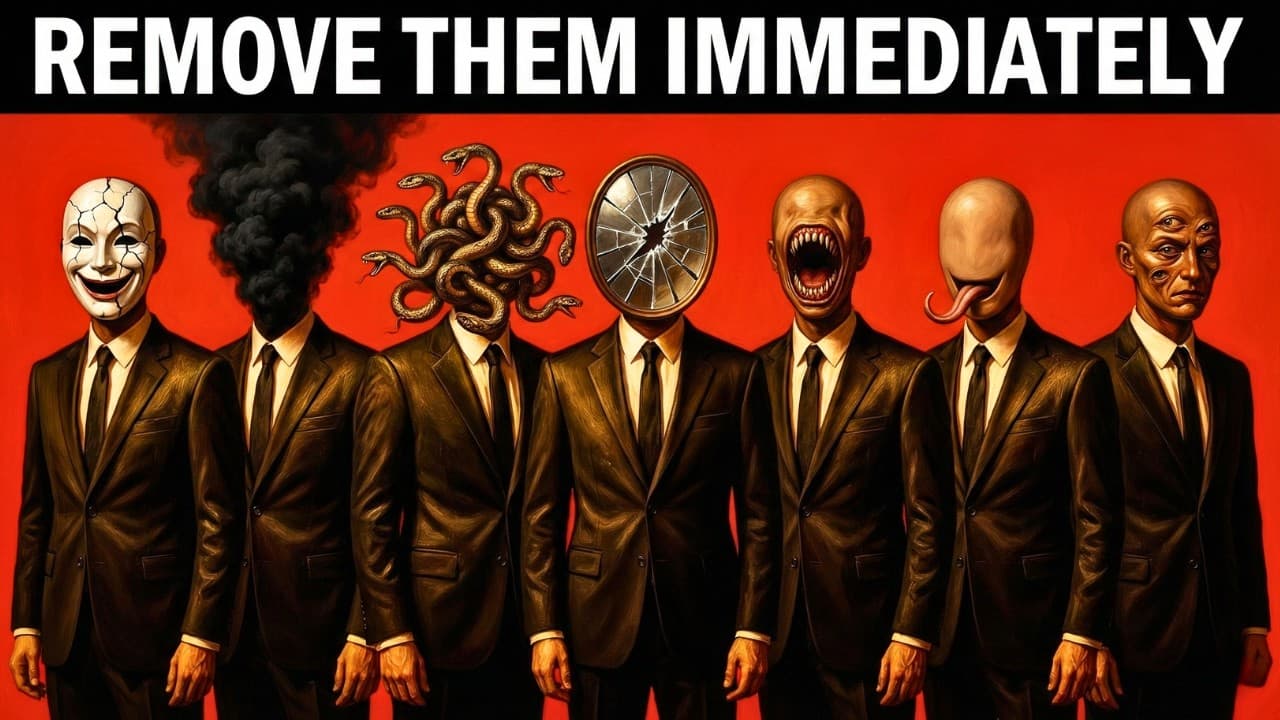
The video identifies seven types of people who undermine you and explains how to spot them in your social circle. It provides concrete fixes to protect yourself and maintain boundaries, like refusing unsolicited help, gray rocking, and testing loyalty. The core idea is to prune relationships that drain your energy and threaten your autonomy.
Transcript
You are sleeping with the enemy. Not literally but psychologically. You invite them to dinner. You text them good morning. You tell them your fears, your dreams, and your secrets. You think you are building a connection, but you are actually handing them the blueprints to your own destruction. Most people believe that danger looks like a monster. T... Read More
Key Insights
- The weaver of covert debts uses generosity as a means to create hidden obligations and control over you, so watch for gifts with strings and set firm boundaries to prevent debt from compounding.
- The information spy leverages vulnerability to gather secrets, turning them into leverage; gray rocking and minimal self-disclosure reduce your risk and protect your private information from being weaponized.
- The architect of misfortune thrives on crisis and chaos, dragging others into their problems; avoid tying your success to someone who habitually drains time and resources through constant emergencies.
- The mirror is a flatterer who reflects your opinions back to you to manipulate your reality; test their loyalty by differing from you and observing if they maintain consistency or shift with your stance.
- The moral assassin uses virtue signaling as a weapon to control behavior; if they make you feel constantly inadequate, reduce interactions and firmly declare that you do not welcome their feedback.
- The neutral saboteur sits on the fence and waits to see who wins, posing a subtle but dangerous risk to alignment and momentum; identify and distance from passive supporters who prefer inaction over truth.
- Each dangerous type signals a pattern you can forecast and interrupt; early boundary setting and deliberate disengagement are essential to preserving your life quality and strategic direction.
- The overall strategy is practical and does not demonize people; it focuses on recognizing toxic dynamics and choosing to preserve energy for growth and positive relationships.
- More videos from this channel:
- More from this channel: Mindplicit
Install to Summarize YouTube Videos and Get Transcripts
Explore YouTube Video Summarizer or Get YouTube Transcript Extractor
Questions & Answers
Q: A real search query question about the video How to identify covert debt senders
Covert debt creators use gifts and favors to bind you with an invisible obligation, and they tend to keep score as reminders of your supposed debt. To spot them, notice patterns where generosity is followed by requests for loyalty, time, or submission. The fix is to refuse unsolicited help and settle any small debts promptly to prevent future leverage.
Q: What is an information spy and how do you handle one
An information spy shares secrets to gain power and control, often using fake vulnerability to lower your defenses. They are attracted to gossip and breaking confidences. Handle them by gray rocking, keeping your life private, and avoiding reciprocal disclosures; if they probe, cut the conversation and observe their reaction to your boundaries.
Q: How can misfortune architects affect your life and what to do
Misfortune architects create constant emergencies and blame external forces for their problems, pulling you into their chaos. They tend to avoid responsibility and resist solutions. Protect yourself by recognizing the pattern, deciding not to get pulled into their crises, and allocating time and money to your own priorities instead.
Q: What defines a mirror in this context and why is it dangerous
The mirror flatters by agreeing with you and mirroring your opinions, often lacking its own stance. This makes you lose sight of your true beliefs and can hide hidden agendas. Test them by taking a controversial position and later reversing yours to see if they adapt consistently or shift with you.
Q: Who are moral assassins and how to deal with them
Moral assassins weaponize virtue to impose standards and control your behavior, often under the guise of care. They erode your self esteem and seek constant validation. Stop explaining your actions, set clear boundaries, and respond calmly that you did not ask for their feedback to reduce their influence.
Q: What is a neutral saboteur and why are they dangerous
Neutral saboteurs stay on the sidelines and pretend neutrality while quietly supporting the side they think will win, undermining your progress. Their danger lies in indecision and delayed action that costs you momentum. Identify them by their lack of commitment and distance yourself to preserve momentum.
Q: How does the circle of dangerous people relate to Machiavelli
The video applies Machiavelli’s ideas about power and perception to modern relationships, showing how people with hidden agendas can undermine you without overt hostility. Recognizing these archetypes helps you protect your reputation, time, and resources, ensuring you navigate social dynamics with strategic caution.
Q: What is the recommended one-line approach to handling a dangerous person
Set a firm boundary and stop unneeded exchanges: state clearly that you do not accept unsolicited help or advice, limit personal disclosures, and avoid engaging in their drama. If they continue, disengage politely and limit future interactions to neutrally necessary topics to protect your autonomy.
Summary & Key Takeaways
-
A social circle autopsy reveals seven archetypes that quietly damage your life, including covert debt creators, information spies, misfortune architects, flatterers, moral aggressors, neutral sabotagers, and envious mimics, each with a distinctive pattern and warning signs.
-
To protect yourself, adopt practical defenses such as refusing unasked for favors, practicing gray rocking, testing loyalty, and setting clear boundaries, ensuring you remain autonomous and focused on your goals while reducing exposure to draining dynamics.
-
The overarching message is about survival and strategic distance, not vilifying people; it emphasizes identifying patterns, safeguarding autonomy, and choosing relationships that empower rather than erode your mental resources and reputation.
Read in Other Languages (beta)
Share This Summary 📚
Summarize YouTube Videos and Get Video Transcripts with 1-Click
Try YouTube Summary with ChatGPT & Claude or YouTube Transcript Generator
Explore More Summaries from Mindplicit 📚



Summarize YouTube Videos and Get Video Transcripts with 1-Click
Try YouTube Summary with ChatGPT & Claude or YouTube Transcript Generator