How Much Does YouTube Actually Pay Small Channels in 2025?
TL;DR
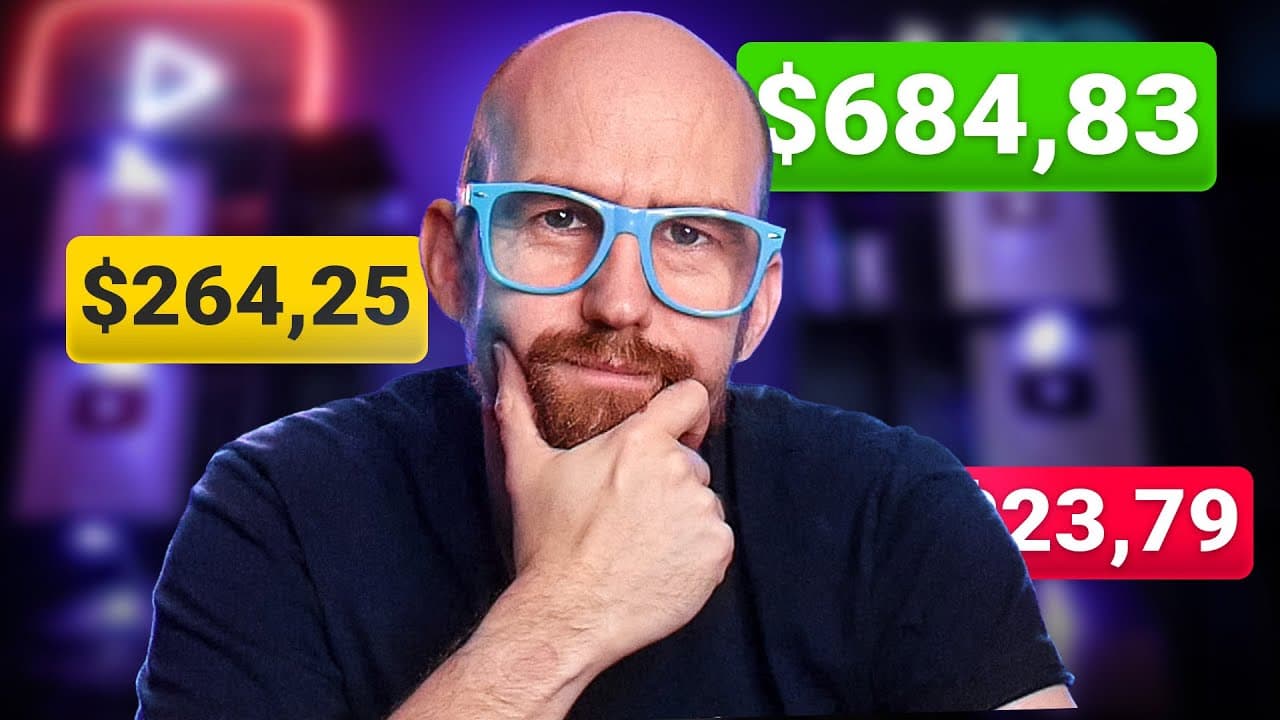
Small YouTube channels can earn dramatically different amounts, even with similar view counts, because revenue depends on RPM and viewing conditions. Examples range from $23.79 for 237,000 mostly Shorts views to $684.83 for a channel with roughly the same views. The breakdown explains how niche, viewer location, video length, and audience retention shape a creator’s first paycheck.
Transcript
Here's a popular YouTube question. How much do small channels make in their first 30 days of monetization? $10, $100, $500? Well, weirdly, it's all of them. In fact, I found two creators with almost exactly the same number of views. One creator earned enough to buy a pizza with pineapple. Controversial opinion, I'm a recent convert. I actually like... Read More
Key Insights
- • RPM is the creator’s actual revenue per 1,000 views after YouTube takes its share, while CPM represents what advertisers pay YouTube before that deduction. YouTube keeps 45% of the CPM, making RPM the more useful measure of creator earnings.
- • Equal view counts do not produce equal earnings because viewing conditions determine advertising value. The transcript compares creators with similar totals whose first monetization earnings were $23.79 and $684.83, demonstrating how dramatically revenue can vary between channels.
- • YouTube Shorts generate a fraction of long-form revenue, usually paying 50 to 100 times less according to the transcript. One Shorts-heavy channel received 237,000 views but earned only $23.79, equivalent to about 10 cents per 1,000 views.
- • Content niche is a major RPM factor because advertisers pay more to reach audiences who are ready to purchase relevant products. Personal finance can attract ads for credit cards, investment tools, and business software, while broad entertainment audiences are less commercially specific.
- • Viewer location determines geographic advertising value, regardless of where the creator uploads or what location the content depicts. The transcript reports a CPM above $20 for US views, while Indian views produced an RPM expected to be below one dollar.
- • Video length affects revenue because long-form content can show advertisements before and after playback. Videos longer than 8 minutes can also include midroll ads, creating additional earning opportunities when those placements occur at appropriate moments.
- • Audience retention is essential because longer viewing sessions give YouTube more opportunities to display advertisements and make content more valuable to advertisers. A compelling 6-minute video can earn more than a 12-minute video whose viewers leave after the opening minute.
- • Low-RPM categories generally earn between $1 and $3 per 1,000 views and include entertainment, lifestyle, music, pranks, vlogs, and gaming. Tutorials, productivity, education, and tech reviews occupy the stated mid-range of $4 to $7 per 1,000 views.
- "This basically is just a fancy way of saying how much YouTube will pay you for 1,000 views." (1:17)
- "The RPM is influenced by what your video is about, where your viewers live, how long your video is, and how long people watch the video for." (2:48)
- "YouTube takes a giant 45% cut of the CPM." (3:12)
- "So to make any serious cash from shorts, you'll need to get tens of millions of views per month, if not more." (4:19)
Install to Summarize YouTube Videos and Get Transcripts
Explore YouTube Video Summarizer or Get YouTube Transcript Extractor
Questions & Answers
Q: How much does YouTube pay small channels in their first 30 days of monetization?
First-month earnings vary widely. One creator earned $23.79 from 237,000 views, another earned $684.83 with roughly the same number of views, and Caleb Bale earned $264.25 from 22,000 views.
Q: What does RPM mean on YouTube?
RPM means revenue per mille and represents how much a creator actually earns per 1,000 views after YouTube takes its share. It is the key reason channels with similar view totals can receive very different payouts.
Q: What is the difference between YouTube RPM and CPM?
CPM is what advertisers pay YouTube to run ads on videos. YouTube takes a 45% cut of CPM, while RPM reflects what the creator actually earns per 1,000 views after that share is removed.
Q: Why can two small YouTube channels with the same views earn different amounts?
Equal view counts do not guarantee equal revenue because the viewing conditions can differ. RPM is influenced by the video topic, viewer location, video length, and how long viewers continue watching.
Q: How much did the Shorts-heavy channel earn from 237,000 views?
The creator earned $23.79 during the first month of monetization, equal to 10 cents per 1,000 views. Most of the channel’s views came from YouTube Shorts.
Q: Why do YouTube Shorts pay less than long-form videos?
Shorts pay only a fraction of long-form revenue, usually 50 to 100 times less. The transcript says earning serious money from Shorts may require tens of millions of views per month, if not more.
Q: Which factors have the biggest effect on YouTube RPM?
The four major variables are the content niche, where viewers live, video length, and audience retention. These conditions affect how much advertisers value the audience and how many advertising opportunities a video creates.
Q: Why can personal finance channels have a higher YouTube RPM?
Personal finance is one of the higher RPM and CPM categories because companies pay more to reach people interested in financial topics. This advertiser demand can let a small channel earn more revenue from fewer views.
Summary & Key Takeaways
-
A creator’s first month of monetization can produce anything from a modest pizza budget to enough for a Switch 2, even when channels receive similar view totals. The central reason is RPM, which measures the creator’s actual revenue per 1,000 views after YouTube has taken its share of advertising revenue.
-
Four variables largely determine RPM: the subject of the content, the countries where viewers live, video length, and audience retention. Finance and other commercially focused topics attract advertisers willing to spend more, while viewers in the US, UK, Canada, and Australia generally represent greater advertising value than audiences in lower-spend markets.
-
Long-form videos offer more advertising opportunities than Shorts, and videos exceeding 8 minutes can include midroll ads. However, length alone does not guarantee higher earnings. A shorter video with strong retention can outperform a longer one that viewers abandon quickly, so creators should prioritize engaging content and appropriately placed advertisements.
Read in Other Languages (beta)
Share This Summary 📚
Summarize YouTube Videos and Get Video Transcripts with 1-Click
Try YouTube Summary with ChatGPT & Claude or YouTube Transcript Generator
Explore More Summaries from vidIQ 📚



Summarize YouTube Videos and Get Video Transcripts with 1-Click
Try YouTube Summary with ChatGPT & Claude or YouTube Transcript Generator