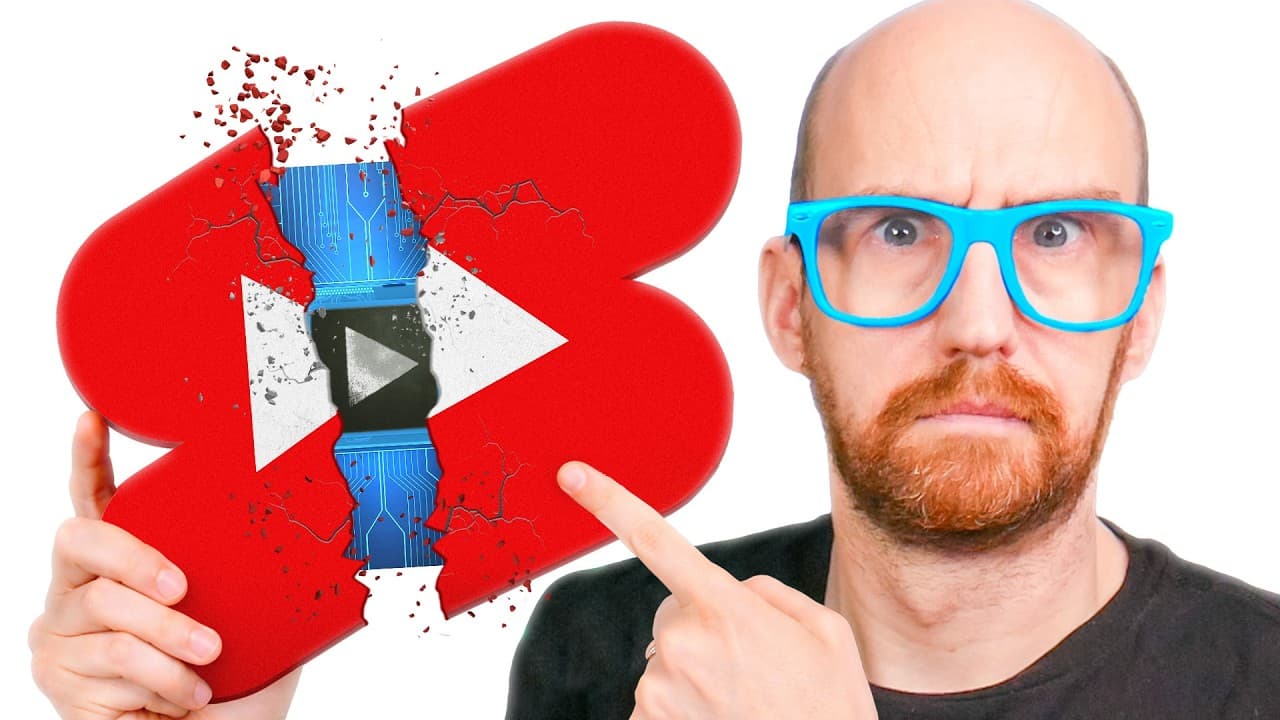
How does YouTube's new Shorts algorithm affect creators?
TL;DR
The update shifts Shorts rankings toward original, transformative content and away from non transformed clips. Creators should add distinct value, commentary or context to any reused material to avoid reduced reach and possible monetization issues. YouTube's policies target non transformative reuploads, emphasizing originality and meaningful edits.
Transcript
So, YouTube have literally just updated the algorithm, and it's fantastic news for everybody. But at the same time, someone somewhere inevitably right now is making a video titled, "YouTube just killed my channel." YouTube is updating the recommendation system to further prioritize original shorts. >> To you and me, recommendation system basically ... Read More
Key Insights
- The update prioritizes original content in Shorts over clipped material, boosting visibility for creators who add unique value.
- Transformative editing matters the most, with the emphasis on new meaning, commentary, and context rather than minor edits.
- Non transformative reuse is discouraged and may be penalized by reduced reach or monetization restrictions.
- Policy alignment is key, as the change is described as consistent with existing rules on reuse content and copyright constraints.
- Creators are urged to distinguish their content by voice and perspective to satisfy the transformation requirement.
- Monetization implications are tied to policy changes, with gates tied to how content is reused and transformed.
- The update is described as transparent, making it easier for viewers and creators to understand why clips may perform differently.
- The guidance suggests avoiding clone-like reuploads and focusing on originality to avoid algorithmic penalties and policy flags.]
- Q_and_A:[{"question":"What is the core change announced for YouTube Shorts?","answer":"The core change is to prioritize original, transformative Shorts over clips that merely reuse content from others. This means creators should add distinct value, commentary, or new meaning to their videos rather than relying on non transformative re uploads. The goal is to reward originality while reducing reach for non transformed content."},{"question":"How should creators approach clips from other creators?","answer":"Creators should ensure their clips include real distinct value such as commentary, context, or a unique point of view. The content should be meaningfully different from the original, not just minor edits or template changes. This aligns with YouTube policies and helps maintain visibility and monetization potential."},{"question":"What does YouTube say about policy alignment?","answer":"YouTube states the change is in line with existing policies, particularly around reused content and spam policies. The support page notes that non transformative reuploads and scrapped content are subject to scrutiny, with monetization and policy implications tied to how content is transformed."},{"question":"What is considered transformation according to the video?","answer":"Transformation involves adding new meaning, commentary, or context that significantly changes the original material. It is not enough to alter a video with short edits; creators should bring a distinct voice or perspective that offers viewers something new and valuable beyond the source clip."},{"question":"How might this affect monetization for clip based channels?","answer":"Monetization could be affected because reuse content that is not transformed may violate policies and reduce eligibility. Channels relying on clipping without adding transformative value may face restrictions as YouTube enforces stricter rules on non original content and copyright concerns."},{"question":"What is the viewers perspective discussed in the video?","answer":"From the viewer perspective, seeing compilations of clips without ownership can feel like a loss of originality and personal connection. The video notes that viewers may experience guilt or fatigue when content appears to be owned by others, highlighting the demand for more authentic, creator driven material."},{"question":"What practical advice is given for creators?","answer":"Creators are advised to focus on transformation, adding distinct storytelling or viewpoints, and avoiding simple non transformative reuploads. The idea is to produce content that users cannot get from the original clip alone, thus supporting both user engagement and policy compliance."},{"question":"What does the video say about the transparency of the update?","answer":"The update is described as unusually transparent for algorithm changes, allowing creators and viewers to understand why certain clips perform differently. This clarity helps reduce speculation and provides a concrete standard for what counts as transformative content."}] }}}}}}}{
Install to Summarize YouTube Videos and Get Transcripts
Explore YouTube Video Summarizer or Get YouTube Transcript Extractor
Questions & Answers
Q: A real search query question about the video (e.g. 'How to...', 'What is...', 'Why does...', 'When should...'). Question 1
Answer to question 1. Detailed, factual, at least 50 words. Standalone answer citable without additional context.
Q: Question 2
Answer 2. At least 50 words.
Q: Question 3
Answer 3. At least 50 words.
Q: Question 4
Answer 4. At least 50 words.
Q: Question 5
Answer 5. At least 50 words.
Q: Question 6
Answer 6. At least 50 words.
Q: Question 7
Answer 7. At least 50 words.
Q: Question 8
Answer 8. At least 50 words.
Summary & Key Takeaways
-
The video explains that YouTube updated its Shorts recommendation system to favor original content and to reduce reach for non transformatively reused clips. It stresses that meaningful transformation, unique storytelling, and clear value addition are required to eligible content under policy guidelines.
-
It discusses how the change affects monetization and policies, noting that reuse content should not be used in non transformative ways and that creators must comply with copyright rules, policy guidelines, and automated detection limitations.
-
It offers practical advice to creators, urging them to add real distinct value, transformation, and a clear point of view when remixing content and to be mindful of what is considered transformative by YouTube policy.
Read in Other Languages (beta)
Share This Summary 📚
Summarize YouTube Videos and Get Video Transcripts with 1-Click
Try YouTube Summary with ChatGPT & Claude or YouTube Transcript Generator
Explore More Summaries from vidIQ 📚
Summarize YouTube Videos and Get Video Transcripts with 1-Click
Try YouTube Summary with ChatGPT & Claude or YouTube Transcript Generator