How to Create a GPU from Scratch with AI Tools
TL;DR
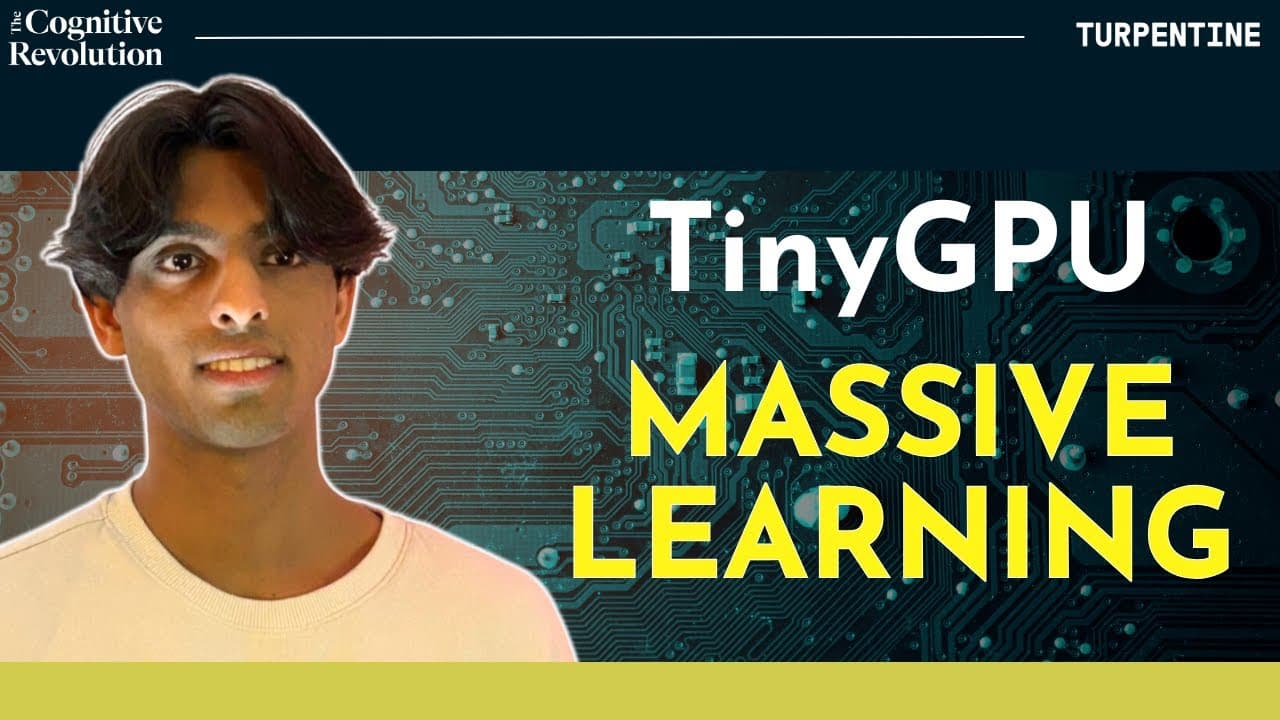
To create a GPU from scratch, Adam Majmudar leveraged AI tools like ChatGPT to accelerate his learning process, focusing on crucial concepts such as parallelization, memory management, and instruction sets. His TinyGPU project highlights both the foundational technology of modern AI and the accessibility of chip design through open-source resources, exemplifying how AI can transform education in complex fields.
Transcript
so these special registers are registers that you can't write to the GPU itself handles writing to them and that means that the GPU itself supplies this code execution environment with like hey you're this block number there's this many threads in each block and you're also this thread number in this block and so the high level job of the GPU now i... Read More
Key Insights
- Adam Majmudar embarked on creating TinyGPU with no prior experience, leveraging AI tools like ChatGPT to accelerate his learning process, showcasing the transformative impact of AI in education.
- The project highlights the multigenerational tech stack that today's AI breakthroughs rely on, emphasizing the contributions of countless engineers over decades.
- Adam's approach involved understanding GPU architecture at a fundamental level, focusing on core concepts like parallelization, memory management, and instruction sets.
- He utilized open-source tools and resources, such as the OpenROAD project and SkyWater process node, to design and simulate the GPU, demonstrating the accessibility of chip design for individuals.
- The project sheds light on the challenges of GPU design, including managing memory bandwidth and latency, which are critical in achieving efficient parallel computation.
- Adam's TinyGPU project serves as an educational resource, providing insights into the foundational technology that powers modern AI applications.
- The podcast discusses the role of proprietary designs in limiting learning resources for GPU architecture, contrasting it with the more open landscape of CPU design.
- The conversation underscores the importance of understanding both technical and industry aspects to achieve technical confidence and explore opportunities in defining technologies.
Install to Summarize YouTube Videos and Get Transcripts
Explore YouTube Video Summarizer or Get YouTube Transcript Extractor
Questions & Answers
Q: How did Adam Majmudar approach the creation of TinyGPU with no prior experience?
Adam utilized AI tools like ChatGPT to accelerate his learning process, allowing him to propose hypotheses and receive feedback. This approach enabled him to quickly grasp the foundational concepts of GPU architecture and design, highlighting the transformative impact of AI in education and learning.
Q: What are the core concepts Adam focused on in his TinyGPU project?
Adam focused on understanding the core concepts of GPU architecture, including parallelization, memory management, and instruction sets. These elements are crucial for achieving efficient computation and understanding how modern GPUs function at a fundamental level.
Q: What role did open-source tools play in Adam's project?
Open-source tools like the OpenROAD project and the SkyWater process node were instrumental in Adam's project, providing the necessary resources to design and simulate the GPU. These tools demonstrate the accessibility of chip design for individuals and the potential for educational projects in this field.
Q: What challenges did Adam face in the GPU design process?
One of the main challenges Adam faced was managing memory bandwidth and latency, which are critical for efficient parallel computation. Understanding how to optimize memory usage and handle multiple threads was essential for the success of the TinyGPU project.
Q: How does the TinyGPU project serve as an educational resource?
The TinyGPU project provides insights into the foundational technology that powers modern AI applications. It offers a practical example of GPU design, highlighting the complexities and considerations involved, and serves as a valuable resource for anyone interested in understanding GPU architecture.
Q: What is the significance of proprietary designs in learning about GPU architecture?
Proprietary designs limit the availability of learning resources for GPU architecture, making it challenging to fully understand the technology. In contrast, the more open landscape of CPU design offers more opportunities for learning and exploration, highlighting the importance of open-source resources like those used in Adam's project.
Q: What does the podcast highlight about the role of AI in education?
The podcast highlights the transformative impact of AI in education, showcasing how tools like ChatGPT can accelerate the learning process and provide valuable insights. This approach allows individuals to quickly gain technical confidence and explore opportunities in defining technologies.
Q: Why is it important to understand both technical and industry aspects according to the podcast?
Understanding both technical and industry aspects is crucial for achieving technical confidence and exploring opportunities in defining technologies. This comprehensive approach allows individuals to grasp the broader context of their work and identify potential areas for innovation and impact.
Summary & Key Takeaways
-
Adam Majmudar set out to create a GPU from scratch, leveraging AI tools to accelerate his learning process. The project highlights the foundational technology underlying modern AI and the contributions of countless engineers over decades.
-
The podcast explores the challenges and insights gained from the TinyGPU project, focusing on core concepts like parallelization, memory management, and instruction sets, and utilizing open-source tools for design and simulation.
-
The conversation emphasizes the transformative impact of AI in education, the accessibility of chip design for individuals, and the importance of understanding both technical and industry aspects to explore opportunities in defining technologies.
Read in Other Languages (beta)
Share This Summary 📚
Summarize YouTube Videos and Get Video Transcripts with 1-Click
Try YouTube Summary with ChatGPT & Claude or YouTube Transcript Generator
Explore More Summaries from Cognitive Revolution "How AI Changes Everything" 📚



Summarize YouTube Videos and Get Video Transcripts with 1-Click
Try YouTube Summary with ChatGPT & Claude or YouTube Transcript Generator