How to Stop Saving Toxic People Machiavelli Style
TL;DR
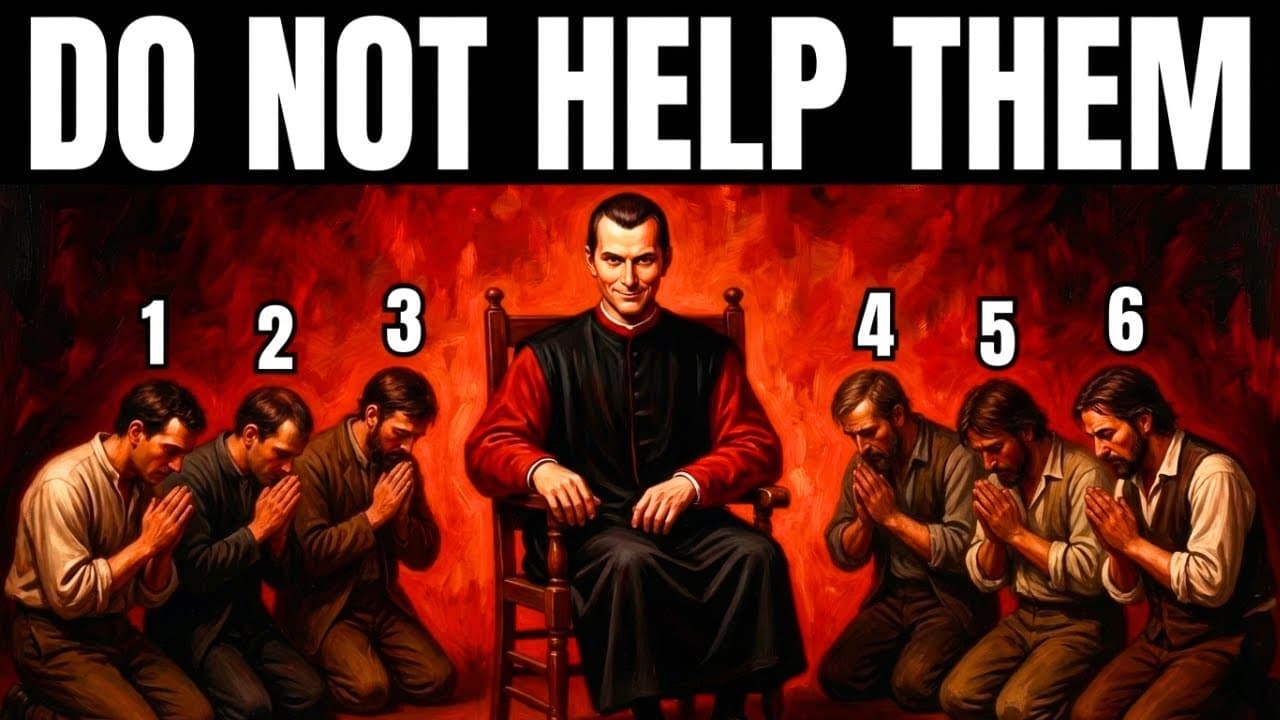
Boundaries matter more than constant compassion. Identify the six archetypes, avoid enabling their chaos, and protect your finite resources by stepping back or cutting off support when necessary. Use detachment and clear limits to preserve energy for those who deserve it and who will grow from help rather than drain it.
Transcript
You are destroying yourself and you call it love. You call it loyalty. You call it being a good [music] person. But in the cold light of reality, it is none of those things. It is self-sabotage wrapped in a moral blanket. [music] There is a terrifying truth about human nature that most people are too afraid to admit. A truth that Nicolo Machaveli, ... Read More
Key Insights
- The six archetypes are architect of chaos, bottomless pit, smiling saboteur, professional victim, arrogant fool, and scorpion.
- Compassion without boundaries is a weakness that predators exploit, leading to personal ruin for the helper.
- Energy, power, and time are finite resources that must be conserved by avoiding enabling toxic people.
- The architect of chaos perpetually brings new disasters, and saving them strengthens their pattern and harms you.
- The bottomless pit requires careful boundary setting to prevent ongoing dependence and resentment.
- The smiling saboteur hides envy behind concern, undermining your confidence and progress.
- The professional victim weaponizes pity, turning help into a debt that must be repaid with interest.
- Detaching and saying no when needed is a form of protective strategy, not cruelty.
- More videos from this channel:
- More from this channel: Mindplicit
Install to Summarize YouTube Videos and Get Transcripts
Explore YouTube Video Summarizer or Get YouTube Transcript Extractor
Questions & Answers
Q: How can I recognize the architect of chaos in my life
The architect of chaos is identifiable by a steady stream of fresh crises that recur after you provide help. They blame external forces, avoid responsibility, and your attempts to stabilize them end up dragging you into their chaos. Recognizing this pattern helps you step back to protect your own stability.
Q: What makes the bottomless pit dangerous to assist
The bottomless pit demands help but resents it and turns gratitude into entitlement. Repeated aid strengthens dependence and can lead to contempt once your boundaries tighten. The key is to test their reaction to limits and withdraw when they show manipulation or anger rather than appreciation.
Q: How does the smiling saboteur affect my progress
The smiling saboteur appears friendly but harbors envy and pretends to protect you from success. Their phrases carry subtle doubt and dampen your confidence, which can stall your growth. Noting these patterns helps you keep distance and continue pursuing goals without undermining influences.
Q: Who is the professional victim and how should they be handled
The professional victim weaponizes pity, seeking ongoing sympathy and support as a way to control outcomes. They view help as a debt and resist taking responsibility. Handling them requires clear boundaries, refusing to perpetuate dependency, and offering support only on terms that promote independence.
Q: What defines the arrogant fool in this framework
The arrogant fool resists being teachable, viewing feedback as threat. They cling to unhelpful beliefs and block personal growth, making repeated interventions futile. Distinguishing them early allows you to conserve energy and avoid reinforcing their self-defeating cycle.
Q: Why is the scorpion a danger to savers
The scorpion embodies repeat offender tendencies, using malice and strategic harm to undermine success. They may cloak malice as concern, but their true motive is to keep you grounded at their level. Recognizing this helps you sever ties before long term damage occurs.
Q: What is the role of boundaries in this approach
Boundaries serve as the primary tool to prevent energy drain and preserve resources. They require clear communication and consistent enforcement. By saying no and limiting access, you reduce the chance of enabling harmful behavior and increase your capacity to support those who deserve it.
Q: How can this Machiavelli-inspired approach improve long-term outcomes
Applying this approach helps you avoid burnout and protects your future by ensuring your time, money, and energy are spent on relationships and goals that yield growth. It shifts focus from futile savior efforts to sustainable support for those who are willing to responsibly improve, aligning with practical self-preservation principles.
Summary & Key Takeaways
-
The video explains a practical framework inspired by Machiavelli to avoid saving six types of toxic people, arguing that compassion without boundaries is a weakness and can ruin the saver. It emphasizes energy, time, and power as finite resources that must be protected to help deserving recipients.
-
It lists six archetypes: architect of chaos, bottomless pit, smiling saboteur, professional victim, arrogant fool, and the scorpion, detailing how each drains energy and why they should be kept at a distance.
-
The overarching message centers on self preservation, setting boundaries, and applying stoic-like detachment to stop enabling harmful patterns in relationships and to focus on those who actually deserve support.
Read in Other Languages (beta)
Share This Summary 📚
Summarize YouTube Videos and Get Video Transcripts with 1-Click
Try YouTube Summary with ChatGPT & Claude or YouTube Transcript Generator
Explore More Summaries from Mindplicit 📚





Summarize YouTube Videos and Get Video Transcripts with 1-Click
Try YouTube Summary with ChatGPT & Claude or YouTube Transcript Generator